Pages

Showing posts with label Charity. Show all posts

Tuesday, April 21, 2015

Slices of life in America, 2015: The Good; The Bad, and The Ugly


The Good: Jordan Speith, 21 year-old Masters golf tournament champion - In this day of giant egos among athletes, entertainers and politicians, we hardly ever expect to see someone behave with dignity and humility when they have a big success.

But following his magnificent win at the Masters on April 12, where he shot a 2-under-par 70 in the final round to finish with an 18-under 270, four shots ahead of three-time Masters champion Phil Mickelson and 2013 U.S. Open champion Justin Rose.

This was his fourth win worldwide in four months, placing him No. 2 in the world. But no self-congratulatory, boastful behavior comes from this young man. “It's the most incredible week of my life," he said. "This is as great as it gets in our sport. … This isn't an honor that's carried lightly.”

He is as even when things don’t go so well. A bad tee shot on the 16th hole in Sunday’s final round elicited a disgusted "dang it!"

"He's just a classy guy," Phil Mickelson said of him on Saturday. "He just represents the game very well and at a very young age, and he's just got a lot of game. So if he were to come out on top, it would be wonderful for the tournament, wonderful for the game."

The Bad: Silly enforcement of a San Antonio ordinance - It’s another case of government run amok, sometimes seeing the good things people do as bad, and following sometimes-silly rules that interfere with religious freedom and the good works people do.

San Antonio lawyer and author Joan Cheever owns The Chow Train, a licensed non-profit food truck that she uses to provide hot, healthy meals to the homeless each week. She has been doing this since 2005, feeding between 25 and 75 homeless people each time. But four of San Antonio’s Finest took exception to this voluntary effort to help those less fortunate, and issued Ms. Cheever a $2,000 ticket.

When she told one of the officers she was merely following the tenets of her religion, he responded, “Ma’am, if you want to pray, go to church.” The officer apparently is not familiar with the First Amendment of the U.S. Constitution, which clearly allows one to freely practice their religion whether in church or not, something that is of a higher authority than city ordinances.

Charitable works have been under attack for decades by a growing attitude among big government advocates that holds, despite dramatic evidence to the contrary, that government can do it better. And now in San Antonio government directly halts a private sector effort to help people in need, people that the city government is not feeding once a week, as does Ms. Cheever.

She will appear in court on June 23 to defend herself, and plans to argue that this expression of her religious convictions is protected under the Religious Freedom Restoration Act. Let us hope the court will see the value of her works, and allow her to follow her charitable impulses to help the less fortunate unimpeded.

The Ugly: Two examples - “Ugly” is a term with a variety of meanings, and applications: very unattractive, disagreeable, unpleasant, objectionable, morally revolting, threatening or dangerous, mean, and is applied to things that are really dumb and defy common sense.

With that in mind, two ugly items:

* A New York Police Department officer who drove his replica of the General Lee car from “The Dukes of Hazard” TV show to work has been told by his superiors not to drive it to work anymore. Why? Because the General Lee has a Confederate flag painted on its top, and some might consider that offensive. According to a local TV news report, a police spokesman said, “due to the fact that its presence at the NYPD facility may be considered offensive and/or inappropriate, the registered owner is being instructed that the car should not be parked on NYPD property.” Maybe the officer should be forced to sell the car as a provision of continued employment, so he can’t offend anyone, even when he’s off duty. No one must be offended. Ever.

* A Virginia college girl and two friends were set upon in her car in a store parking lot after making a purchase by seven plainclothes officers of the state Alcoholic Beverage Control agency. The girls did not realize the un-uniformed people were law enforcement agents, and got scared when the agents aggressively approached their car. They tried to escape, prompting one officer to pull a gun and another to try to break out a window with a flashlight. In the effort to escape, the driver brushed two of the officers. She was later charged with three felonies and spent the night in jail. What had these girls done? The officers “thought” they “might” have bought beer and “might” have been under age. They had bought bottled water, not beer. Eventually, the charges against the girl were dropped. Who thinks hiding in store parking lots waiting to catch under-age customers buying beer is efficient use of ABC resources and taxpayer money?

Thursday, December 27, 2012

This is the Season of Generosity and Good Will


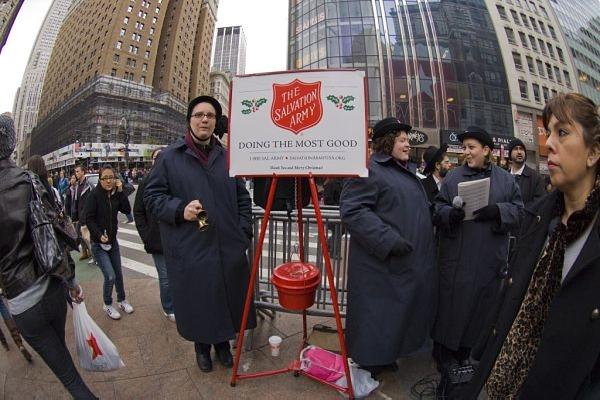
For those of the Christian faith, Christmas is the raison d'être for their religion, the fulfilling of God’s promise to send His Son to Earth more than 2,000 years ago. Christmas now is celebrated around the world by both Christians and non-Christians through the tradition of gift-giving.  In America, we not only exchange gifts, but also freely give of our time and money to help those less fortunate or who are in trouble during this time of the year.

In every community there are organizations that provide tangible benefits to the public and help others in need through volunteering for service projects and monetary and other contributions. Civic clubs and religious organizations raise and give thousands of dollars in assistance every year for medical care, food pantries, weatherization and home heating in the winter, building and repairing homes for less fortunate people and families, student tutoring and scholarships, animal welfare and spay/neuter programs, arts and cultural programs, assisting disabled persons, assisting police and fire fighters to purchase needed equipment, among other forms of aid.

Americans are regarded as the most generous people in the world. We give unselfishly to religious and civic organizations that support our charitable interests to help people both at home and across the globe.

In 2010 Americans donated more than $290 billion to their favorite causes, and four out of every five dollars donated came from individuals and bequests. The breakdown of charitable giving is: individuals, $211.8 billion; foundations, $41 billion; bequests, $22.8 billion; and corporations, $15.3 billion.

Americans donated $23.7 billion in corporate stock; $7.6 billion in clothing, and land valued at $4 billion. Leading the list of recipients of this generosity by a wide margin were churches and religious organizations at $100.6 billion, followed by educational entities, $41.7 billion; foundations, $33 billion; human services, $26.5 billion; organizations benefiting public and societal needs, $24.2 billion; health organizations, $22.8 billion; international affairs, $15.8 billion; arts, culture and humanities, $13.3 billion; and environmental issues and animal welfare, $6.7 billion.

And when disaster strikes anywhere in the world, we respond. We stepped up when the tsunami struck Japan, when an earthquake rocked Haiti. At here at home when Hurricane Katrina struck the Gulf Coast in 2006, more than $4 billion was raised to assist victims. We are still giving to victims since super storm Sandy struck in October.

However, as generous as the American people are, the economic crisis has significantly affected charitable giving, which remains $12 billion less today than when the recession began in 2008, and is predicted not to improve anytime soon. That is a real problem for the country: The nonprofit sector generates nearly 6 percent of U.S. gross domestic product, and pays $668 billion in wages and benefits to its 13.5 million employees.

The fiscal cliff further threatens charitable giving, as lawmakers on Capitol Hill consider capping or eliminating deductions, and a change to the charitable deduction could severely damage non-profits and the charitable work that generates enormous goodwill locally and globally.

A 2009 study by the Center on Philanthropy showed that the proposal to raise the marginal tax rate to 39.6 percent on those earning $250,000 or more and cap the charitable tax deduction at 28 percent would precipitate a 2.1 percent decline in giving, which works out to a $5 billion decrease.

However, a proposal by the Bipartisan Policy Center’s Debt Reduction Task Force would be far worse. It proposes to eliminate the charitable deduction altogether and replace it with a credit like the one used in the United Kingdom. Applying this practice to the U.S. level of charitable giving would cost $260 billion, devastating charities across America.

The Charitable Giving Coalition urged both President Obama and House Speaker John Boehner to protect the charitable tax deduction as they deal with the fiscal cliff facing America. The charitable deduction encourages individuals to give to those in need, and to give more than they would otherwise give by allowing them to offset some of their tax obligation with charitable contributions. Data suggests that every dollar a donor claims in tax relief for charitable donations produces three dollars of public benefit.

The significance of the charitable work of American non-profits is one thing that sets us apart from less charitable nations. It is a reflection of the generous heart of America, and the charitable tax deduction helps to fuel that generosity. That is why it must be protected. If we fail to stop this thoughtless process, Americans will be substantially hampered in their financial support of people in need, and we will all be the worse for it.

To the extent that government continues replacing the work of charitable organizations with taxpayer funded government programs, or impedes the charitable impulses of the American people with short-sighted tax policies, those of us who give to charity lose the ability to decide which projects and causes receive our financial support.

And as the failure to control profligate government spending continues to be ignored in favor of political considerations, the likelihood increases that charitable deductions will be targeted to help raise revenue to feed the government’s spending addiction.

Tuesday, November 30, 2010

Private charity threatened by unrelenting
“Big Government” policies

Now that we’ve officially entered the holiday season we will be hearing more about the need for charitable giving. Surveys indicate, in fact, that over 50 percent of all donations to charity are made between Thanksgiving and Christmas.

According to Mint.com, a personal financial Web site, Americans give about $300 billion to charities each year and are the most generous people on Earth. It would take three French, seven Germans or 14 Italians to equal the charitable donations of the average American, Mint tells us.

Americans voluntarily help their neighbors when they need it, and furthermore help people in need, anywhere in the world. They support causes they think are worthy, and it doesn’t matter that they do not have a lot to give; they give what they can.

A biennial survey by Bank of America of 801 households with an income greater than $200,000, or a net worth of at least $1 million – those that Indiana University’s Center on Philanthropy say account for about two-thirds of all individual giving – showed that average giving by survey respondents decreased significantly last year compared with 2007. Like everyone else, the wealthy were hurt by the economic collapse and had less to spend on charitable giving, among other things.

The Chronicle of Philanthropy reports that the 400 largest charities in the US saw a decrease of 11 percent in donations last year, the sharpest decline in 20 years of tracking donations. The larger organizations are still doing okay, but many smaller ones are feeling the pinch.

Into this already troubling scenario is that the Obama administration and the Democrats in Congress favor allowing the Bush tax cuts that reduced tax rates for all taxpayers to expire for just this one group of taxpayers. They would extend them for everyone else. The tax rate for those Americans would jump from 33 percent to 39.6 percent, leaving much less money for them to use for charitable purposes. And if that isn’t a serious enough problem, the Obama administration further wants to decrease the charitable deduction and the real estate tax and mortgage deductions for these same households from 35 percent to 28 percent.

These changes are estimated to decrease charitable giving by about 2.1 percent, which in 2006 (the last year for which data are available) meant a loss to charities of almost $3.9 billion, according to the Center on Philanthropy. This would deter the efforts of the most generous Americans to do what they want to do, and what should be done, which is to share their wealth with those in need by donating to charitable organizations that help needy Americans.

Rick Dunham, President and CEO of the strategic consulting company Dunham & Company, explains in practical terms what these changes really mean: “If the Obama plan stays as is, the tax burden of an individual owning a small S corporation with [total] taxable income of $250,000 would jump from 33 percent to 39.6 percent, or $16,500, which is 6.6 percent of the household income and close to the average of what these households now give to charity – $20,500.” Did you get that? Their tax would increase almost as much as the average amount they give to charity.

Over the last several decades we have seen the federal government spend more and more of our tax money on problems that are the traditional focus of private charitable giving. Before government in its infinite wisdom decided that it could do a better job taking care of people in need, private charity took care of these social problems. Since government got involved, the problems have multiplied; there are more people receiving government “charity” every year.

But government charity is not real charity, which is the willful giving of one’s own money to needs of one’s own choosing. What government does is take money from the people by force and use it for the purposes that the politicians deem appropriate, and that frequently means putting money where it does the politicians the most good.

This system pays government employees to collect and redistribute the money, increasing both the size and cost of government, and wasting billions on salaries and other costs that charities would use directly to address community needs. It diminishes real charitable giving by robbing people of their means of supporting the needs they see in their communities, and it replaces the people’s judgment of the problems needing attention with government’s judgment.

Think about charities that you know and donate to because of the good work they do. Ask yourself if your community will be better off if these organizations have less to operate with than in years past, or perhaps can’t continue to operate. Ask yourself if government really does a better job of addressing the needs of your community than these organizations, supported by your charitable contributions.

Getting government out of the “charity” business would reduce the size, cost and power of the federal government, eliminate billions in taxes and spending, and return control of more of your money to you to support organizations that are more efficient at addressing these problems than government.

Click Here to Comment


Technorati Tags:
, , ,

Tuesday, December 29, 2009

Damage from health care reform
reaches beyond health care boundaries

Opponents of so-called health care reform believe terrible things will happen if some version of it passes and gets signed into law. Most of the damage will occur in obvious places, such as to doctors and hospitals, to those who are happy with their existing health insurance, and to everyday Americans, whose taxes and cost of living will rise.

But it will also affect areas outside health care, like private charity.

“How can reforming the health care system and health insurance industry affect charities,” you may wonder? It may seem like a weird disconnect, but it does because, like so much of what liberalism attempts in pursuit of a “perfect” society, it produces consequences that either are unforeseen, or those consequences get written off as acceptable sacrifices in order to achieve what liberals see as the greater good. So, if charities suffer in taking over the health care system, that’s okay.

During formulation of the Senate Finance Committee’s health care bill, a group including Senator Jay Rockefeller (D-WV) and John Kerry (D-MA) proposed an idea that would raise billions of dollars in additional tax revenue to help offset the enormous costs of the health care takeover by limiting the value of itemized deductions, such as donations to charity. The proposal would hold the value of charitable deductions at 35 cents on a dollar, while the top tax rate rises to more than 39 percent when the Bush tax cuts expire in 2011.

And when Senate Democrats passed their unpopular health care bill in the middle of that snowy night on a strict 60-40 party-line vote, Democrats said “Merry Christmas” to America’s poor by reducing funding for charities that assist them by billions of dollars each year.

Howard Husock, the Vice President of Policy Research and the Director of the Manhattan Institute's Social Entrepreneurship Award, explained that “when a similar proposal was advanced early this year by President Obama, the long-time head of the National Bureau of Economic Research, Martin Feldstein, estimated it would lead to a $7 billion drop in charitable giving.”

Charities have already taken a big hit, according to the Chronicle of Philanthropy, which reported that six of ten United Way chapters saw a decline in giving last year, totaling $4 billion.

Indeed, a coalition of 15 major charitable organizations that are concerned about the situation wrote a letter to Senate Finance Committee chairman Max Baucus (D-MT) stating that “charities have seen an increased demand for their services as individuals and families struggle with financial uncertainty.”

The underlying assumption of the Democrat’s scheme seems to be that “we’ve got to get money from anywhere and everywhere to offset the exorbitant costs of our health care reform, and government can do a better job of spending charitable dollars than people can.” So, to pay for its takeover of one-sixth of the private economy, the federal government now will take money the people intended for the charities they deem important, and will substitute the judgment of individual Americans with the judgment of a federal bureaucracy in deciding how the funding should be used and which charities will get funding.

In preparation for this not-yet-collected treasure, the Obama Administration has already announced the establishment of a new White House Office of Social Innovation which will make grants directly from the White House to individual non-profit organizations.

And, just as some industries jumped on the health care reform and cap-and-trade bandwagons to insure their survival against an overly aggressive government, some non-profit organizations support this idea, putting themselves in the position to attract “government money” that will enable them to survive and thrive, even as charitable donations drop by billions of dollars a year.

When government calls the shots instead of the people, those intended charitable dollars will be used to support the administration’s purposes, not the people’s purposes, and certain “preferred” organizations and causes get a subsidy. “This government-led giving contrasts sharply with the wide-ranging, sometimes quirky, but historically creative nature of American philanthropy,” Mr. Husock said.

Roberton Williams, senior fellow at the Tax Policy Center, said it's impossible to calculate the exact effects of all the tax changes, but he said the overall result is clear – less philanthropic giving. "This will lead people to give less to charities if they behave the way they've behaved in the past," he said. "We've already seen a drop in giving as a result of the economic collapse. On top of that, this will just reduce the amount of giving."

Office of Management and Budget Director Peter Orszag has noted, however, that the recovery act calls for “$100 million to support nonprofits and charities as we get through this period of economic difficulty." Do Senate Democrats and the President really think that taking more money from those citizens with the most to give to charity, and reducing charitable giving, and then replacing billions of lost donations with a few million dollars controlled by the government will have no negative implications?

Will the American people recognize that the measures President Obama and the Congress are promoting will wreck their country in time to stop them?

Click Here to Comment

Technorati Tags: , , ,