Pages

Showing posts with label Big Tech. Show all posts

Sunday, February 26, 2023

Freedom of speech is a protected right, but also a complex issue


February 21, 2023

One of the founding principles of the United States that Americans cherish is the right to freedom of speech. Its origins date back to ancient Greece. The Greeks considered free speech, meaning to “speak candidly,” a democratic principle.

America is one of the nations where this is considered important. Our Founders thought it was so important as to earn inclusion in the First Amendment to the U.S. Constitution. Americans have the protected right to criticize the government and speak their minds without fear of being censored or persecuted.

Through the two-plus centuries of America’s existence, the courts have ruled on this right. For example, in 1919, the Supreme Court ruled in the case Schenck v. United States that individuals are not entitled to speech that presents a “clear and present danger” to society. On the other hand, in1969, the court declared in Brandenburg v. Ohio that, generally, even inflammatory speech, such as racist language by a leader of the Ku Klux Klan, should be protected unless it is likely to cause violence.

So, dangerous language is not protected, but inflammatory speech that is not dangerous is protected.

In a free society, all citizens must be able to think for themselves, to choose their goals and pathways to achieve them. In America, people are free to express their ideas, even if those ideas are unpopular, or wrong. And, as we have seen, those “wrong” ideas may sometimes be proven right. 

But on the world stage, just how free is speech in America? World Population Review in 2020 listed the “Top 30 Countries with the Most Freedom of Speech/Expression.” And the United States ranks near the bottom of that list, along with Luxembourg and Peru, with a rating of .74 on a 1.00-point scale

Leading the world are: Denmark at .95; Belgium at .87; and Finland, Switzerland and Uruguay at .86. In between those high marks and the U.S. position are 22 other nations who rated higher than we did. Lowest of all nations is Panama at .65. We are closer to the bottom than we are to the top.

Interestingly, while the U.S. ranked at the bottom of the top 30 nations for free speech, a Pew Research Center poll ranked the U.S. at the very top of the list of “Whose Citizens Value Free Speech the Most.”

Why would the nation whose citizens value free speech more than any other nation not have the greatest degree of free speech?

“We the people tell the government what to do. It doesn’t tell us,” former President Ronald Reagan once said. “We the people are the driver; the government is the car. And we decide where it should go, and by what route, and how fast. 

“Almost all the world’s constitutions are documents in which governments tell the people what their privileges are. Our constitution is a document in which we the people tell the government what it is allowed to do. We the people are free,” he said. 

Obviously, if the American people value free speech more than any other people, and if they have told the government through the Constitution that we will have free speech, then government isn’t doing its job on this subject.

There is incontrovertible evidence that some social media platforms play favorites with political opinions. Platforms have the right to control content. They can control “misinformation” or “disinformation,” and “false information.” But it is not okay to term things as “misinformation” or “disinformation,” or say that something is “false” because it is contrary to their political opinion.

A New York Post opinion piece by Miranda Devine said that a “little-noticed federal lawsuit, Missouri v. Biden, is uncovering astonishing evidence of an entrenched censorship scheme cooked up between the federal government and Big Tech …” Sixty-seven officials and agencies are accused of pressuring Facebook, Twitter and Google to censor users for alleged misinformation or disinformation. The Post was one victim of this alleged malfeasance.

Former Hawaii Democrat Congresswoman and former presidential candidate Tulsi Gabbard appeared before a new subcommittee of the House of Representatives that is dedicated to probing the weaponization of the federal government earlier this month. She expressed the necessity of maintaining free speech in the United States, even when some of that speech is objectionable to some, and that includes hate speech, she said.

She cited efforts by social media to control the information that users could see, including her accounts on some of those media sites that were suspended or blocked without explanation. 

This action has social media, and perhaps also federal government agencies, putting themselves in place to decide what the rest of us can and will see, hear and read. Having some ideas blocked by social media — or worse, government agencies — is not freedom of speech. It is, in fact, un-American.

In addition to the previous quote from Reagan, he also offered these, which are fitting: “Government is not the solution to our problem, government IS the problem." And, “freedom is never more than one generation away from extinction.”

All of those who are elected, appointed or hired to work for the people in the federal government need to stop being politicians and start being Americans.


Friday, August 20, 2021

About Dr. Fauci, and the importance of the marketplace of ideas

Dr. Anthony Fauci is the face and official voice of all that is going on with the Covid pandemic, and how we should respond to it. Depending upon whom you ask, Fauci is either one who walks on water, or one who lives in hell.

I am one of the likely few outside the healthcare and scientific communities who had heard of the man prior to the invasion of COVID-19. That previous knowledge kept me from bowing down to him, as so many have. But at the same time, it gave me reason to give him the benefit of the doubt on the mysteries of, and prescriptions for dealing with the pandemic.

In the 1980s when AIDS (acquired immunodeficiency syndrome) was a new thing, its causes were being investigated. Two schools of thought existed: one was that a human immunodeficiency virus (HIV) was the cause; the other was that long-term drug use and other factors that weaken the immune system were the cause.

Another scientist, Dr. Peter Duesberg, was prominent at that time. Duesberg isolated the first cancer gene through his work on retroviruses in 1970, and mapped the genetic structure of these viruses. This, and his continued work on viruses, resulted in his election to the National Academy of Sciences in 1986. He also received a seven-year Outstanding Investigator Grant from the National Institutes of Health.

Duesberg had made a name for himself in the scientific world. He is regarded as a specialist on viruses and retroviruses. He was a primary voice among those who argued that HIV is not the cause of AIDS.

One of the better-known opponents of Duesberg and his theory was, and is, Anthony
Fauci, and that is how I came to know who he is. Fauci has an MD degree and has worked in the National Institutes of Health, and as a clinical associate in the National Institute of Allergy and Infectious Diseases, which he now heads. He no doubt has learned things beyond what a practicing physician knows in some areas. But does he know more about viruses than a virology expert?

Duesberg’s position is that HIV is merely a passenger in AIDS, and not the cause, a position that draws derision from the HIV = AIDS faction.

Through the decades, viruses have been defeated by vaccines. Those include: flu, SARS, measles, hepatitis A and B, mumps, chickenpox, whooping cough, tetanus, polio, and recently COVID-19. However, to date, decades after AIDS came on the scene, there is no vaccine for HIV.

Is that perhaps because, as Duesberg maintains, AIDS is not caused by a virus?

* * *


In his new book, The Case Against the New Censorship: Protecting Free Speech from Big Tech, Progressives, and Universities, liberal Democrat and civil rights attorney Alan Dershowitz makes the case for an unrestricted “marketplace of ideas.”

John Stuart Mill is generally credited with originating the concept of the marketplace of ideas back in 1859. He argued against censorship and in favor of the free flow of ideas, claiming that the free competition of ideas is the best way to separate falsehoods from fact.

However, in certain social media platforms today, the controlling oligarchs, likely unaware of Mills and his position, insist on removing content they regard as false, or perhaps just inconvenient.

But that creates potential problems. Dershowitz wrote: “If Facebook, Twitter and YouTube take down content which they deem to be untrue, then at least some viewers may come to believe that content that is not taken down must have passed the test of truthfulness.”

“So, when social media get into the business of selectively censoring some untruths,” he continues, “it is they who may be promoting false belief in the alleged truth of the untruths they do not censor. It is a no-win situation.”

And then getting to what many believe is the deliberate muzzling of conservative comments, Dershowitz wrote that, “censorship is almost never content-neutral. Codes that purport to ban ‘offensive’ or ‘untruthful’ words are inevitably invoked selectively against politically incorrect words.”

With the free flow of ideas comes the likelihood of false or misleading information being published, which Dershowitz defends by saying “the costs of imposing a regime of censorship outweigh the costs of tolerating dangerous speech and its consequences.”

He describes the present efforts to control speech and thought as “the current regressive war against freedom of speech being waged by ‘progressives,’ social media moguls, university administrators, and other well-meaning but dangerous censors.”

“The marketplace of ideas is the best option for a democracy not because it always produces the best ideas,” he wrote, “but because like democracy itself, the alternatives are far worse.” And then the kicker: “[W]ithout freedom of speech, democracy cannot survive.”

* * *

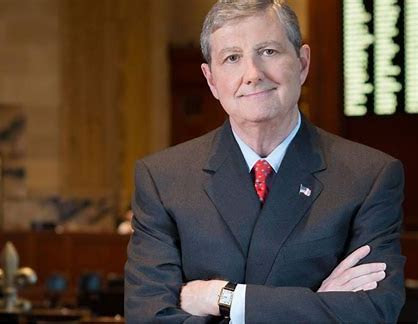
And then there are these gems from Louisiana Republican Senator John Kennedy, who has been called the Will Rogers of our time:

“This election in Georgia will be the most important in history. You have nothing to worry about, unless you are a taxpayer, parent, gun owner, cop, a person of faith, or an unborn baby!”

And about some members of Congress: “how did these morons make it through the birth canal?”

Friday, March 12, 2021

Big Tech has grown too big, and is a true threat to our freedoms


America’s Founders recognized that certain rights existed that were absolute and unassailable, and that those rights were fundamental to the nation they had created. Before some states would ratify the new Constitution, they insisted that these rights be specifically detailed. And they were, in the first 10 amendments to the U.S. Constitution, the Bill of Rights.

Back in the day, we learned important elements of our nation’s founding in school. We studied the Bill of Rights, and learned that the First Amendment cited the five freedoms of religion, speech, the press, peaceful assembly, and petitioning government for the redress of grievances.

Religion and speech have been under attack off and on for a long time. Religion has been under strong attack lately, and now free speech has also become a target.

In many countries, what the people say and do is controlled by a dictatorial government. In America, where the Constitution limits what the government can do, the current attempt to kill free speech is being carried out by a political faction that has among its members the fat-cats who own the Big Tech companies.

The Big Tech companies whose disrepute has blossomed of late — Google, Facebook, Twitter, YouTube and Amazon — have grown too big for their britches. The oligarchs who own and run these giants have gained such riches that their over-fed egos persuade them that they can and should control the rest of us for their own narrow purposes.

The level of control of Big Tech reaches into the news we read, see and hear; information we find online; the ads we see and the things we buy; and discussions in the political sphere.

These platforms gather information on users about their likes and dislikes, the websites they visit, videos they watch, issues they are interested in, and their political party affiliation.

This information is used to make money and to influence how users think about many things. Even the results of online Google searches are determined by this user information.

The arrogance of Big Tech has produced the censoring on their platforms of a story in the New York Post on the questionable behavior of President Joe Biden’s son Hunter Biden. Social media platforms Facebook and Twitter banned the now-former President of the United States Donald Trump from their platforms. And Big Tech took down the upstart social media site Parler, which has now been reborn.

There are continuing issues regarding the censoring of political posts and comments by Republicans and conservatives. Things that do not favor the leftist/liberal side of things are frequently blocked or removed on the grounds that they violate some internal policy.

These policies supposedly protect the public from dangerous speech, which is not the job of social media platforms. They originally were available for users to have their say about any topic, except for things like promoting violence or illegal activities.

The vast majority of speech, even that which is highly offensive to some, has been determined through litigation to be protected by the First Amendment. Nevertheless, Big Tech owners and employees, who should not be the judges of the appropriateness of their users’ comments, continue to do so. And they condemn language like what has been determined by law to be okay. 

Since these “platforms” frequently abandon that realm in favor of behaving like “publishers,” which are expected to control speech to a higher degree, they should lose the protections of Section 230 of the Communications Decency Act of 1996, which protects platforms from lawsuits over content generated by users on their sites. It gives them the right to moderate content, but does not give them the responsibility to do so.

This allows platforms to operate without needing to moderate content, therefore, platforms must not go too far if they do moderate. Despite this, they continue censoring conservative speech.

Allum Bokhari, an author and technology correspondent, speaking to a conference of the Center for Constructive Alternatives at Hillsdale College, had the following comment in his address: “If Big Tech’s capabilities are allowed to develop unchecked and unregulated, these companies will eventually have the power not only to suppress existing political movements, but to anticipate and prevent the emergence of new ones. This would mean the end of democracy as we know it and place us under the thumb of an unaccountable oligarchy.”

Big Tech platforms are such a sham, I do not like them, Sam-I-Am.
They cheat, and censor what people say, but only those who don’t think their way.
They think they are king of what they do, but they must also be red, and not just blue.
Their egos swelled as they gained power, and now Big Tech needs a really cold shower.
They have gained the throne and now they are woke, but justice will be done if they go broke.

Freedom of speech must be protected. Big Tech should be sanctioned, regulated, or broken up into smaller, less powerful and less harmful units with little ability to control free speech. This would allow the public to express all but the most truly dangerous ideas, as platforms originally were.

Tuesday, February 02, 2021

Big tech silences conservative voices as House concerned with pronouns

Published Jan. 19, 2020


House Speaker Nancy Pelosi, D-Calif., and chairman of the House Rules Committee Rep. James McGovern, D-Mass., announced a resolution recently intended to “honor all gender identities” by modifying pronouns in the House rules and references to family relations, such as father, mother, son, daughter, brother, sister, as reported by the Daily Caller. These words would be changed to “parent, child, sibling, spouse, or parent-in-law,” the resolution said.

The announcement said that hereafter “pronouns and familial relationships in the House rules [will] be gender-neutral,” and removes references to gender, “to ensure we are inclusive of all Members, Delegates, Resident Commissioners and their families – including those who are nonbinary.” 

“Nonbinary” is the term that is applied to those who see themselves as neither female nor male. The changes also mandate that extended family members, such as an aunt or uncle, would be referred to as “child’s parent.”

Not long after announcing these critically important changes in allowable language, Pelosi’s Twitter profile still reads: “Speaker of the House, focused on strengthening America’s middle class and creating jobs; mother, grandmother, dark chocolate connoisseur.”

Given the COVID pandemic, which we are told has taken the lives of nearly 400,000 Americans; the new impeachment effort of Congressional Democrats days before President Donald Trump’s term ends; the riot at the Capitol two weeks ago; and the inauguration of the new president coming up tomorrow, one might expect there to be much more important things for the House of Representatives to busy itself with than a politically correct remaking of acceptable gender language in the House. If so, one would be wrong.

* * *

Tech giants Facebook, Twitter, Amazon and Google have grown too big for their britches. Protected from repercussions of what participants post on their sites by Section 230 of the Communications Decency Act, these platforms have rushed past these protections into the unprotected land of publishers, just as are newspapers and magazines.

Problems arose when people and other platforms were shut down or otherwise punished by these Big Tech firms. They turned out to be primarily, or perhaps entirely, those expressing conservative ideas.

Having had their voices silenced by Twitter, some users then migrated to a new platform named “Parler.” These mistreated users were then followed by millions of others who were angered by the censorious stuffed-shirts of Twitter.

Similar actions have been taken by Facebook and Internet site host Amazon AWS and search engine and Web host Google. Parler has since been banished by Amazon for having dared to allow free speech.

By their actions of selectively deciding who can post on their site, or who can have a site hosted by them, these platforms have abandoned the protections of Section 230, and become publishers. They are not the nation’s Internet babysitters; they are not in charge of protecting the masses from ideas that do not fit the narrow range of thought they find acceptable.

These harmful acts are not immune to negative consequences. Twitter has been punished for suspending President Donald Trump’s accounts.

Politico Daily reported that “Twitter’s stock price fell by 12 percent and erased $5 billion from its market capitalization after choosing to delete an account that had about 88 million followers. The stock dropped as low as $45.17 per share,” from its high of $52.44.

The report added that “the stock fell after people saw the decision as one that was politically motivated and a way to silence a major conservative voice among the public. This also erodes interest in social media platforms that look to censor free speech.” 

* * *

President- elect Joe Biden deserves congratulations and the admiration of us all. He masterfully engineered and operated a plan to get himself elected in November, overcoming great odds. Biden’s win is truly historic.

As someone not leading the pack when the nomination race began, he managed to get the nomination. And then the really surprising win occurred.

His incumbent opponent, President Donald Trump, earned 74,111,419 votes, which was 11,126,594 more votes than he got in the 2016 election. Incumbents usually win a second term, and the last time one did not was George H.W. Bush in 1992. An incumbent losing has only occurred 4 other times in the last 100 years.

Biden’s vote total of 81,009,468 was the most ever for a presidential election, and roughly 18 million more votes than Barack Obama, a very popular Democrat, received in 2012.

In winning election, Biden beat the odds to win over an incumbent president, and at the same time increase the number of people who voted by a significant number.

In 2012 more than 129 million voted. In 2016, 137.5 million people voted, six percent more than four years earlier. And in 2020, there were more than 159 million voters, and the number of voters increased by nearly 16 percent. Wow!

He also won despite losing most bellwether counties, and significant Democrat losses down ballot. 

And, Biden was able to win even though officials in Georgia, Michigan, Pennsylvania and Wisconsin broke their own state laws and breached the terms of the U.S. Constitution governing elections when they changed election procedures improperly.

This election is certainly one for the books.