Pages

Showing posts with label Censorship. Show all posts

Friday, December 05, 2025

To make important decisions, all points of view should be heard


December 2, 2025

The earliest drafts of the U.S. Constitution did not include a bill of rights. Among those working on the Constitution who thought a bill of rights was important were Thomas Jefferson and James Madison, now known as the “father of the Constitution.”

When the delegates of the Constitutional Convention provided the document to the states for ratification, they realized that without a rights declaration, ratification could be difficult.

Some states quickly ratified the document, however, others had hotly contested debates. When those states did ratify the document, they included features that they wanted to be added.

Eventually, the elements of the Bill of Rights were added to the Constitution as amendments.

What ultimately became the First Amendment to the Constitution was the one protecting the establishment of religion, and its free exercise; the freedom of speech and the press; the right of the people to peaceably assemble, and to petition the Government for a redress of grievances.

Of those First Amendment items, the idea of free speech is the one that is currently the most prominent.

Over the past several years, the charge has been that various sources — including newspapers and magazines, radio and television news organizations and social media — had been censoring what they regarded as “misinformation,” “disinformation,” “false information,” etc. 

There is no doubt that certain things were banned, as the censors admitted as much. But whether they should have banned those opinions and contrary ideas is still being defended.

Those who censored comments claimed they were protecting the public from false information, as if it was their duty, and within their ability to make such judgements. In a country with a constitutional defense of a right of free speech, it was neither of those things.

However, the ability of the people to express their thoughts and ideas about what is happening, what should happen, or what should not happen should be banned only under very special circumstances.

Throughout our history there have been many explanations of why even unpopular speech should not be regulated or banned.

Here are some of them:

* “If freedom of speech is taken away, then dumb and silent we may be led, like sheep to the slaughter.” George Washington (1783)

* “We can never be sure that the opinion we are endeavouring to stifle is a false opinion; and if we were sure, stifling it would be an evil still.” – John Stuart Mill, On Liberty (1859)

* “He who stifles free discussion, secretly doubts whether what he professes to believe is really true.” – Wendell Phillips (1870)

* “Some people’s idea of [free speech] is that they are free to say what they like, but if anyone says anything back, that is an outrage.” – Winston Churchill, (1943)

* “If liberty means anything at all it means the right to tell people what they do not want to hear…” – George Orwell (1945)

* The U.S. Supreme Court in Gertz v. Robert Welch, Inc. said, in part, “We begin with the common ground. Under the First Amendment, there is no such thing as a false idea. However pernicious an opinion may seem, we depend for its correction not on the conscience of judges and juries but on the competition of other ideas.”

* “Freedom of speech is indivisible; unless we protect it for all, we will have it for none.” Law professor Harry Kalven

* “If you are afraid to say it, that is exactly why it needs to be said.” Journalist Andy Rooney

* “If you had to pick one freedom that was the most essential to the functioning of a democracy, it has to be freedom of speech. Because democracy means persuading one another, and then ultimately voting, and the majority, the majority rules. You can’t run such a system if there is a muzzling of one point of view. So, it’s a fundamental freedom in a democracy.” Former U.S Supreme Court Justice Antonin Scalia, speaking at the National Press Club

* Yet, historically, the greatest threat to citizens has come not from those who state falsehoods but those who claim the right to regulate what is true and false.” Jonathon Turley, law professor and author of “The Indispensable Right: Free Speech in an Age of Rage”

However, even the First Amendment to the Constitution does not protect certain types of speech. These categories are types of speech that may be dangerous. These include obscenity, fraud, child pornography, speech integral to illegal conduct, speech that incites lawless action, speech that violates intellectual property law, and true threats.

Speech that may be obviously untrue, but not actually harmful, as are those in the preceding list, may not be banned.

Notice that political speech by Democrats or Republicans or whomever, are not included in the list of speech which may be banned.

So, let’s be honest and open about the differences in ideas. We should combat ideas that we find unpopular, but not with cowardly censorship, but with better and more sensible ideas.

Freedom of speech is one of the several ideas that sets the United States of America above other nations, and we must not allow it or the others to be taken away.


Saturday, September 07, 2024

Zuckerberg shines the light on the control of information


September 3, 2024

Last week, confirmation of a long-held notion of an organized effort to control the information available to the public — which opponents and “fact-checkers” labeled as “false” and “conspiracy theories” — came to light.

A story, attributed to Thomson/Reuters, appeared on Newsmax.com, saying that “Meta Platforms CEO Mark Zuckerberg said senior officials in the [Biden-Harris] administration had pressured his social media company to censor COVID-19 content during the pandemic, adding that he would push back if this were to happen again.”

This revelation came to light in a letter from Zuckerberg to the House Judiciary Committee. He expressed regret for not speaking up about this earlier, and he also expressed regret about some decisions made by Meta Platforms’ applications Facebook, Instagram and WhatsApp about removing certain content that had been identified.

In addition to COVID-19 content, information relating to the Hunter Biden laptop that was available ahead of the 2020 election was labeled “Russian disinformation,” and as a result was widely unavailable to the public. Undoubtedly, this same thing happened to other pieces of information.

Zuckerberg deserves some credit for admitting what was suspected for so long. Too bad it took him years to get to this point. 

In the letter, he also said he would “not make any contributions to support electoral infrastructure in this year's presidential election so as to ‘not play a role one way or another’ in the November vote.”

The White House has responded to this revelation with a statement to Fox News in which it did not admit to or deny Zuckerberg’s charge of the administration applying pressure on Meta.

Zuckerberg wrote, "I believe the government pressure was wrong, and I regret we were not more outspoken about it.” “I also think we made some choices that, with the benefit of hindsight and new information, we wouldn't make today."

The House Judiciary Committee called Zuckerberg’s admission of Facebook’s censoring of Americans a “big win for free speech.”

This revelation increases the likelihood that some, or perhaps a lot, of the other suspected instances of censoring were also not “conspiracy theories” or “false” information.

It supports the allegations of wide-spread dishonesty in the handling of important information, and that some in our country are willing to play dirty.

The concept of free speech as guaranteed to Americans by the First Amendment to the U.S. Constitution protects unpopular speech, and even offensive speech. What is unpopular and/or offensive to one group may well be quite important to another group. 

Without a variety of ideas being freely circulated, how can Americans possibly work their way to a valid understanding of things, so that they can make informed decisions about issues, particularly things as critical as election choices?

And while what Meta and other information sources did may not be against the law, the case that was cited and other similar instances of blocking information certainly is against the spirit of the First Amendment.

What these platforms did certainly interferes with the very reason that our Founders made the amendment protecting free speech the first of the ten amendments to the Constitution, the Bill of Rights. They understood that the people must have all the available information they need and are entitled to, good or bad, popular or unpopular, offensive or not. 

However, such action by elements of our federal, state and local governments definitely is illegal. And Zuckerberg’s message about the Biden-Harris administration’s efforts to censor speech ought to anger all of us.

The country is now experiencing a dangerous attack on integrity, honor and honesty. Dishonesty in politics is not new. But it has grown greatly over recent years, and is even more of a problem than ever.

How many newspapers and magazines, TV and radio networks and stations, and internet sites have dishonestly censored ideas that do not match their preferred political ideas? How many in our public education systems are there not to teach the young the things they need to become productive adults, but to indoctrinate them with anti-American ideas?

This lack of honor and integrity is a characteristic of many in the faction that is desperately working to defeat Donald Trump in his effort to be re-elected as President. He is a great threat to their goal of achieving eternal control of the country. This is a goal they cannot achieve through honest means, because this radical socialist/communist goal does not have the necessary support of the electorate. Therefore, their working motto is, “we will win, and we will use any method available to achieve that goal.” 

People with integrity know that they must win honorably and honestly, and if they lose, it must be the result of an honorable and honest effort. That is the American way.

This revelation illustrates what happens when the Constitution and our laws are not followed. Imagine the chaos if the Democrats’ desires to pack the Supreme Court, do away with the Senate filibuster, continue the open-border policy, move control of elections from the states to the federal government, and other radical changes to the country’s operating procedure are put into effect.

Thursday, March 23, 2023

The attacks on freedom of speech continue on college campuses


March 21, 2023

Freedom of speech is still an “iffy” situation in the United States. We have previously heard where people invited to speak on a college campus were heckled and harassed by a group that disagreed with the speaker’s point of view.

That has occurred once more. A person was invited to speak at a campus event sponsored by an off-campus organization. When news of the upcoming event became public, more than 70 opponents of the speaker immediately emailed the college administration asking that the live event be cancelled, or changed to an online event. It was not cancelled or changed.

Students also posted flyers critical of the speaker and the organization that invited him. Prior to the event, members of the sponsoring organization met for lunch on campus, but were told they were not welcome at the location because it was to be a “safe space” for students offended by the speaker being there.

As the time for the event neared, roughly 100 protesters were outside booing those who entered, and inside the event site as many as 70 more protesters carried signs.

As the sponsor’s representative began the event, he was heckled. When the speaker went to the podium, he was met with shouting by the protesters. They continued to yell at him, while members of the administration took no action. 

When he asked for administration action, an associate dean approached the stage, with prepared notes in hand, and she then began to also attack the speaker. She asked right off the bat, “Is the juice worth the squeeze?” Which, of course, meant was the message from the speaker worth so horribly upsetting the hypersensitive students?

The heckling kept coming as the speaker tried to continue his address. Ultimately, the administrator suggested that since the yelling had not stopped, that the speaker move on to questions, answers and comments, against the speaker’s desire to finish.

Who were the players in this disturbing display of censoring free speech?

The event sponsor was the Federalist Society. The speaker was U.S. Fifth Circuit Court of Appeals Judge Stuart Kyle Duncan. The administrator was Associate Dean for Diversity, Equity, and Inclusion Tirien Steinbach. The college was Stanford Law School. The protesters were Stanford Law students. 

A Federal Circuit Court of Appeals Judge is invited to address law students at a respected law school, and many of the attendees don’t understand fundamental aspects of the U.S. Constitution, laws, civil behavior, or general good manners.

Because the judge had ruled on cases in ways that were averse to the students’ political or social positions, they breached all of the aforementioned standards. They further do not understand that a judge is sworn to apply the law, and not impose his or her personal feelings when on the bench or otherwise acting as a judge. Either that, or they do not have the intelligence or integrity to know how to behave in such situations.

Knowing that the speaker was someone they disagreed with, why did they even bother to attend the event?

Civil behavior and good manners should have been learned long before they got to law school. And the basics of the Constitution and our laws should be known and respected by anyone entering law school.

And what of Associate Dean Steinbach? When called upon by the guest speaker, rather than appropriately chastise the students and tell them to be respectful, she joined the party and attacked their guest. Later, after interrupting the speaker again, she did say “I do think we should give space to hear what Judge Duncan has to say …”

Duncan was later escorted out of the event site by federal marshals to ensure his safety.

This criticism of the students’ and associate dean’s behavior is not because they chose to protest something they were against, but regarding the specific situation of who the speaker is, and who they are. 

But even protesting has a limit, after which it becomes something worse, and unacceptable. Peaceful protest is protected by the Constitution, as it is a form of free speech. But protected protest is peaceful protest. What Judge Duncan was faced with was not peaceful protest.

After the event, Stanford President Marc Tessier-Lavigne and Dean Jenny Martinez apologized for the chaos at their school saying that “staff members who should have enforced university policies failed to do so, and instead intervened in inappropriate ways that are not aligned with the university’s commitment to free speech.” Dean Martinez also clarified to alumni that “freedom of speech is a bedrock principle for our community at SLS, the university, and our democratic society.”

The proportion of Stanford’s student body that participated in this disgusting display has not been reported. But we may properly wonder what sort of lawyers and judges these protesters will turn out to be if they are able to satisfactorily finish their legal training.

Will they outgrow their adolescent sense of superiority; will they be able to actually do the job of lawyers and judges without allowing their personal feelings to control them?

This is yet another reflection of the degree to which our once stable and sensible culture is devolving into utter chaos.

Sunday, February 26, 2023

Freedom of speech is a protected right, but also a complex issue


February 21, 2023

One of the founding principles of the United States that Americans cherish is the right to freedom of speech. Its origins date back to ancient Greece. The Greeks considered free speech, meaning to “speak candidly,” a democratic principle.

America is one of the nations where this is considered important. Our Founders thought it was so important as to earn inclusion in the First Amendment to the U.S. Constitution. Americans have the protected right to criticize the government and speak their minds without fear of being censored or persecuted.

Through the two-plus centuries of America’s existence, the courts have ruled on this right. For example, in 1919, the Supreme Court ruled in the case Schenck v. United States that individuals are not entitled to speech that presents a “clear and present danger” to society. On the other hand, in1969, the court declared in Brandenburg v. Ohio that, generally, even inflammatory speech, such as racist language by a leader of the Ku Klux Klan, should be protected unless it is likely to cause violence.

So, dangerous language is not protected, but inflammatory speech that is not dangerous is protected.

In a free society, all citizens must be able to think for themselves, to choose their goals and pathways to achieve them. In America, people are free to express their ideas, even if those ideas are unpopular, or wrong. And, as we have seen, those “wrong” ideas may sometimes be proven right. 

But on the world stage, just how free is speech in America? World Population Review in 2020 listed the “Top 30 Countries with the Most Freedom of Speech/Expression.” And the United States ranks near the bottom of that list, along with Luxembourg and Peru, with a rating of .74 on a 1.00-point scale

Leading the world are: Denmark at .95; Belgium at .87; and Finland, Switzerland and Uruguay at .86. In between those high marks and the U.S. position are 22 other nations who rated higher than we did. Lowest of all nations is Panama at .65. We are closer to the bottom than we are to the top.

Interestingly, while the U.S. ranked at the bottom of the top 30 nations for free speech, a Pew Research Center poll ranked the U.S. at the very top of the list of “Whose Citizens Value Free Speech the Most.”

Why would the nation whose citizens value free speech more than any other nation not have the greatest degree of free speech?

“We the people tell the government what to do. It doesn’t tell us,” former President Ronald Reagan once said. “We the people are the driver; the government is the car. And we decide where it should go, and by what route, and how fast. 

“Almost all the world’s constitutions are documents in which governments tell the people what their privileges are. Our constitution is a document in which we the people tell the government what it is allowed to do. We the people are free,” he said. 

Obviously, if the American people value free speech more than any other people, and if they have told the government through the Constitution that we will have free speech, then government isn’t doing its job on this subject.

There is incontrovertible evidence that some social media platforms play favorites with political opinions. Platforms have the right to control content. They can control “misinformation” or “disinformation,” and “false information.” But it is not okay to term things as “misinformation” or “disinformation,” or say that something is “false” because it is contrary to their political opinion.

A New York Post opinion piece by Miranda Devine said that a “little-noticed federal lawsuit, Missouri v. Biden, is uncovering astonishing evidence of an entrenched censorship scheme cooked up between the federal government and Big Tech …” Sixty-seven officials and agencies are accused of pressuring Facebook, Twitter and Google to censor users for alleged misinformation or disinformation. The Post was one victim of this alleged malfeasance.

Former Hawaii Democrat Congresswoman and former presidential candidate Tulsi Gabbard appeared before a new subcommittee of the House of Representatives that is dedicated to probing the weaponization of the federal government earlier this month. She expressed the necessity of maintaining free speech in the United States, even when some of that speech is objectionable to some, and that includes hate speech, she said.

She cited efforts by social media to control the information that users could see, including her accounts on some of those media sites that were suspended or blocked without explanation. 

This action has social media, and perhaps also federal government agencies, putting themselves in place to decide what the rest of us can and will see, hear and read. Having some ideas blocked by social media — or worse, government agencies — is not freedom of speech. It is, in fact, un-American.

In addition to the previous quote from Reagan, he also offered these, which are fitting: “Government is not the solution to our problem, government IS the problem." And, “freedom is never more than one generation away from extinction.”

All of those who are elected, appointed or hired to work for the people in the federal government need to stop being politicians and start being Americans.


Saturday, December 17, 2022

Elon Musk’s releasing of Twitter files proves what so many thought


December 13, 2022

It is possible that there is a new person atop the left’s “Most Disliked Person” list. And that person, replacing former President Donald Trump, is the new owner of Twitter, Tesla owner Elon Musk. Or maybe Musk will merely be added to the list below Trump’s name.

Twitter and Facebook have long been criticized for censoring certain kinds of tweets and posts, including those of conservatives and those whose opinions run counter to liberal thinking. Now that Twitter is not owned and operated by someone who believes in censorship, things are changing. And evidence to support the long-held beliefs that social media sites were infringing on free speech is coming to light.

Not only is the censorship of certain topics now shown to be fact, but some, perhaps many, of the items censored were valid and important.

One conservative user, “Stanford University's Dr. Jay Bhattacharya — a longstanding opponent of a COVID groupthink during the pandemic who expressed opposition to lockdowns" was placed on the site’s secret blacklists, as reported by Fox News, which is as bad to the left was Twitter was good.

This man is no average guy expressing an uneducated opinion. Yet, in its efforts to protect a faulty narrative, Twitter blacklisted him.

Bari Weiss, founder and editor of The Free Press, posted on Twitter earlier this month that, “A new #TwitterFiles investigation reveals that teams of Twitter employees build blacklists, prevent disfavored tweets from trending, and actively limit the visibility of entire accounts or even trending topics — all in secret, without informing users.”

Her revelations are all based upon information provided by Musk from Twitter files he has released.

"Twitter denied that it does such things," Weiss noted. "In 2018, Twitter's Vijaya Gadde (then Head of Legal Policy and Trust) and Kayvon Beykpour (Head of Product) said, ‘We do not shadow ban.’ They added, ‘And we certainly don’t shadow ban based on political viewpoints or ideology.’" Former Twitter owner Jack Dorsey said as much in a Congressional hearing.

One technique used is visibility filtering, a senior Twitter employee told Weiss: “Think about visibility filtering as being a way for us to suppress what people see to different levels. It’s a very powerful tool.”

 A post on msn.com offered the following: “Liberals on Twitter panned the latest ‘Twitter Files’ revelations from Elon Musk and journalist Matt Taibbi Friday which showed the internal communications of Twitter leading up to the decision to ban former President Donald Trump from the social media platform in early 2021.

“The third ‘Twitter Files’ installment – this time dubbed, ‘THE REMOVAL OF DONALD TRUMP,’ presented documents showing that Twitter staff banned Trump not solely based on tweets he made during January 6th, but on the ‘context surrounding’ Trump and his supporters’ actions ‘over the course of the election and frankly last 4+ years.’”

And more inside information: A member of Facebook’s Oversight Board and former Prime Minister of Denmark Helle Thorning Schmidt, said, “Free speech is not an absolute human right,” at a Politico Europe event. “It has to be balanced with other human rights.” Schmidt may have said what’s what in Denmark, but that’s not the way things are in America, where free speech is guaranteed in the First Amendment to the U.S. Constitution. And that includes unpopular speech.

What we know and are learning shows that the mindset of Twitter’s boss and employees was one of cheating, censoring speech by deplatforming, suspending users, and other techniques to achieve its liberal/progressive goals, including winning the election of 2020.

“Deplatforming is certainly an effective tool when it comes to countering terrorist and like-minded extremist groups online. But the fact that this tactic is being used against individuals and organizations that do not fit these categories is a terrifying abuse of power,” reported The Washington Times.

“Such a tactic has proven to be just as effective in manipulating mainstream electoral campaigns. One of the most egregious examples of this was when Facebook and Twitter censored the New York Post over the paper’s exposés about Hunter Biden’s emails and corruption. In other words, social media platforms baselessly characterized the Post’s investigative journalism as ‘misinformation’ and blocked it.”

The Times story goes on to say that a news report from the Media Research Center shows that some voters “would not have voted for the Biden-Harris presidential ticket if they knew at least one of the eight news stories that were suppressed by big tech and mainstream media outlets.”

Twitter was and is a platform owned by a private company. According to webopedia.com, “Social media platforms are interactive digital channels that focus on the creation and sharing of thoughts, ideas, and information through virtual networks. These platforms enable users to take part in social networking by creating content, sharing their thoughts, commenting on other user content, and reposting it.”

Twitter and Facebook can control what is on their platform. They can prohibit truly dangerous language. But to take a political side, without a public statement to that effect, and then secretly censor the other political side is dishonest, and un-American.

Elon Musk has a good start to cleaning up Twitter, and hopefully will keep it politically neutral. Maybe Facebook will clean up, too.

Friday, September 16, 2022

Free speech: “Censorship is to art as lynching is to justice.”


September 13, 2022

The First Amendment to the United States Constitution states: “Congress shall make no law respecting an establishment of religion, or prohibiting the free exercise thereof; or abridging the freedom of speech, or of the press; or the right of the people peaceably to assemble, and to petition the Government for a redress of grievances.”

The rights guaranteed in the Amendment were selected first among the ten amendments in the Bill of Rights because of their importance to the well-being of the new nation. And free speech was the second of those freedoms to be listed.

John Milton, English poet and intellectual of the 1600s, understood the importance of the concept of free speech to individual and national freedom. He wrote, “Let truth and falsehood grapple … in a free and open encounter.” 

Under Milton’s sensible vision the American people must get information from a variety of sources to help them understand issues and craft informed opinions. This includes both speech that is liked and accepted by some individuals and groups, and speech which is not liked or accepted by some individuals and groups.

This idea is one of the most important in the founding of the United States of America, and one which has played a critical role in its success among the nations of the world throughout its history.

The rub comes when some people dislike certain points of view, and will not tolerate their existence in free discussion. Milton’s point, however, is that all points of view must be available for those interested in knowing them. 

In 1927, Supreme Court Justice Louis Brandeis provided this advice: "The remedy to be applied is more speech, not enforced silence."

In 1969 the U.S. Supreme Court held in Brandenburg v. Ohio that “inflammatory speech -- and even speech advocating violence by members of the Ku Klux Klan -- is protected under the First Amendment, unless the speech ‘is directed to inciting or producing imminent lawless action and is likely to incite or produce such action.’"

Only the most severe and dangerous ideas should be overruled, which means not merely ideas that are disagreed with or that anger some people, but those which actually try to incite violence or endanger people. 

Yet many Americans work hard to thwart free speech. Worst of all is if and when the government tries to stifle dissent or controversial language, or participates with non-governmental entities to oppose some speech. 

On social media platforms, claiming posts and comments are “misinformation” or “disinformation,” these targeted offerings are deleted, and the writer often blocked from further participation. 

Author Salman Rushdie offered this opinion: “The moment you declare a set of ideas to be immune from criticism, satire, derision, or contempt, freedom of thought becomes impossible.” Rushdie was recently the victim of a vicious attack by an armed man, who may have been prompted by Rushdie’s “Satanic Verses,” and wanted vengeance for a message with which he disagreed.

In the campaign for the 2020 election, some posts and comments were labeled as false by these platforms, and removed. After the election, however, some turned out to be correct. But because ideas that should have been freely available were censored, participants were denied knowing this pertinent information.

Imagine a world where only some information is allowed. Who gets to decide what is and is not allowed for anyone to see? Who has that power? Who has that right?

Some prefer to advance their narrow ideas without the troublesome problem of having to prove those ideas are the best through open and free debate. After all, who does not understand that with only one idea being offered, it will be accepted by many people who might not have accepted it had contrary ideas been available to consider.

In addition to social media platforms, other places where different ideas should be open to discussion, such as opinion sections of the news media and schools, must be bastions of the free exchange of ideas.

The Foundation for Individual Rights and Expression (FIRE) recently released the results from its 2022-2023 College Free Speech Rankings survey. This survey questioned 44,847 college students currently enrolled in four-year degree programs at 208 colleges and universities in the United States about their institution’s degree of speech freedom.

The highest score on a 100-point scale was 77.92, ranking it in the “Good” level of speech freedom. Depending upon which grading scale you apply to 77.92, it is only a C-plus, at best.

Five other institutions also were rated “Good.” Sixteen institutions were rated “Poor,” two were rated “Very Poor,” and one was rated “Abysmal,” with a numerical score of 9.91. Only 76 of the 208 institutions in this survey scored above 50.0, only 27 scored above 60.0, and just 6 scored above 70.00.

This is far below the level of free speech and open debate of ideas that should be occurring in institutions of higher education in the United States. 

An objective view of the free speech environment will clearly show many efforts to discourage and even ban ideas that some people or some groups do not like.

This is not healthy for our country, and it clearly violates the intent of the First Amendment.

Saturday, February 26, 2022

Censorship is dangerous, especially as science is very rarely settled

Those who resisted the often-conflicting advice from health experts about how to fight the COVID virus, particularly after more than a year of hearing it, were condemned for “not following the science.” And we have heard for years from some people that the science of climate change is settled, and that we must accept those assertions as fact.

It is the reality, however, that science is rarely settled, that there is always the possibility that new information will be discovered and that some theories will be proven wrong, or need to be amended, as a result.

Without getting too deep into the scientific method, Baen Books (baen.com) explains that “science is a process of examination and exploration, not a ‘fact,’ pronouncement, or conclusion. In essence, science consists of formulating a hypothesis from observed facts, creating experiments to prove or disprove the hypothesis, observing the results of the experiments, then making a conclusion to accept or reject the original hypothesis on the basis of those observations.”

One well known example of how scientific theories are wrong and are corrected is the centuries-old theory that the sun, moon and stars revolved around a stationary Earth, or “geocentrism.”

Here is how this “fact” was established:
Question: Why does the sun always rise in the East and set in the West? 
Observations: The sun, moon and stars always follow the same rotation around the Earth. 
Conclusion: The Earth is the center of the system of the sun, moon and stars.

This view of the universe was scientifically sound for its day and age, hundreds of years ago, and thus “settled science.” But centuries later — in the 18th and 19th Centuries — it was thought likely that the sun, not the Earth, might be the center of the system. Heliocentrism entered into and eventually dominated thought on the essence of the solar system. We now know that the planets and their moons revolve around the sun. The settled science was wrong.

Thus, science is very often not settled, and there are frequently different ideas about what is and what isn’t correct that should be examined.

With that in mind, consider the way social media have responded to ideas about COVID that were divergent from the “approved messages.” Those posts were labeled as “false information” by the “fact-checkers” of social media platforms, such as Facebook, YouTube and Twitter. As a result, they were labeled or blocked on the charge that they contained “harmful” or “dangerous” information. This was done ostensibly “to protect the public.”

But often these platforms were simply keeping opinions contrary to the preferred message from their audience. And not infrequently, those censored messages were actually true and correct. Among information that was correct and helpful, but forbidden, were points about wearing masks, the supposed benefits and risks of vaccination, and natural immunity gained from having had COVID. 

In America, one of our wonderful assets is that we have the freedom of expression. Through freedom to express our ideas, “settled science” may be discovered as incorrect or incomplete, and be improved by new information. New ideas may be presented at any time, and be open to debate, and perhaps lead to better understanding.

Censorship, even when imposed by private entities like social media, is wrong, unless the censored material is unarguably dangerous or harmful. This is so because we are blessed with freedom of speech, and that includes unpopular speech and even bad speech. And also, because even the most heavily supported ideas may be wrong, or in need of being improved upon. Furthermore, keeping unpopular ideas hidden may itself be dangerous.

Many ideas that do not agree with the approved messaging are censored by social media sites. There is a discussion regarding whether a “platform,” which such sites are, can arbitrarily decide what is “false information.” We expect newspapers and other news purveyors to make sure their content is correct, but platforms are not held to that standard, and are intended for open dialog.

You cannot have a useful discussion about important topics if only some information is allowed in the discussion. Social media sites, as platforms, are not supposed to regulate speech, unless it is truly dangerous. Political differences, or mere differences of opinion, are out-of-bounds for being blocked by social media “fact-checkers.”

And while, social media sites may have important information on them, they are not the only place people ought to go to find it. Social media have no business considering themselves as authorities on anything. That is not their role.

Social media must stop playing God, and let people have their say, right, wrong, or undetermined, so long as they do not allow inciting violence or other dangerous activity.

Of course, one reason — perhaps the main or only reason — social media sites engage in censorship is because they have a political purpose, and open dialogue thwarts their efforts to have their ideas win out in the court of public opinion. After all, it is easier for your side to win the argument if it is the only side put forth

But good ideas will win on their inherent content, without needing to censor opposing ideas.

Sunday, February 13, 2022

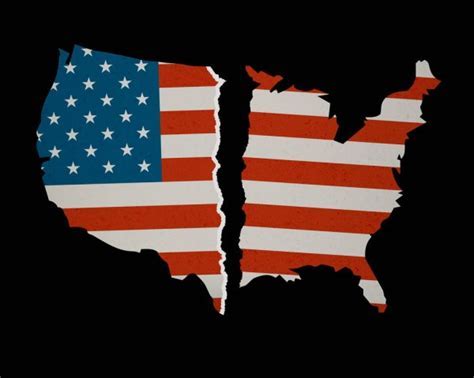
America is being torn apart from within by bad politics, leftist policies

Watching America collapse or, more accurately, be torn apart from within, is very disturbing. The country has had challenges before. Some of us remember the turbulence of the sixties. The Vietnam War, the hippies and the Civil Rights Movement all had things stirred up. But the country settled down after a while.

Today, the large number of “Americans” who do not know why our system of government is superior to the others, because they were not taught about it, did not learn about it when they were taught, or who just don’t accept it, is truly troublesome.

Barack Obama’s pledge to “fundamentally transform the United States of America” if elected should have started a revolution against that concept. Instead, due to the large number who disagree with and/or don’t understand our nation’s founding principles, it fired up a lot of people who agreed with that idea. Today we are seeing where that mindset has led us.

Our country is divided more than it has been since the Civil War. One political faction wants to change many things, frequently because “times have changed.” Things like doing away with the Electoral College that protects minority interests and getting rid of the Senate filibuster that helps discourage the introduction of highly partisan legislation, and makes it easier to pass one-sided legislation. 

It has also discussed packing the Supreme Court with liberal activists to make laws rather than to correctly interpret laws. This will strengthen and maintain leftist power in Washington for a long time.

And even though Joe Biden won the 2020 election with 81.3 million votes — the most ever — and with the highest voter turnout percentage since 1900, it wants to change election laws to “increase voter turnout.”

The other side, however, wants to protect and defend the brilliant concepts of the Founders that made America superior to every other governmental form yet conceived.

This conservative faction understands that the principles of the U.S. Constitution do not change with the winds of time, or the preferences of political parties. And it understands why they should not change. 

The “conservative” justices on the Supreme Court and other courts work to maintain founding principles, and to save the republic from the suicidal tendencies of the socialist/communist radical left.

Laws that protect people must be followed and protected. And people that cannot or will not live and act in compliance with those laws must be punished. The safety of the populace is of utmost importance in the workings of a good government.

Fortunately, the disastrous results of defund the police, no bail/low bail, and not punishing some crimes are being seen for the irrational blunders they are. Yet millions among us still want to change direction from that which brought us a strong nation, and they are having negative effects on our country.

Education, which has been made far less effective because of the fear surrounding the Covid virus, now is home to a movement, mostly in secret, to improperly change the history curriculum. Some of this occurs at the school board level, some at the school level, and some at the instructor level. And it has spread into other subject areas.

Critical Race Theory (CRT) has been sneaked into classrooms, and rather than teach children that each of them is a valuable individual, it classifies them as either an oppressed person, or an oppressor. The distinction depends not on individual character, but on skin color. 

Instead of encouraging kids to understand and get along with each other, CRT pits groups of kids against each other, further intensifying the discord we see.

Some school boards deny parents their right to express concerns at meetings, and deny them requested materials. Some board members tell parents “I don’t work for you.” Teachers unions resist the importance of getting back into the classroom, and restoring the learning environment.

Reactions to the Covid variants have had devastating effects on the country, and much of the world. Combined with the other issues, things are truly upside-down.

Advice from the scientists has been all over the board. Some of that is a normal part of learning to deal with a new disease. But two years in, there is beginning to be resistance to the control mechanisms put into effect to protect us. 

Governments and businesses mandate vaccinations. Vaccines are designed to keep people from getting a disease. Vaccines in the past have done that. The Polio, Tetanus and Measles vaccines, for example, prevent contracting those diseases. 

Some people use those vaccines to justify forcing Covid vaccinations. But there is a big difference. Covid vaccines do not prevent catching or transmitting Covid. They reportedly reduce the effects of the virus, but do not prevent catching or transmitting it.

And then there is the selective censorship by social media platforms that impede the free exchange of important ideas. It is aimed primarily at conservative politics, and the “approved” Covid messages.

Comments contrary to the approved message were taken down, labeled as “false information” by the self-appointed media judges. Much of that information, however, proved to be correct.

Free speech is guaranteed by the U.S. Constitution. Without the free expression of ideas — good and bad ideas — we are doomed.

Friday, August 20, 2021

About Dr. Fauci, and the importance of the marketplace of ideas

Dr. Anthony Fauci is the face and official voice of all that is going on with the Covid pandemic, and how we should respond to it. Depending upon whom you ask, Fauci is either one who walks on water, or one who lives in hell.

I am one of the likely few outside the healthcare and scientific communities who had heard of the man prior to the invasion of COVID-19. That previous knowledge kept me from bowing down to him, as so many have. But at the same time, it gave me reason to give him the benefit of the doubt on the mysteries of, and prescriptions for dealing with the pandemic.

In the 1980s when AIDS (acquired immunodeficiency syndrome) was a new thing, its causes were being investigated. Two schools of thought existed: one was that a human immunodeficiency virus (HIV) was the cause; the other was that long-term drug use and other factors that weaken the immune system were the cause.

Another scientist, Dr. Peter Duesberg, was prominent at that time. Duesberg isolated the first cancer gene through his work on retroviruses in 1970, and mapped the genetic structure of these viruses. This, and his continued work on viruses, resulted in his election to the National Academy of Sciences in 1986. He also received a seven-year Outstanding Investigator Grant from the National Institutes of Health.

Duesberg had made a name for himself in the scientific world. He is regarded as a specialist on viruses and retroviruses. He was a primary voice among those who argued that HIV is not the cause of AIDS.

One of the better-known opponents of Duesberg and his theory was, and is, Anthony
Fauci, and that is how I came to know who he is. Fauci has an MD degree and has worked in the National Institutes of Health, and as a clinical associate in the National Institute of Allergy and Infectious Diseases, which he now heads. He no doubt has learned things beyond what a practicing physician knows in some areas. But does he know more about viruses than a virology expert?

Duesberg’s position is that HIV is merely a passenger in AIDS, and not the cause, a position that draws derision from the HIV = AIDS faction.

Through the decades, viruses have been defeated by vaccines. Those include: flu, SARS, measles, hepatitis A and B, mumps, chickenpox, whooping cough, tetanus, polio, and recently COVID-19. However, to date, decades after AIDS came on the scene, there is no vaccine for HIV.

Is that perhaps because, as Duesberg maintains, AIDS is not caused by a virus?

* * *


In his new book, The Case Against the New Censorship: Protecting Free Speech from Big Tech, Progressives, and Universities, liberal Democrat and civil rights attorney Alan Dershowitz makes the case for an unrestricted “marketplace of ideas.”

John Stuart Mill is generally credited with originating the concept of the marketplace of ideas back in 1859. He argued against censorship and in favor of the free flow of ideas, claiming that the free competition of ideas is the best way to separate falsehoods from fact.

However, in certain social media platforms today, the controlling oligarchs, likely unaware of Mills and his position, insist on removing content they regard as false, or perhaps just inconvenient.

But that creates potential problems. Dershowitz wrote: “If Facebook, Twitter and YouTube take down content which they deem to be untrue, then at least some viewers may come to believe that content that is not taken down must have passed the test of truthfulness.”

“So, when social media get into the business of selectively censoring some untruths,” he continues, “it is they who may be promoting false belief in the alleged truth of the untruths they do not censor. It is a no-win situation.”

And then getting to what many believe is the deliberate muzzling of conservative comments, Dershowitz wrote that, “censorship is almost never content-neutral. Codes that purport to ban ‘offensive’ or ‘untruthful’ words are inevitably invoked selectively against politically incorrect words.”

With the free flow of ideas comes the likelihood of false or misleading information being published, which Dershowitz defends by saying “the costs of imposing a regime of censorship outweigh the costs of tolerating dangerous speech and its consequences.”

He describes the present efforts to control speech and thought as “the current regressive war against freedom of speech being waged by ‘progressives,’ social media moguls, university administrators, and other well-meaning but dangerous censors.”

“The marketplace of ideas is the best option for a democracy not because it always produces the best ideas,” he wrote, “but because like democracy itself, the alternatives are far worse.” And then the kicker: “[W]ithout freedom of speech, democracy cannot survive.”

* * *

And then there are these gems from Louisiana Republican Senator John Kennedy, who has been called the Will Rogers of our time:

“This election in Georgia will be the most important in history. You have nothing to worry about, unless you are a taxpayer, parent, gun owner, cop, a person of faith, or an unborn baby!”

And about some members of Congress: “how did these morons make it through the birth canal?”

Friday, March 12, 2021

Big Tech has grown too big, and is a true threat to our freedoms


America’s Founders recognized that certain rights existed that were absolute and unassailable, and that those rights were fundamental to the nation they had created. Before some states would ratify the new Constitution, they insisted that these rights be specifically detailed. And they were, in the first 10 amendments to the U.S. Constitution, the Bill of Rights.

Back in the day, we learned important elements of our nation’s founding in school. We studied the Bill of Rights, and learned that the First Amendment cited the five freedoms of religion, speech, the press, peaceful assembly, and petitioning government for the redress of grievances.

Religion and speech have been under attack off and on for a long time. Religion has been under strong attack lately, and now free speech has also become a target.

In many countries, what the people say and do is controlled by a dictatorial government. In America, where the Constitution limits what the government can do, the current attempt to kill free speech is being carried out by a political faction that has among its members the fat-cats who own the Big Tech companies.

The Big Tech companies whose disrepute has blossomed of late — Google, Facebook, Twitter, YouTube and Amazon — have grown too big for their britches. The oligarchs who own and run these giants have gained such riches that their over-fed egos persuade them that they can and should control the rest of us for their own narrow purposes.

The level of control of Big Tech reaches into the news we read, see and hear; information we find online; the ads we see and the things we buy; and discussions in the political sphere.

These platforms gather information on users about their likes and dislikes, the websites they visit, videos they watch, issues they are interested in, and their political party affiliation.

This information is used to make money and to influence how users think about many things. Even the results of online Google searches are determined by this user information.

The arrogance of Big Tech has produced the censoring on their platforms of a story in the New York Post on the questionable behavior of President Joe Biden’s son Hunter Biden. Social media platforms Facebook and Twitter banned the now-former President of the United States Donald Trump from their platforms. And Big Tech took down the upstart social media site Parler, which has now been reborn.

There are continuing issues regarding the censoring of political posts and comments by Republicans and conservatives. Things that do not favor the leftist/liberal side of things are frequently blocked or removed on the grounds that they violate some internal policy.

These policies supposedly protect the public from dangerous speech, which is not the job of social media platforms. They originally were available for users to have their say about any topic, except for things like promoting violence or illegal activities.

The vast majority of speech, even that which is highly offensive to some, has been determined through litigation to be protected by the First Amendment. Nevertheless, Big Tech owners and employees, who should not be the judges of the appropriateness of their users’ comments, continue to do so. And they condemn language like what has been determined by law to be okay. 

Since these “platforms” frequently abandon that realm in favor of behaving like “publishers,” which are expected to control speech to a higher degree, they should lose the protections of Section 230 of the Communications Decency Act of 1996, which protects platforms from lawsuits over content generated by users on their sites. It gives them the right to moderate content, but does not give them the responsibility to do so.

This allows platforms to operate without needing to moderate content, therefore, platforms must not go too far if they do moderate. Despite this, they continue censoring conservative speech.

Allum Bokhari, an author and technology correspondent, speaking to a conference of the Center for Constructive Alternatives at Hillsdale College, had the following comment in his address: “If Big Tech’s capabilities are allowed to develop unchecked and unregulated, these companies will eventually have the power not only to suppress existing political movements, but to anticipate and prevent the emergence of new ones. This would mean the end of democracy as we know it and place us under the thumb of an unaccountable oligarchy.”

Big Tech platforms are such a sham, I do not like them, Sam-I-Am.
They cheat, and censor what people say, but only those who don’t think their way.
They think they are king of what they do, but they must also be red, and not just blue.
Their egos swelled as they gained power, and now Big Tech needs a really cold shower.
They have gained the throne and now they are woke, but justice will be done if they go broke.

Freedom of speech must be protected. Big Tech should be sanctioned, regulated, or broken up into smaller, less powerful and less harmful units with little ability to control free speech. This would allow the public to express all but the most truly dangerous ideas, as platforms originally were.

Wednesday, December 02, 2020

We may not realize the degree to which free speech is under attack


Free speech is under attack across the country. The censoring of conservatives on Google, Twitter and Facebook is one form, and another form of censorship occurs in the news media when many of the nation’s largest and most read newspapers, and most watched and listened to broadcast media, report only some of the relevant news.

This bias of selecting some news over other news is dishonest and dangerous. It creates a situation where millions of Americans are quietly forced, through their reading, listening and watching habits, to make a wide variety of often significant decisions with only some of the important information they may need.

Free speech is also under attack at many of America’s institutions of higher learning. Colleges and universities once were the places where the expression of a variety of ideas was highly regarded and encouraged.

The Foundation for Individual Rights in Education (FIRE) recently released the results of what it called “the largest free speech survey of college students ever performed,” consulting roughly 20,000 students at a variety of institutions. 

The 55 colleges involved were chosen “to represent a variety of colleges in the United States, including large public universities, small private colleges, religiously-affiliated colleges such as Brigham Young University, and Ivy League colleges.”

The results are not encouraging.

Sixty percent of students said they could not express an opinion because of how students, a professor, or the administration would respond. This position was held by 73 percent of “strong Republicans” and 52 percent of “strong Democrats.”

Black students are most likely to report an instance where they censored themselves, with 63 percent taking this position. Here are three examples from survey participants on self-censoring:

* “I was in a class where the professor pretty much made you feel as if your participation grade was at risk if you disagreed with them.” — Black female at Georgetown University
 
* “Whenever it is obvious that some of my professors are on the left, I felt like I couldn’t express my political opinions due to my grades.” — Asian male at Clemson University
 
* The professors within my college tend to be conservative. I worry with certain professors that my opinion would cause them to unfairly grade my projects. — Hispanic female at the University of Arizona

The survey also found that just 15 percent of students — 11 percent of females and 19 percent of males — felt comfortable publicly disagreeing with a professor about a controversial topic.

The FIRE report notes that “a number of questions focused on a tension between feelings, or emotional reasoning, with logical inference and deduction.” And some faculty members explained that “a number of their students place a ‘supreme importance’ on their own feelings even when what they ‘feel’ is right is contradicted by empirical evidence.” Here are two students’ responses on this:

“Just in general. You have to be very careful of your words in order to avoid hurting anyone’s feelings. Sometimes it is very hard to debate on topics because of this.” — Multiracial male at Northwestern University

“Nearly every day I feel like I cannot express my opinion without hurting someone’s feelings.” — White female at Georgetown University

Over the last couple of years there have been several instances of speakers invited to campuses to speak, but were shouted down and sometimes threatened. Many of those speakers were unable to complete their speaking engagement.

FIRE found that Ivy League school students were slightly more in favor of using violence to stop a campus speech. Twenty-one percent — one of every five — expressed some level of acceptance for violence in such situations.

And, on whether it is “always” or “sometimes” acceptable to shout down a speaker in extreme conversations, only 15 percent of extreme conservatives agreed, while more than 60 percent of extreme liberals agreed.

FIRE rated the universities on a numerical scale, and color-coded them for Speech Code, meaning “whether college policies restrict student speech that is protected by the First Amendment.” The codes are: Green = Best; Yellow = Intermediate; Red = Worst; Pink = Warning.

The five institutions with the highest level of free speech are: University of Chicago, Kansas State University, Texas A&M University, University of California, Los Angeles, and Arizona State University, all with Green codes.

The five institutions with the lowest level of free speech are: Syracuse University, Dartmouth College, Yellow codes; and Louisiana State University, University of Texas, and DePauw University, Red codes.

No West Virginia institutions were among the 55 that were ranked, but two Virginia institutions were included. The University of Virginia was ranked 6th on the list with a high level of free speech, and a Green code. The Virginia Polytechnic Institute and State University (VPI) was ranked a respectable 8th with a mid-level Yellow code.

Censorship is a serious issue, one that is at odds with America’s First Amendment. Free speech is a cornerstone of this nation. 

There really is only one reason why someone or some group would exercise censorship: They are afraid their ideas will not be able to win when competing with different ideas, and therefore they will be unable to inflict their will on others. It’s about control.

Sunday, November 01, 2020

Reining in social media censorship, and ending the debate commission


There is increasing evidence supporting the idea that certain social media platforms are getting too big for their already huge britches. Two of them, Twitter and Facebook, cannot seem to kick the habit of censoring some of their participants.

As the owners of a platform, Twitter and Facebook have complete control of it, of course. And both of them have millions of users, thereby putting them in a very small class with a lot of weight to sling around.

And because of their huge number of users and the influence that those big numbers carry with them, they should not arbitrarily restrict or block what some users post, while leaving others alone to post as they please. 

We also need to keep in mind that these platforms are under no legal obligation to monitor the postings of their users for accuracy, only for certain criminal and intellectual property-based claims, as are those sites classified as “publishers.”

In fact, social media are protected from legal action for what their users post by 47 U.S.C. § 230, a Provision of the Communication Decency Act (CDA), unlike media that are considered publishers, such as newspapers and broadcasters.

Section 230 says that "No provider or user of an interactive computer service shall be treated as the publisher or speaker of any information provided by another information content provider." 

This means that online intermediaries that host or republish speech are protected against a range of laws that might otherwise be used to hold them legally responsible for what others say and do. Twitter and Facebook are not responsible for the truth/accuracy of any posts made by users, beyond the criminal and intellectual property-based claims mentioned earlier.

Despite the protections the CDA provides to social media, both Twitter and Facebook routinely block user posts/comments that breach their nebulous “rules of the road,” often on the premise of inaccuracy.

So why are Twitter and Facebook so concerned with what their users have to say on their platform, when they are under no legal obligation to be concerned about accuracy and such?

And, as it turns out, most or all of those censored posts/comments are made by … wait for it … conservatives/Republicans.

Among users that have been, and perhaps still are, arbitrarily blocked or restricted are President of the United States Donald Trump, White House press secretary Kayleigh McEnany, the satire site The Babylon Bee, and the 219-year-old New York Post, the fourth largest newspaper in the country. The latter had all references to a story it published on the Hunter Biden email situation removed/blocked by Twitter, even when made by other users.

Twitter CEO Jack Dorsey last week called it “unacceptable” that his site blocked users from sharing links to the Post story without providing a clear message as to why it was taking the action. But is that all that Twitter did that was improper?

“Social media companies have a First Amendment right to free speech. But they do not have a First Amendment right to a special immunity denied to other media outlets, such as newspapers and broadcasters,” FCC Chairman Ajit Pai tweeted recently.

Pai recently announced that the FCC plans to “clarify the meaning” of Section 230 that protects these tech giants from being held responsible for content posted by their users.

“The Commission’s General Counsel has informed me that the FCC has the legal authority to interpret Section 230. Consistent with this advice, I intend to move forward with a rulemaking to clarify its meaning,” Pai added.

Perhaps, if social media platforms are going to act like publishers, they will be held to the same legal standards and eligible for the same potential penalties, as are newspapers and broadcasters. Most likely, arbitrarily censoring some users for certain infractions, but not all of them, will carry serious penalties.

These Left-leaning platforms are all too happy to cheat to help push their political agenda. They should not be allowed to use their platforms to affect the beneficial information that users see, and perhaps especially when that information has influence on election choices.

* * *

The Presidential Debate Commission has come under criticism, particularly from President Donald Trump’s campaign and his backers on the political right, for what those critics charge are politically motivated actions.

Without getting into the weeds of those charges, the Commission is the sole agent that organizes the presidential debates, with all details based upon what its members alone decide.

Instead of using an independent commission, that could conceivably be biased, why not allow the campaigns of the two, or perhaps three, candidates who have the most support to work together to establish the details of the debates, including the number of debates, their locations, who the moderators will be, what topics will be included, etc.

With campaign officials agreeing on these details, there would be much less for individual campaigns to disagree with, and it might even produce better debates.

The debate commission system has been around for a long time. Maybe it is time for a new approach to presidential debates.