Pages

Showing posts with label Coal. Show all posts

Monday, May 18, 2026

The view of Earth’s energy production and climate is evolving

May 12, 2026

Climate and energy are two very important topics. They can be closely related and over the last few decades they have been very closely related. Very serious problems were predicted to effect Earth’s climate due to the damage fossil fuels were supposedly causing.

The Fulcrum7 website provided a list of predictions of disaster due mostly to our energy production that did not come true:

1) In 1970, S. Dillon Ripley, a wildlife conservationist who served as secretary of the Smithsonian Institute, warned that 75 percent to 80 percent of species would be extinct by 1995.

2) In 1970, Kenneth Watt, an ecologist and professor at the University of California, Davis, warned that "there won't be any more crude oil," that "none of our land will be usable" for agriculture, and the world would be 11 degrees colder by the year 2000. 

3) In 1970, biologist Paul Ehrlich at Stanford University warned that by the end of the decade up to 200 million people would die each year from starvation due to overpopulation, life expectancy would plummet to 42 years, and all ocean life would perish. 

4) In 1970, Peter Gunter, a professor at North Texas State University, predicted that "world population will outrun food supplies" and "the entire world, with the exception of Western Europe, North America, and Australia, will be in famine" by the year 2000.

5) In 1971, Dr. S. I. Rasool, an atmospheric scientist at NASA, predicted the coming of a "new ice age" within 50 years.

6) In 1975, Ehrlich, the Stanford biologist, warned that 90 percent of tropical rainforests and 50 percent of species would disappear within 30 years. 

7) In 1988, Hussein Shihab, environmental affairs director of the Maldives, warned that his island nation would be completely underwater within 30 years, which wouldn't even matter because experts also predicted the Maldives would run out of drinking water by 1992.

8) In 2004, a Pentagon analysis warned of global anarchy due to climate change.  Major European cities would be underwater by 2020, at which point Britain would suffer from a "Siberian" climate.

9) In 2008, Bob Woodruff of ABC News hosted a two-hour climate change special warning that New York City could be underwater by 2015, among other apocalyptic predictions.

10) In 2009, former vice president and climate activist Al Gore predicted the Arctic Ocean would have no ice by 2014, which is the same thing Greta Thunberg said would happen by 2022.

Al Gore also issued several other warnings that were false, including: Kilimanjaro’s no more snows within a decade; Glacier National Park glaciers gone by 2020; Polar ice caps ice free by 2016.

Enough scientists and others agreed with these predictions, forcing decisions on energy production that had significant negative influences on the American people, how they lived and where they worked. Fossil fuels, which were the primary sources of energy production for decades, were ruled dangerous, and wind and solar production were advertised as the solutions to the dangers of fossil fuels.

Coal-fired electric plants were closed or scheduled for closure. Mining operations were cut back or shut down. And the use of wind and solar facilities was increased.

As time has passed, the problems with wind and solar have become more well-known. Solar panels don’t work when the sun doesn’t shine, and wind turbines don’t work when the wind doesn’t blow. Thus, dependable 24-hour-per-day backup systems and large battery facilities are needed. 

Both wind and solar systems take up lots of land and use materials that are difficult and expensive to obtain, and their panels and turbines are also difficult or impossible to recycle after they wear out.

And now the scientific reality of clean, renewable energy being so much better is being weakened by scientific data from scientists who are not afraid to talk about the understated problems of wind and solar, and the overstated problems of fossil fuels.

A good many respected scientists say that not only is CO2 not the huge problem we have been told it is, but that we actually need more of it to contribute to plant growth, which will produce more oxygen and consume more CO2.

The reality of the problems of wind and solar, and the exaggerated story of CO2 problems caused by fossil fuels are now recognized for the damage they have done. We are seeing shut down coal-fired power plants reopening, along with the mining industry beginning a comeback.

Chris Hamilton, President of the West Virginia Coal Association, tells us that, “There are moments when events strip away the luxury of theory and force a return to first principles. This is one of those moments. Recently, President Donald Trump invoked the Defense Production Act to strengthen America’s coal supply chains and reinforce the backbone of reliable, affordable electric generation. The order authorizes federal support for mining, transportation, export and domestic terminals, generating unit availability, and long-term fuel security. It is a direct acknowledgment that coal remains indispensable to the stability of the American power system and to the broader national interest.”

The coal industry, so helpful to our area in the past, likely won’t reach its previous levels. But increased coal use will be a good thing.

Tuesday, July 01, 2025

Coal and the other fossil fuels are still very important


June 25, 2025

Anyone who has lived in, or spent much time in this region knows and understands the importance of the coal industry to its development. Without coal, so much that occurred and that we enjoyed would not have happened.

Tens of thousands of jobs and who knows how much money passed through the region due to the mining, sale and transportation of coal mined here to other places.

Over the next several years, Bluefield became the center of activity resulting from the coal boom that occurred several decades ago. It was the finance and shopping center for the southern West Virginia and southwestern Virginia coal fields. People came here from towns miles away because of Bluefield’s role in the coal industry, and the things it offered to them.

How many of us remember driving along Bluefield/Princeton Avenue and seeing dozens or hundreds of coal cars on the railroad tracks loaded with coal moving out of the railyard, and dozens more empty cars on their way back to be refilled?

This lasted for many years, and the area prospered during that time.

However, as life evolves, things change. New and better ways of doing things come to be, and the old ways gradually fade away. 

This process is slow, gradual and not very painful. The other side of that story occurs when some factions start pushing for change before its time, and with things other than the natural replacements.

Unfortunately, the latter process has been the catalyst for what has occurred in the southern West Virginia and southwestern Virginia region’s coal industry.

The idea that burning fossil fuels like coal and oil was damaging to the environment took hold and resulted in what some have called “a war on coal,” which produced the closing of coal burning power plants, and the large decline in the need for coal. At least in the United States.

But science does not agree with the idea that we have too much CO2 in the atmosphere, and that it is harmful. In fact, quite a few scientists say that we need more, as much as two times the amount of CO2. They say that would be a great benefit to plant life. Plants and trees consume CO2 and emit oxygen. Having more plants and trees is a good thing.

During President Donald Trump’s first term the U.S. became energy independent and provided energy sources to other countries. This highly robust level of production was so strong that it lasted well into the Biden administration, despite Biden’s efforts to stifle it. The U.S. produced a record amount of energy in 2023, and out-performed that the following year. 

Eventually, the Biden administration’s efforts did cripple the energy industry. Other countries were still burning coal, and needing coal, oil and gasoline, but they were getting it from other countries, resulting in an economic punch in the gut to U.S. businesses.

The problem with the green energy solution that so many prefer is that while using green energy does not burn fossil fuels or add CO2 to the atmosphere, producing the elements that gather wind and solar power do. All of the materials that must be mined, then transported, and put into production use great amounts of gas and oil.

Now that Trump has been re-elected to the presidency, his administration is working to reinstate the previous philosophy on fossil fuels.

A West Virginia organization — Friends of Coal — based in Charleston, is excited about this change. “The recent decision by the U.S. Environmental Protection Agency to roll back burdensome greenhouse gas and toxic emissions regulations marks a pivotal moment for America’s energy future — and a long-overdue reprieve for the coal, natural gas and oil industries that power our nation,” it said.

In its June 20 email, Friends of Coal included a couple of other bright spots:

“The Trump administration on Wednesday formally reinstated the National Coal Council, an advisory group focused on fossil fuels that existed for more than three decades before lapsing under the Biden administration. The Department of Energy in a Federal Register notice restored the group.”

“President Trump took two major steps this week to end the 14-year old ...Democrat war against the coal industry and cheap electricity. Although greens have promised to sue, they are unlikely to succeed as the moves have pretty much been pre-approved by the Supreme Court.”

Some other states, even some that are not coal producers, understand how important it is.

In South Carolina, the state legislature is considering the new S.C. Energy Bill. The bill provides for “all of the above forms of energy for electricity 

generation.” One of the bill’s supporters noted that “the lowest cost, most reliable power that the Low Country has had delivered for over 80 years is from Santee-Cooper with over 60% of that low-cost electricity coming from the primary energy of coal.”

While it is very unlikely that these changes will spur a recovery in the coal industry that puts it back where it once was, things should improve locally, at least some.

And, like other changes the Trump administration supports, these changes will take some time to emerge as is the case with gasoline prices. 

Saturday, March 01, 2025

Coal’s future is better than the climate change faction hoped


February 25, 2025

Those of us who have been around for a good while remember the days when dozens of train cars loaded with coal filled the Bluefield railyard and were seen moving coal on the tracks throughout the area. The immense effect coal had on the economics of the southern West Virginia and southwest Virginia regions was a greatly appreciated fact. That is what actually built much of the area.

Over the years, coal’s use has declined substantially, due to various factors, a major one of which is the climate change mania that took aim at coal, oil and natural gas as fuels. This action cost the region a heavy price.

The climate change faction has been sounding the alarm that there is a dangerous level of CO2 in the atmosphere, and it needs to be immediately lowered. However, many scientists argue against that opinion. They say the CO2 level should be doubled to increase the growth of plants that in return produce the oxygen that feeds humanity and animals.

Even if the climate mania narrative is correct, the US effort to reduce CO2 by mandating cutting back on coal, oil and natural gas use made little to no difference in the CO2 level. The “improvements” we made were rendered moot by the greatly increased use by other nations. So, while thousands were put out of work, and other negative economic results were achieved in the US, China and India made that all seem pointless.

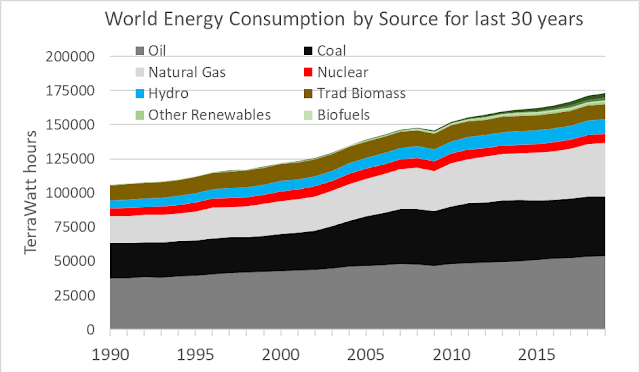
Friends of Coal is a non-profit organization based in Charleston, WV supporting the continued use of coal. “The supposed energy transition from fossil fuels to a suite of government-supported alternatives like wind and solar has always seemed more of a marketing campaign than reality,” a Friends of Coal newsletter stated. “It’s a transition that we are asked to believe has been ongoing since at least 2015 and the signing of the Paris Climate Accords, yet the percentage of primary energy supplied by oil, natural gas, and coal continues to hover right at the 80 percent level despite all the trillions of dollars in government subsidies thrown at the problem.”

Citing new leadership in West Virginia and the nation, Friends of Coal says that West Virginia’s coal industry has strong support for its part in “powering homes, businesses and national infrastructure.”

Coal also plays an important role in West Virginia’s economy by providing 15 percent of the state’s annual revenue and more than 50,000 jobs.

While coal’s part in producing electricity for the nation has been diminished over recent years, it is still active in that role, and is prepared to step up to help meet the predicted need for more electric power in the near future.

And the new US Secretary of Energy, Chris Wright, told interviewers at Bloomberg that the time has come to halt the closing of coal-fired power plants that resulted from the war on coal under the direction of former Presidents Barack Obama and Joe Biden. "Coal has been essential to the United States' energy system for over 100 years,” he said. “It's been the largest source of global electricity for nearly 100 years, and it will be for decades to come, so we need to be realistic about that.”

And there is more good news for the industry. Increases in coal’s existing uses, and new uses for it are on the horizon.

Forbes reports that “India and the U.S. are plugging a hole in the market for steel-making coal caused by declining Chinese demand,” and the “dominance by China for steel-making, or coking coal, is fading as the Chinese Government encourages a slowdown in steel production.”

A report on the World Economic Forum website suggests that the uses of coal have not been fully realized. Coal is a highly varied material and its molecular complexity has not been explored for new uses.

Where coal has been being refined into basic elements and then used as a feedstock for the chemical industry’s production of plastics, dyes and solvents, it now is thought to be a basis for producing solar panels, batteries and electronic devices. 

It may also be used in manufacturing carbon products. Whereas petrochemical or biomass feedstocks are now used for products like carbon fiber and carbon additives for cements and the like, coal is now seen as a likely substitute for these processes. And, it has the further advantage of being a fairly cheap base material, which is a very positive factor.

Other new developments are also helping make coal more useful and less polluting. Through gasification and liquefaction processes, coal can be converted into synthetic gases or liquids, and these products can be processed into valued chemicals like methanol and hydrogen, which are used in industrial processes.

And processes like high efficiency low emission technologies work to reduce the emissions of coal-fired power plants. Carbon capture and storage processes are being developed to prevent CO2 emission from entering the atmosphere.

These new developments in the use of coal hold promise for the industry. And while it might not grow the industry to its former size and influence, it could again become a strong economic factor in places like southern West Virginia and southwestern Virginia.

Thursday, November 21, 2024

Coal is still a valuable asset with many beneficial uses


November 19, 2024

Over recent years the amount of coal used in the US for producing electricity has dropped dramatically. This same decline can be seen across the globe, with 100 countries that have either gone coal-free or have set 2040 as a phase-out date.

The environmental movement is responsible for most of this, prompted by the Paris Agreement in 2015, where 75 nations focused on doing away with coal use by 2050. The environmental faction tells the story that burning coal is a major factor in what they say is the dangerous over-abundance of carbon dioxide (CO2) in Earth’s atmosphere.

To correct this problem, we must stop using fossil fuels like coal, oil and natural gas to produce electricity, power vehicles or other uses. Even if it is true that we have too much CO2 in the atmosphere — and more than a few scientists argue that position isn’t true — this perspective ignores that fossil fuels contribute to our lives in other ways that are quite useful in addition to producing the power on which we rely so heavily.

And let’s not ignore the idea of many scientists that the level of CO2 in our atmosphere not only should not be reduced, but should be doubled to promote the growth of plant life. Plants and trees consume CO2 and release oxygen, which is critical to human life, into the atmosphere.

On this topic, Mining Digital tells us that “The demise of steam coal — also known as thermal coal — has been well documented, as investors shy away from the fossil fuel that fired the Industrial Revolution and has been an energy mainstay pretty much ever since, save for the past decade or so. Yet one corner of the coal market is thriving: metallurgical coal, otherwise known as coking coal, and vital for making steel.”

Coal is a critical part of steel, and steel is a huge factor in so many things, such as in buildings, as reinforcing rods in concrete, in bridges, tools, ships, trains, cars, bicycles, machines, electrical appliances, furniture, and weapons.

Oil is also used in many things, like plastics, fertilizers, petrochemicals crayons, dishwashing liquids, deodorant, eyeglasses, tires, ammonia, lubricants, coolants and paints.

So, you see, these fossil fuels have other uses as well as their contribution to electricity production and propelling vehicles and other devices of various descriptions. But the Biden/Harris administration, with its myopic view of reality and the manic anti-fossil fuel attitude of the left, wants to destroy fossil fuels, and especially coal, which has been, and can still be, so valuable to our region.

While coal use is still declining, and coal-fired power plants are fewer and fewer, the rate of that decline has slowed recently, as power demand is rising for datacenters and manufacturing entities.

And a forecast from S&P Global Commodity Insights points to this as a lifeline for coal power. “But tech companies are building power-hungry datacenters to support new artificial intelligence applications. Additional demand from new datacenters will double in just a year, to 47,448 GWh (Gigawatt hours) between 2024 and 2025, and rise more than eightfold by 2030 to 199,982 GWh.”

President-elect Donald Trump named former New York Rep. Lee Zeldin to lead the Environmental Protection Agency (EPA). It is thought that the EPA will ease regulations affecting fossil fuel-fired power plants.

Trump said of Zeldin, who served in the House from 2015 to 2023, that he will ensure “fair and swift” deregulatory decisions. The result of this will be a boon to American businesses and still maintain the highest environmental standards.

Zeldin said in a recent statement that, “We will restore US energy dominance, revitalize our auto industry to bring back American jobs, and make the US the global leader of AI. We will do so while protecting access to clean air and water.”

E&E News offered this idea of what will happen. “Some of the most stringent rules enacted by the Biden administration will likely end up in the dust bin, such as the agency’s regulations to reduce climate pollution from power plants, according to analysts. Other standards may survive in a weakened form, like the administration’s rules to lower methane emissions.”

“I think the power plant rule is pretty easy for them to revoke,” said Jeff Holmstead, who served as EPA’s air chief under President George W. Bush. “There’s really no one in industry who supports that rule. People just think that EPA was entirely unrealistic.”

Fortunately for those businesses and individuals who support the continued use of coal, not only for power production, but also for the other uses it has, the onset of the Trump/Vance administration is a breath of fresh air. 

Reversing the Biden administration’s mindless restrictions on coal, oil and other fossil fuels will allow the US to regain its position as energy independent, bring back to our country the sale of coal and gas that was sent to other countries by Biden’s orders, and bring down the needlessly high prices for gasoline and diesel fuel.

These changes will not restore the thriving coal industry of a few decades ago, but will allow its use for energy production as well as other positive purposes that have recently come to light.

Friday, October 13, 2023

Coal has been and will be an important factor in our lives


October 10, 2023

Some of us remember the days of many years ago being in downtown Bluefield, West Virginia and looking at the then-Norfolk & Western railyard, and seeing dozens, perhaps hundreds of train cars filled with coal, waiting to be taken to market. We also saw dozens of empty cars waiting to be taken to the mines to be refilled.

Those were the days when Bluefield, southern West Virginia and southwest Virginia were bustling with businesses and higher populations, largely due to a vibrant coal industry. But, alas, things began to change, and Bluefield and the surrounding area are much different today as a result.

Changes to coal’s popularity and broad usage have had a big impact on our area and other coal-producing areas. Some of the change was due to normal evolution, as other fuels became more popular and took more of the market. 

But more recently it has been a deliberate effort to kill coal as a fuel, highlighted by President Joe Biden and his fellow “progressives” as they drive toward the goal of killing fossil fuels in the name of protecting the environment.

In addition to, or perhaps a part of that effort is the announcement by former New York City mayor and billionaire Michael Bloomberg of a $500 million commitment to expand the Beyond Carbon campaign. Its goal is to close the nation’s remaining coal-fired power plants, to cut natural gas plant capacity in half, and stop any new gas plants from being opened within the next six years.

An email from the West Virginia Coal Association (WVCA) contains a statement from the president of the Pennsylvania Coal Alliance, Rachel Gleason. She commented that “It is an absolute attack on our state, our livelihoods, and our families. It is un-American that someone would use their wealth to destroy our state and nation’s industrial base and also seek to send a large segment of the 381,000 American workers in industry to the unemployment line while destabilizing electric reliability and security in America.” 

Likewise, our area will be further affected by this action. And Chris Hamilton, President of the West Virginia Coal Association, expressed his concerns about the future if this effort continues: “Energy experts agree that the U.S. will not have enough reliable energy production to meet demand, and Bloomberg’s efforts, if successful, may result in black- and brown-outs across the country. Bloomberg, the ultra-liberal national Democrat Party, and their environmental extremist group co-conspirators are marching America off an energy cliff and dooming American families to darker days.”  

This also concerns other coal-producing states. Wyoming’s Mining Association Executive Director, Travis Deti, also commented on this development. “It truly is astonishing to see an eccentric billionaire spend his fortune on cutting off people’s electricity. Bloomberg should be held accountable for his callous actions.”

In a communication from the WVCA, Hamilton tells about the coal industry today, and paints the dismal picture that West Virginia faces: “Remarkably, there’s been over $8 billion dollars in new investments in West Virginia mining operations over the past several years, including approximately $2 billion in 2022-2023. These investment dollars may not be of much value to those chasing shiny objects or, like President Biden, forcing a questionable transition away from fossil energy, but to 50,000-plus West Virginians who show up at a mine every day it is extremely important, and will serve to keep our state’s coal industry a vital part of West Virginia’s economy for decades to come.

“The impact the production of met coal alone has on West Virginia is significant, generating approximately $9.6 billion in total economic activity, supporting about 30,500 jobs, contributing nearly $554 million in tax revenue for US state and local governments, and producing about $2.5 billion in labor income in 2019. West Virginia is the leading producer of met coal nationally and we supplied nearly 63 percent of all the met coal distributed to U.S. coke plants.

“The coal industry also provides jobs in predominantly more rural areas of the state, allowing employees who choose to work in the sector the opportunity to stay in their communities.”

Whether the efforts of Biden and the others in the manic drive away from fossil fuels are built upon a true concern for the environment, or just one more effort to increase the level of control government has over the people it is designed to serve, is open to debate.

But if they were giving any value to the many scientists who say the war on CO2 is based upon faulty data, and that the country will not be able to function satisfactorily without a substantial amount of fossil fuel energy for many years in the future, they would not be so blindly determined to continue this war.

Some of the information presented comes from America's Coal Associations (ACA) which represent 381,000 American Workers and $261 billion in America’s economy. The ACA issued its statement on behalf of a dozen coal organizations across the country.

The problems of killing coal and the other fossil fuels are far from over.

Saturday, July 22, 2023

Could the region possibly see a return of the good old days?


July 18, 2023

Those of us fortunate enough to be around this area in the 40s, 50s and 60s probably remember what Bluefield was like, back then. One of my vivid memories is in the years after WHIS-TV went on the air in 1955. The TV station and its radio siblings, WHIS-AM and FM were located on the third floor of what was then the Municipal Building on Bland Street, and is now the Arts Center.

I liked the TV and radio stations and hung around there a good bit. I remember standing at the windows overlooking Bland Street at 5:00 p.m. watching two lanes of bumper-to-bumper traffic slowly crawling out of the downtown area. 

At that time the downtown was filled and thriving: clothing stores, furniture stores, pharmacies, office buildings, banks, a music store, hotels, restaurants, a newspaper, railroad buildings, and more. Bluefield was the shopping center and banking center for the southern West Virginia and southwest Virginia coal fields, where tens of thousands of regional residents lived and worked.

The rail yard was filled with hundreds of train cars, both those dozens filled with coal getting ready to head out, and those empty cars ready to be filled up again. Empty tracks were not visible until you were out of the downtown area of both Bluefields.

The coal industry isn’t what it once was, due to natural and manmade events. Coal became naturally replaced for some uses by other fuels. But it also was targeted by governments, which caused great distress well before the job and business losses should have occurred, and over a much shorter time period than was either necessary or judicious.

Today, a large faction wants coal and other fossil fuels to be abandoned in favor of cleaner, “green” energy sources. But fortunately, there is still a need for these fuels, not only in America, but across the globe.

“Coal is an abundant natural resource that can be used as a source of energy, as a chemical source from which numerous synthetic compounds (e.g., dyes, oils, waxes, pharmaceuticals, and pesticides) can be derived,” Britannica.com explains, “and in the production of coke for metallurgical processes,” such as making steel.

Although burning coal for heat and energy are heavily opposed, coal is still a major source of energy for electricity, particularly in other countries like China and India. Also, the gasification and liquefaction of coal produce gaseous and liquid fuels that can be easily transported by pipeline and stored in tanks.

Britannica.com adds, “After the tremendous rise in coal use in the early 2000s, which was primarily driven by the growth of China’s economy, coal use worldwide peaked in 2012. Since then coal use has experienced a steady decline, offset largely by increases in natural gas use.”

For coal reserves, only China has more than the U.S., but the U.S. has nearly twice as much recoverable coal as China. And the industry is working to make burning coal a cleaner process.

“Meanwhile, more than a quarter trillion tons of coal lie underfoot, from the Appalachians through the Illinois Basin to the Rocky Mountains—enough to last 250 years at today's consumption rate,” according to National Geographic. “You hear it again and again: The U.S. is the Saudi Arabia of coal. About 40 coal-burning power plants are now being designed or built in the U.S., [and] China, also rich in coal, could build several hundred by 2025.”

Clearly, there is and will be for a long time the need for coal produced in the two Virginias, and elsewhere.

Chris Hamilton, President & CEO West Virginia Coal Association, sent out an email thorough Friends of Coal recently, saying, “Throughout our state’s 160-year history, the coal industry has been a major driver behind West Virginia’s economy and billions of dollars of new investment will ensure that similar benefits are generated for the next 160 years.

“Despite all the hype you hear about a zero-carbon economy and transitioning to renewable, or intermittent energy forms, West Virginia’s metallurgical and thermal coals will continue to drive our economy while remaining a stable component of our state and nation’s energy mix,” he wrote.

The email contained some other relevant information:

* World coal use is growing with over 8 billion tons consumed in 2022.

* Coal accounts for over 50 percent of West Virginia’s total export product.

* West Virginia-produced coal accounts for over 40 percent of our nation’s total coal exports.

* Forty countries and 30 states rely on West Virginia coal to power their energy needs.

* West Virginia produces the highest quality metallurgical coal found anywhere in the world and 69 percent of the base fuel for domestic steel making.

The coal industry may not again become the powerful local economic engine it was back in the day, but it is still responsible for over $14 billion in annual economic activity for the state, provides 50,000-plus West Virginia jobs, and provides substantial severance tax collections for the state.

The coal reserves in our region constitute an opportunity to provide a product that the nation and the world will need for quite a while in the future, and an economic boost for the region.


Thursday, November 03, 2022

Fossil fuels do much, much more than just produce harmful CO2


November 1, 2022

While President Joe Biden and those in the green movement are working hard to rid the world of fossil fuels because of the CO2 they produce, a broader understanding of all the things fossil fuels do might help our perspective.

Oil, natural gas, and coal, are fossil fuels that we use for heat, electricity and to power vehicles. However, they are also a source of raw materials that are used in the manufacturing of many products. Among these is plastic. “Most of the plastics we use are of synthetic origin from petroleum,” according to Global Recycle. “They are simple to manufacture, and the processes are low cost.”

Yes, it is true that too much plastic in many ways causes some problems. But in other ways plastic is a very useful material. Think of all the ways plastic is used today, and all of the products that we would not have without it. 

The most common use of fossil fuels is to power vehicles and planes with gasoline, diesel fuel and jet fuel. But of the 42.6 gallons of oil in a barrel, only about 35 gallons are used for these fuels. The rest of the crude oil is used to manufacture other useful products.

Some of the other materials are petroleum jelly, asphalt, synthetic rubber, paraffin wax, fertilizers, pesticides, detergents, paints, upholstery, carpets, floor wax, insecticides, tires, nail polish, dresses, basketballs, soap, anesthetics, body lotions, deodorants, toothpaste, and even our food is preserved with a little help from fossil fuels.

During the campaign in New Castle, New Hampshire back in 2019, Biden said: “I want you to look at my eyes. I guarantee you, I guarantee you we’re going to end fossil fuels.” But that wasn’t all. He added, “No more subsidies for the fossil fuel industry. No more drilling, including offshore. No ability for the oil industry to continue to drill, period,” he said of his energy policies if he won the election. “It ends.”

If he succeeds, there will be a hefty price to be paid by the people he was elected to serve, replacing thousands of jobs and the long list of products that we buy and use today that we get from fossil fuels. Biden has engaged in fulfilling his promise, cancelling the Keystone XL pipeline on January 20, 2021, and other actions that followed.

The idea that fossil fuels actually have beneficial qualities may shock some people. But it is the truth. Even some, or maybe many, of those who don’t buy into the catastrophic theme surrounding the use of oil, natural gas and coal may not realize the broad range of things that fossil fuels give us.

The negatives seem to be the controlling theme. Fossil fuels are bad because they produce CO2, which is dangerous to the environment, and to our existence. Nuclear energy and hydro energy produce no CO2, which is good. But many people also oppose these two alternatives.

Wind and solar power, on the other hand, are championed by the anti-fossil fuel group as the saviors of our planet. And if we don’t replace fossil fuels with them in a fairly short time, we are doomed, they tell us.

Yet, these same people oppose the processes involved in producing windmills and solar panels, like mining and great amounts of industrialization.

The author of The Moral Case for Fossil Fuels, Alex Epstein, has a new book out. Fossil Future: Why Global Human Flourishing Requires More Oil, Coal, and Natural Gas — Not Less.

In chapter 10, he wrote that “Since 1980, the percentage of humanity living on less than $2 a day has gone from 42 percent to under 10 percent today.” This is attributed to “increasing productivity, which is driven by the increasing and expanding use of fossil fueled machine labor and the enormous amounts of mental labor it frees up.”

Making life easier and less expensive for millions of people across the globe, including the poorest of us, is certainly a positive development. And continuing improvement in pollution-control technology will make it possible for even more of the poorest on Earth to use fossil fuels “to lift themselves out of poverty with less and less pollution,” Epstein wrote.

“All of this means more first light bulbs, more first refrigerators, more first rewarding jobs, more first years with a consistently full stomach, more first years drinking consistently clean water, more first years being comfortable no matter what the weather,” he wrote.

He explains how much more there is to the story of fossil fuels than the CO2 they produce. And as technology advances, cleaner burning fossil fuels result. America produces the cleanest crude oil in the world. And we should also remember that CO2 is fertilizer for trees and other plant life that then produce and release oxygen into the air. 

Billions of people rely on inexpensive fossil fuels for energy, and that number continues to grow. But the more expensive “renewable” energy sources are beyond their financial means.

So, while technology works to clean up fossil fuels, and to make the cleaner renewable sources more functional and affordable, we need to utilize all the benefits that fossil fuels provide.

Thursday, October 01, 2020

America’s energy picture is very good, and getting even bette


In 2019, for the first time since 1957, America’s energy production exceeded its energy consumption, the U.S. Energy Information Administration (EIA) reports. And energy exports exceeded imports for the first time since 1952.

Fossil fuels — coal, natural gas and petroleum — accounted for 93 percent of U.S. energy production in 1966, and despite the arrival of new fuels for energy production, fossil fuels still accounted for 80 percent of our energy production last year.

Over the last decade coal has been replaced as the leading fuel for energy production, due to both natural and unnatural causes, by natural gas, which has seen a dramatic increase over that same period. Hydraulic fracturing — fracking — has spawned great increases in both oil and natural gas production, making natural gas more affordable, thus favored for electricity production.

Renewable sources — primarily wind and solar — have seen production increases over the last two decades, but are currently responsible for only about 12 percent of electricity production.

The U.S. has maintained the title of number one producer of natural gas since surpassing Russia in 2011, and it became the number two producer of oil, surpassing Saudi Arabia, in the last couple of years. Further, the U.S. now exports more oil than most OPEC countries, and exports liquified natural gas to 38 countries.

One definition of energy independence is when a country produces more energy than it consumes. By this definition, the U.S. is energy independent. However, things are frequently less simple than they seem. Even though the U.S. exports excess energy, it still imports energy, and is therefore is not purely energy independent. Some experts contend that it is important that we continue to do business with other producers, and buying from them as well as selling to them is smart, they say.

There are currently 3 million workers in good-paying U.S. jobs in the natural gas and oil workforce, many of whom work in skilled trades and science, technology, engineering and mathematics fields, according to the American Petroleum Institute (API). Among those jobs are construction workers, operating engineers, pipefitters, plumbers and boilermakers, as well as data analysts and computer scientists. Another 5.86 million jobs are in the supply chain for the oil and gas industry.

The API further notes that average annual pay in the industry is near $100,000, and that is almost $50,000 higher than the national average. And, there is the projection of 1.9 million additional jobs by 2035. API also reported that “the energy industry is poised to provide stable livelihoods to an expanding workforce – one increasingly comprised of veterans, women and minorities.”

Globally, NS Energy ranks oil as the most utilized fuel at 39 percent of all fuels; followed by coal at 28 percent; natural gas at 22 percent; hydroelectricity at 6 percent; nuclear at 4.4 percent; geothermal, biomass and waste at 0.4 percent; and solar at 0.03 percent.

Clearly, there is a world-wide need for the fuels America produces, and combined with the country’s needs, the energy sector is a provider of a lot of good-paying jobs. 

Enter, stage left, Joe Biden, Democrat nominee for President of the United States. In the Democrat primary debate, Sen. Bernie Sanders, I-Vt., said: "I'm talking about stopping fracking as soon as we possibly can. I'm talking about telling the fossil fuel industry that they are going to stop destroying this planet — no ifs, buts and maybes about it." To which opponent and former Vice President Joe Biden said, “So am I.”

Not long after agreeing with Sanders, his campaign issued a retraction. And more recently, Biden told union workers, "I am not banning fracking. Let me say that again. I am not banning fracking.”

He told his Democrat comrades one thing, and wooed his union voters with an opposite message. Which one should we believe? Maybe Biden himself isn’t sure.

A Biden-Harris administration — or a Harris-Biden administration, whichever it is — can only do great harm to the burgeoning oil, gas, and coal industry that has such a bright future providing needed fuels to the world, and jobs to the U.S.

Biden has pledged to the climate change faction that fossil fuel use in the country will end by 2035. Bye-bye 5 to 10 million industry jobs. Including fracking. That should make the folks in fracking states like Ohio, Pennsylvania, Colorado and Texas very unhappy.

But replacing fossil fuels with renewables is not as easy as we are led to believe. Those technologies are not currently up to the job, and producing solar panels and wind turbines is a huge, and not environmentally friendly, challenge.

Producing elemental silicon pure enough for solar PV cells requires an enormous amount of electricity, and turning raw silicon into finished wafers pure enough for solar cells involves several toxic and corrosive materials. 

Windmills kill thousands of flying creatures annually, and require enormous amounts of concrete. Both solar and wind utilize large amounts of land dedicated to the production of electricity. And worn out enormous turbine blades are not recyclable, meaning they will forever clog up landfills.

Biden and others supporting renewable energy as an easy and non-problematic solution to supposed climate change are deceiving the public.