Pages

Showing posts with label CO2. Show all posts

Monday, May 18, 2026

The view of Earth’s energy production and climate is evolving

May 12, 2026

Climate and energy are two very important topics. They can be closely related and over the last few decades they have been very closely related. Very serious problems were predicted to effect Earth’s climate due to the damage fossil fuels were supposedly causing.

The Fulcrum7 website provided a list of predictions of disaster due mostly to our energy production that did not come true:

1) In 1970, S. Dillon Ripley, a wildlife conservationist who served as secretary of the Smithsonian Institute, warned that 75 percent to 80 percent of species would be extinct by 1995.

2) In 1970, Kenneth Watt, an ecologist and professor at the University of California, Davis, warned that "there won't be any more crude oil," that "none of our land will be usable" for agriculture, and the world would be 11 degrees colder by the year 2000. 

3) In 1970, biologist Paul Ehrlich at Stanford University warned that by the end of the decade up to 200 million people would die each year from starvation due to overpopulation, life expectancy would plummet to 42 years, and all ocean life would perish. 

4) In 1970, Peter Gunter, a professor at North Texas State University, predicted that "world population will outrun food supplies" and "the entire world, with the exception of Western Europe, North America, and Australia, will be in famine" by the year 2000.

5) In 1971, Dr. S. I. Rasool, an atmospheric scientist at NASA, predicted the coming of a "new ice age" within 50 years.

6) In 1975, Ehrlich, the Stanford biologist, warned that 90 percent of tropical rainforests and 50 percent of species would disappear within 30 years. 

7) In 1988, Hussein Shihab, environmental affairs director of the Maldives, warned that his island nation would be completely underwater within 30 years, which wouldn't even matter because experts also predicted the Maldives would run out of drinking water by 1992.

8) In 2004, a Pentagon analysis warned of global anarchy due to climate change.  Major European cities would be underwater by 2020, at which point Britain would suffer from a "Siberian" climate.

9) In 2008, Bob Woodruff of ABC News hosted a two-hour climate change special warning that New York City could be underwater by 2015, among other apocalyptic predictions.

10) In 2009, former vice president and climate activist Al Gore predicted the Arctic Ocean would have no ice by 2014, which is the same thing Greta Thunberg said would happen by 2022.

Al Gore also issued several other warnings that were false, including: Kilimanjaro’s no more snows within a decade; Glacier National Park glaciers gone by 2020; Polar ice caps ice free by 2016.

Enough scientists and others agreed with these predictions, forcing decisions on energy production that had significant negative influences on the American people, how they lived and where they worked. Fossil fuels, which were the primary sources of energy production for decades, were ruled dangerous, and wind and solar production were advertised as the solutions to the dangers of fossil fuels.

Coal-fired electric plants were closed or scheduled for closure. Mining operations were cut back or shut down. And the use of wind and solar facilities was increased.

As time has passed, the problems with wind and solar have become more well-known. Solar panels don’t work when the sun doesn’t shine, and wind turbines don’t work when the wind doesn’t blow. Thus, dependable 24-hour-per-day backup systems and large battery facilities are needed. 

Both wind and solar systems take up lots of land and use materials that are difficult and expensive to obtain, and their panels and turbines are also difficult or impossible to recycle after they wear out.

And now the scientific reality of clean, renewable energy being so much better is being weakened by scientific data from scientists who are not afraid to talk about the understated problems of wind and solar, and the overstated problems of fossil fuels.

A good many respected scientists say that not only is CO2 not the huge problem we have been told it is, but that we actually need more of it to contribute to plant growth, which will produce more oxygen and consume more CO2.

The reality of the problems of wind and solar, and the exaggerated story of CO2 problems caused by fossil fuels are now recognized for the damage they have done. We are seeing shut down coal-fired power plants reopening, along with the mining industry beginning a comeback.

Chris Hamilton, President of the West Virginia Coal Association, tells us that, “There are moments when events strip away the luxury of theory and force a return to first principles. This is one of those moments. Recently, President Donald Trump invoked the Defense Production Act to strengthen America’s coal supply chains and reinforce the backbone of reliable, affordable electric generation. The order authorizes federal support for mining, transportation, export and domestic terminals, generating unit availability, and long-term fuel security. It is a direct acknowledgment that coal remains indispensable to the stability of the American power system and to the broader national interest.”

The coal industry, so helpful to our area in the past, likely won’t reach its previous levels. But increased coal use will be a good thing.

Saturday, September 20, 2025

An effective challenge to the climate catastrophe narrative

Sept. 16, 2025

Despite the desperate efforts of the climate catastrophe crowd, very good opinion pieces arguing against their narrative keep being released. Another one appeared in the Wall Street Journal, written by Steven E. Koonin.

The article, titled, “At Long Last, Clarity on Climate,” began: “A recent Energy Department report challenged the widespread belief that greenhouse gas emissions pose a serious threat to the nation. It likely soothed Americans irked by forced energy transitions, but you would be wrong to assume it reassured many alarmed by hypothetical climate catastrophes.” 

Koonin, who is an author and a senior fellow at Stanford’s Hoover Institution, continued, writing that “There is a disconnect between public perceptions of climate change and climate science — and between past government reports and the science itself. Energy Secretary Chris Wright understands this. It’s why he commissioned an independent assessment by a team of five senior scientists, including me, to provide clearer insights into what’s known and not about the changing climate.”

He noted that this group has more than 200 years of research experience collectively, most of which was closely related to climate studies.

“The resulting peer-reviewed report is entirely our work, free from political influence — a departure from previous assessments,” he wrote. “It draws from United Nations and U.S. climate reports, peer-reviewed research, and primary observations to focus on important aspects of climate science that have been misrepresented to nonexperts.” 

Among the report’s key findings:

• Elevated carbon-dioxide levels enhance plant growth, contributing to global greening and increased agricultural productivity. 

• Complex climate models provide limited guidance on the climate’s response to rising carbon-dioxide levels. Overly sensitive models, often using extreme scenarios, have exaggerated future warming projections and consequences. 

• Data aggregated over the continental U.S. show no significant long-term trends in most extreme weather events. Claims of more frequent or intense hurricanes, tornadoes, floods and dryness in America aren’t supported by historical records. 

• While global sea levels have risen about 8 inches since 1900, aggregate U.S. tide-gauge data don’t show the long-term acceleration expected from a warming globe. 

• Natural climate variability, data limitations and model deficiencies complicate efforts to attribute specific climate changes or extreme events to human CO2 emissions. 

• The use of the words “existential,” “crisis” and “emergency” to describe the projected effects of human-caused warming on the U.S. economy finds scant support in the data. 

• Overly aggressive policies aimed at reducing emissions could do more harm than good by hiking the cost of energy and degrading its reliability. Even the most ambitious reductions in U.S. emissions would have little direct effect on global emissions and an even smaller effect on climate trends. 

Koonin notes that this group’s report is the first in a good while that challenges the narrative of catastrophic climate change, and that many people are surprised by it because government has failed to accurately communicate climate science.

What is commonly called “climate science” is often more like “climate crises.” The idea is to scare people about the climate so that they will comply with the narrative and the proposed actions to protect us from catastrophe. 

So many of the previous predictions of devastation have not been correct. Here are some of the many examples of false predictions and the year in which they were made:

1967: Dire Famine Forecast by 1975

1969: Everyone Will Disappear in a Cloud of Blue Steam by 1989

1970: Urban Citizens Will Require Gas Masks by 1985

1971: New Ice Age Coming by 2020 or 2030

1988: Maldive Islands will Be Underwater by 2018

1989: Rising Sea Levels Will Obliterate Nations if Nothing Done by 2000

1989: UN Warns Global Warming Will Wipe Nations Off the Face of the Earth by 2000 

2000: Snowfalls Are Now a Thing of the Past

2002: Famine In 10 Years If We Don’t Give Up Eating Fish, Meat, and Dairy

2005: Manhattan Underwater by 2015

2008: Arctic will Be Ice Free by 2018

2008: Climate Genius Al Gore Predicts Ice-Free Arctic by 2013

2009: Climate Genius Prince Charles Says We Have 96 Months to Save the World

In 2024 the National Oceanic and Atmospheric Administration website published the components of our atmosphere, and the dreaded CO2 (carbon-dioxide), the gas that is blamed for leading us to a ¬catastrophic future, makes up just .04% of it. 

Some scientists say that we need twice as much CO2 to enhance plant growth, and more plants produce more oxygen. And they say that reducing the .04% level by half would seriously endanger plant and human life. 

Others who support the global warming theory, admit that lower CO2 levels would lead to lower — perhaps much cooler — temperatures, since CO2 is credited for raising temperatures.

“Climate policies must balance the risks of climate change against a response’s costs, efficacy and collateral effects,” Koonin wrote. “Reports like ours may draw a lot of anger but our work accurately portrays important aspects of climate science. Acknowledging the facts is essential for informed policy decisions.”

Given the large number of climate catastrophes that have been predicted, and that have not occurred, and given the relatively moderate current atmospheric conditions, perhaps we should relax on this topic.

Saturday, June 07, 2025

The One Big Beautiful Bill and the environment in the news

June 3, 2025

A very hot topic in the news lately is the Republican’s “One Big Beautiful Bill Act” (OBBB) that passed the House by a razor-thin margin and is now before the Senate. As with many bills of this kind, there are good things, and not-so-good things, in it. And, predictably, the Democrats are 100% against the bill, and even some Republicans have issues with it.

There will be much activity in the Senate for members to get things taken out they don’t like, or to moderate things to make them more acceptable.

And like so many others, this one breaks a common-sense idea about legislation. The OBBB is 1,100 pages long and proposes tax cuts and spending cuts, as well as several other subjects that are not related to each other. The bill contains many things that Republicans and President Donald Trump like and want, hence its title. 

However, as a practical matter, bills before Congress should address 1 item, or maybe a couple that are very closely related, and not be as long as, or longer than, a best-selling novel.

Bills are often used to sneak in a controversial topic that a small number of the members support. It might get passed because the primary topic or topics are very popular, and voting against the bill because of the sneaked-in aspect would not sit well with constituents. Also, having a number of different topics in a bill makes it longer and harder to get through, as well as more difficult to understand and to develop a level of support or opposition.

Ideas about changes to the OBBB are being suggested. The Club for Growth, for example, has a list of 21 “potential improvements,” including: 
* Full and immediate repeal of the Inflation Reduction Act  
* Cut marginal tax rates for individuals 
* Reduction to Corporate Income Tax rate 
* Enhance the qualified business income deduction from 23% to 40% 
* Reduction of capital gains and dividends taxation/investment income 
* Index Capital Gains to Inflation 
* Allow all Americans to save for their futures tax-free through Universal Savings        Accounts 
* Prohibit funding for sanctuary cities 
* Eliminate the SALT deduction 
* Extend Work Requirements to all anti-poverty welfare benefit programs
* Sell federal land

There are also a few articles dealing with the environment that are not widely available. Some of them challenge the popular narrative, while others discuss topics less common than those to which we are accustomed. 

Dr. Roy Spencer is a former NASA scientist, climatologist, author, and former Visiting Fellow in The Heritage Foundation’s Center for Energy, Climate, and Environment. He offered this information in a Heritage Foundation article. 

“Warming of the global climate system over the past half-century has averaged 43 percent less than that produced by computerized climate models used to promote changes in energy policy. In the United States during summer, the observed warming is much weaker than that produced by all 36 climate models surveyed here. 

“While the cause of this relatively benign warming could theoretically be entirely due to humanity’s production of carbon dioxide from fossil-fuel burning, this claim cannot be demonstrated through science. At least some of the measured warming could be natural. Contrary to media reports and environmental organizations’ press releases, global warming offers no justification for carbon-based regulation.”

Two “Key Takeaways” from the Heritage article are:
* Climate models that guide energy policy do not even conserve energy, a necessary condition for any physically based model of the climate system.
* Public policy should be based on climate observations—which are rather unremarkable—rather than climate models that exaggerate climate impacts.

Appearing in emails and elsewhere is this: “After nearly two decades of accelerating ice loss (with losses reaching about 142 billion tons per year from 2011–2020), Antarctica saw a dramatic shift between 2021 and 2023.

“During this period, satellite data (GRACE and GRACE-FO missions) show the Antarctic Ice Sheet gained about 108–119 billion tons of ice per year.

This gain was especially pronounced in four major glacier basins in East Antarctica (Totten, Moscow University, Denman, and Vincennes Bay), which had previously been rapidly losing mass.”

Another article discussed a lesser-known factor that affects our environment. “A recent scientific study confirms that changes in Earth’s orbit play a key role in triggering ice ages. These shifts, known as Milankovitch cycles, affect the planet's climate over tens of thousands of years by altering the amount of sunlight reaching Earth. Based on current orbital patterns, researchers estimate that the next ice age could begin within the next 11,000 years. This discovery deepens our understanding of Earth's long-term climate cycles and the natural forces that drive major environmental changes.”

And Researchers from ETH Zurich and the Carnegie Institution for Science say Earth is cooling far faster than we thought — and will turn into a dead, rocky planet like Mars much sooner than expected.

Our environment is very complex, with factors of which most people are unaware that affect it. They are rarely talked about outside of scientific circles. But they have an effect on the environment that cannot be ignored. We must always be aware of the “big picture” of our environment.

Wednesday, April 23, 2025

An atmospheric scientist “clears the air” on climate change


April 22, 2025

The debate about global warming — or climate change, as some prefer to call it — goes on. There are essentially two sides to this debate, those who believe the environment is under attack by carbon dioxide (CO2), and those who think CO2 is not really a problem. There are regular people on both sides of the debate, and there are also scientists on both sides of it.

One scientist with significant credentials divides those who are pro and con on the global warming/climate change debate into three groups. Two of those groups are scientists, and group three, he says, are mostly politicians, environmentalists and the media.

The authority cited is Richard Lindzen, who was professor of atmospheric sciences at the Massachusetts Institute of Technology (MIT) for 30 years, who wrote an article for Prager University. During his professional life, Lindzen has published more than 200 scientific papers. He notes that in his 30 years at MIT, “the climate has changed remarkably little.”

He says that during that time, “the cry of ‘global warming’ has grown ever more shrill. In fact, it seems that the less the climate changes, the louder the voices of the climate alarmists get. So, let’s clear the air and create a more accurate picture of where we really stand on the issue of global warming.”

He begins by describing the three groups involved in the debate: “Group one is associated with the scientific part of the United Nation’s International Panel on Climate Change or IPCC (Working Group 1). These are scientists who mostly believe that recent climate change is primarily due to man’s burning of fossil fuels — oil, coal and natural gas. This releases C02, carbon dioxide, into the atmosphere and, they believe, this might eventually dangerously heat the planet.

“Group two is made up of scientists who don’t see this as an especially serious problem. This is the group I belong to. We’re usually referred to as skeptics.”

He notes that there are many reasons why the climate changes, including “the sun, clouds, oceans, the orbital variations of the earth, as well as a myriad of other inputs. None of these is fully understood, and there is no evidence that CO2 emissions are the dominant factor.”  

He then lists five things that the two groups generally agree on:

1. The climate is always changing.

2. CO2 is a greenhouse gas without which life on earth is not possible, but adding it to the atmosphere should lead to some warming.

3. Atmospheric levels of CO2 have been increasing since the end of the Little Ice Age in the 19th century.

4. Over this period (the past two centuries), the global mean temperature has increased slightly and erratically by about 1.8 degrees Fahrenheit or one degree Celsius; but only since the 1960’s have man’s greenhouse emissions been sufficient to play a role.

5. Given the complexity of climate, no confident prediction about future global mean temperature or its impact can be made. The IPCC acknowledged in its own 2007 report that, “The long-term prediction of future climate states is not possible.”

So, where does the heated discussion come from? He explains that, “Most importantly, the scenario that the burning of fossil fuel leads to catastrophe isn’t part of what either group asserts. So why are so many people worried, indeed, panic stricken about this issue. Here’s where Group Three comes in — the politicians, environmentalists, and media.

“Global warming alarmism provides them, more than any other issue, with the things they most want: For politicians it’s money and power. For environmentalists it’s money for their organizations and confirmation of their near religious devotion to the idea that man is a destructive force acting upon nature. And for the media it’s ideology, money, and headlines. Doomsday scenarios sell.”

He adds that over recent years scientists who are not directly involved in climate science have joined the crowd that believes that CO2 will destroy the Earth. They are “publishing papers blaming global warming for everything from acne to the Syrian civil war,” and others, whom he calls “crony capitalists,” are after the abundant and easily procured government subsidies.

Group three has taken the lead in the public argument, having out-shouted the other side, replacing what ought to be serious debate with organized, but inaccurate noise.

Lindzen concludes his article with this: “But while politicians, environmentalists and media types can waste a lot of money and scare a lot of people, they won’t be able to bury the truth. The climate will have the final word on that.”

We need to understand that quite a few scientists support the idea that we actually need more CO2 in the atmosphere, not less. They say plant life, hence humans, would benefit from twice the CO2, given that plants produce and release oxygen. There is also the fact that global temperatures have been higher several times in the past than they are now.

The scare tactics that the climate change faction is pumping out have done damage to the country and the people. Things such as lost jobs, economic problems, unnecessary changes to what we are allowed to purchase and how we are allowed to live our lives are not justified.

Friday, October 04, 2024

What exactly is carbon dioxide, and why is it such a problem?

October 1, 2024

First it was “global warming,” and now it is “climate change.” It is caused, we are told, by too much carbon dioxide (CO2) in the atmosphere. CO2 is one-part carbon and two-parts oxygen. It is the carbon that is the problem.

“Carbon is a planetary paradox,” according to Arizona State University’s ASU News. “As the foundation for DNA, carbon is essential for all life on Earth. Yet, as part of the compound carbon dioxide, too much of it has built up in our air, threatening life on Earth as well.

“Today, carbon-based fuels power our very way of life. They support the global economy, transport networks and energy infrastructures. Addressing our carbon problem is, in a word, complex.

“Fortunately, it’s also a problem we can solve together.

“At Arizona State University, researchers explore many ways to reduce atmospheric carbon. And by working alongside industry, government, nonprofits and communities, they’re seeking solutions that are good not just for the planet but also human well-being.

“Experts from fields across ASU share how we can start to bring these systems into harmony and build a healthier world for ourselves and our children.

Why is carbon dioxide a problem?

“Our planet has an elegant system to recycle carbon. After making its way through plants, animals, soil, rock and ocean, it goes into the atmosphere — mainly as carbon dioxide — where it begins its journey again. But if Earth is so great at recycling carbon, how did we end up with too much in the atmosphere?

“Around 200 years ago, a key disturbance unbalanced this cycle. People found they could extract oil and coal — two forms of carbon called fossil fuels — and burn them for energy.

“In short time, our way of life came to depend on carbon-based fuel. Many of today’s amenities, like long-distance travel, buying food grown far away and lighting our homes, rely on this fuel.

“But these innovations have a hidden cost. As we burn fossil fuels, we release carbon back into the air, bypassing a natural process that would have taken thousands of years.

“From pre-industrial times to 2021, humans have added an extra 1.69 trillion metric tons to the atmosphere, and scientists estimate we added around 37 billion metric tons in 2022 alone.

“CO2 naturally traps heat, so all that extra CO2 increases Earth’s average temperature. This has noticeably affected our climate and weather patterns. These changes increase flood and fire risk, threaten crops and food security, endanger vulnerable species, expose us to new diseases, and force people to leave their homelands.”

So, that amount of CO2 in the atmosphere is a problem. What besides CO2 is Earth’s atmosphere made of? While the list of components has 16 gases, it primarily consists of four gases: nitrogen, oxygen, argon, and carbon dioxide.

The function provided by each of these is described thusly by the National Oceanic and Atmospheric Administration (NOAA): “Nitrogen dilutes oxygen and prevents rapid burning at the Earth's surface. Living things need it to make proteins. Oxygen is used by all living things and is essential for respiration. It is also necessary for combustion (burning). 

“Argon is used in light bulbs, in double-pane windows, and to preserve museum objects such as the original Declaration of Independence and Constitution. Plants use carbon dioxide to make oxygen. Carbon dioxide also acts as a blanket that prevents the escape of heat into outer space.”

Because CO2 absorbs heat, it is blamed for contributing to the “greenhouse effect,” “global warming,” or “climate change.”

However, the NOAA website from July 2024 tells us that the proportion of these four gases is approximately as follows: nitrogen = 78 percent; oxygen = 20.9 percent; argon = 0.9 percent; carbon dioxide = 0.04 percent.

So, with all that extra CO2 from fossil fuel use, only 4 in 10,000 atmospheric particles are CO2.

As the NOAA said, “Plants use carbon dioxide to make oxygen.” So, plants “eat” CO2 and emit oxygen. That’s a good thing, right?

In Australia, China and nations in Africa, drylands are turning greener. Why? Because of the increased amount of CO2 in the atmosphere.

“The primary reason, most recent studies conclude, is the 50-percent rise in carbon dioxide concentrations in the atmosphere since preindustrial times,” according to Yale Environment 360, published by the Yale University School of the Environment.

David McGee, an associate professor in the MIT Department of Earth, Atmospheric and Planetary Sciences, is quoted on MIT’s Climate Portal saying that today’s CO2 levels are actually “nothing special.” “In the past, carbon dioxide levels have been much higher than they are today and much lower than they are today.”

And Earth’s temperatures have been both much higher and much lower than they are today.

Conceivably, the comparatively minor temperature and CO2 increases that have been witnessed recently are not so important in the context of those changes over many decades and centuries.

Perhaps these increases are not really the serious problem the climate crisis faction wants us to believe they are. And maybe if we make changes to how we do things, those changes should be less radical than those proposed.


Friday, March 08, 2024

The United States’ war on CO2 is having no actual effect


March 4, 2024

The idea that our atmosphere is heating up to dangerous levels continues. We are told that the cure to this temperature increase is the reduction or elimination of carbon emissions (CO2).

Looking at how carbon emissions changed from 2000 to 2018, we find that the United States and Europe had reduced their emissions, with the U.S. reducing by 10 percent, and Europe reducing by 16 percent, according to data from the Global Carbon Budget 2018.

As meager as that might seem to climate activists, it is enormously better than what some other nations were doing. India, for example, had increased its emissions by 155 percent, and China had trounced India, defeating it with a 208 percent increase.

Why is CO2 a crisis in the U.S. and Europe if two nations — India and China — are producing almost 15 times the carbon emissions that the U.S. and Europe are eliminating? And, China has been building one new coal-fired power plant per week. 

And more to the point, why should we in the U.S. have to purchase items that produce less CO2 and are less efficient, less desirable and more expensive? Or, why are we are unable to buy or use anymore items that we prefer because of their carbon emissions when all of that makes absolutely no difference in the effort to reduce emissions due to the monumental lack of concern of India and China?

However, in light of all of this we should consider whether CO2 is actually a real problem.

The National Geographic Society and National Geographic magazine published an article which said that “Earth’s atmosphere is composed of about 78 percent nitrogen, 21 percent oxygen, 0.9 percent argon, and 0.1 percent other gases. Trace amounts of carbon dioxide, methane, water vapor, and neon are some of the other gases that make up the remaining 0.1 percent.” 

So, CO2 and other gases combine for a grand total of just 1/10th of one percent of the atmosphere. But, let’s look deeper.

Yochanan Kushnir is a research professor at Lamont-Doherty Earth Observatory, in the Division of Oceans and Climate Physics of Columbia University. He explains that of those other gases, carbon dioxide is only 0.04 percent — 4/100ths of a percent — of the entire atmospheric mixture. 

That figure is confirmed by other scientists, who also tell us that 95 percent of that 0.04 percent comes from natural sources, not human activity. Still others say that plant life will do better if the CO2 level was doubled.

While the effort to reduce or eliminate CO2 has affected household and other items, it also had a big effect on a large economic element in our region.

A policy of the Barack Obama administration limited power plant emissions and reduced domestic coal production. The Mercury and Air Toxics Standards policy left power plants with the option of purchasing costly upgrades if they were to stay in business. This forced many plants across the country to close up shop, according to John Deskins, director of the Bureau of Business and Economic Research in West Virginia University’s John Chambers College of Business and Economics.

West Virginia Coal Association President Chris Hamilton noted that these regulations forced six West Virginia plants to close, and hundreds across the country due to the financial burdens the policy caused.

He also said that West Virginia lost nearly half of its coal production, dropping from 165 million tons to less than 90 million tons.

Damian Phillips of WVNews wrote last week that coal production improved somewhat after Donald Trump became President. And Hamilton noted that During Trump’s first year in office, coal production rose in West Virginia alone.

“The state’s coal production stayed about the same in Trump’s second year,” Hamilton said, “but by the time the pandemic was in full swing, production around the country shut down, and it took more than a year for it to recover.”

Those of us living in southern West Virginia, southwest Virginia and other coal-producing areas have seen first-hand the harmful economic effects of the Obama policy. It is a policy that, according to the data presented earlier, must have been based on political ideals rather than scientific evidence.

And Phillips quoted Hamilton as saying that “Energy producers have warned the Federal Energy Regulatory Commission and the Biden administration that continuing with these policies may upset the national power grid, increasing the likelihood for outages.”

Previous dire warnings about climate catastrophe include that space satellites showed a new ice age coming fast; that there was no end in sight to 30-year cooling trend in northern hemisphere; that within five years the North Polar Ice Cap would be completely free of ice; and French foreign minister Laurent Fabius’ 2014 warning that "we have 500 days to avoid climate chaos." None of these and other predictions of catastrophe actually came to be.

Given the long list of doomsday prognostications that didn’t occur, their breathtaking contrariness to climate reality, and the minuscule amount of CO2 in the atmosphere, we should neither worry about, nor continue to combat CO2, and stop punishing the American people by mandating inferior products and unnecessary costs.

Friday, November 03, 2023

The less frequently published side of the climate change debate


October 31, 2023

One of the hottest issues occurring these days is the debate over whether we are harming the planet and threatening human life by burning fossil fuels and adding dangerous amounts of carbon dioxide into the atmosphere.

There are many people on each side of this debate, including scientists. The more frequently expressed point of view in the media is the climate catastrophe side. But to add a strong opinion to the other side of that argument, the following information from Patrick Moore is offered.

Moore is a co-founder of Greenpeace, a Canadian environmentalist who previously served as president of Greenpeace Canada and director of Greenpeace International.

In a video produced by Prager University, he presented his position. “All life is carbon based. And the carbon for all that life originates from carbon dioxide in the atmosphere. 

“All of the carbon in the fossil fuels we are burning for energy today was once in the atmosphere as carbon dioxide before it was consumed by plankton in the sea and plants on the land. Coal, oil and natural gas are the remains of those planktons and plants transformed by heat and pressure deep in the Earth’s crust. 

“In other words, fossil fuels are 100 percent organic, and were produced with solar energy. Sounds positively green. 

“If there were no carbon dioxide in the Earth’s atmosphere, the Earth would be a dead planet. Period. Talk about catastrophic climate change. Take away CO2 and you’d have it. 

“And yet the U.S. Environmental Protection Agency has deemed this essential ingredient for life a pollutant. But how can something that makes life possible be bad?” 

He went on to say that “carbon dioxide is a colorless, odorless, tasteless gas which is an indispensable food for all living things. Can you have too much of it? In theory, yes. That’s what climate alarmists say is happening now: CO2 levels are getting too high.

“Are they right? Well, if we look at the big picture, we find something surprising. For most of the history of life on Earth, carbon dioxide has been present in the atmosphere at much higher levels than it is today.”

Continuing, Moore said that “From a big picture perspective, we’re actually living in a low carbon dioxide era. The optimum level of CO2 for plant growth, for example, is four to five times what is currently found in our atmosphere. That’s why greenhouse growers worldwide actually inject additional CO2 into their greenhouses.”

That certainly is not a common perspective on CO2 and the environment.

Ian Plimer is a geologist and professor emeritus at the University of Melbourne. He spoke at the 2009 Copenhagen Climate Challenge, a conference for climate change deniers. According to The Australian newspaper, in closing his speech, Plimer stated that "They’ve got us outnumbered, but we’ve got them outgunned, and that’s with the truth." 

An online video produced after the conference shows Plimer saying, “No one has ever shown that human emissions of carbon dioxide drive global warming. Never been shown. 

“And if it could be shown, then you would have to show that the 97 percent of emissions which are natural do not drive global warming. Game over.

“We are dealing with a fraud. That’s a scientific fraud from day one. We hear the propaganda that increases of the gas of life, a trace gas in the atmosphere, will bring a disaster. And that we will have runaway global warming. 

“Sorry, folks. We’ve known for 200 years from chemistry that it’s the exact inverse. When we drill into ice we have chemical fingerprints that tell us what the temperature was, and we have little bits of trapped air [to examine]. And we can show that when we had natural warming, some 650 to 6,000 years later we had an increase in carbon dioxide. 

“It’s not carbon dioxide that drives temperature, it’s the exact inverse. Another fraud.”

Godfrey William Bloom is a former British politician who served as a Member of the European Parliament. His position on the argument is one that often arises when governments attempt to do something that many disagree with.

“Isn’t this really just about the state being able to get its hands in ordinary people’s trouser pockets to still get more tax from them,” he asked. “Isn’t this all about political control? Isn’t all of this about politics and big business?

“The whole thing’s a sham, this bogus hypothesis, this ridiculous nonsense that manmade CO2 is causing global warming.  Enough, please, before we damage irrevocably the global economy.”

It is crucial to recognize the need for carbon dioxide to sustain life, and also that it is possible to have too much of many things. But, if it is possible to have too much carbon dioxide, how much is actually too much? And, are we really there, yet?

This argument is not going to be resolved anytime soon. Both sides of the issue have strongly held positions. And neither side seems ready to give in to the other.

But it is important to have as many different ideas about important topics as possible so that after considering all relevant points, good decisions can be made.

Friday, October 13, 2023

Coal has been and will be an important factor in our lives


October 10, 2023

Some of us remember the days of many years ago being in downtown Bluefield, West Virginia and looking at the then-Norfolk & Western railyard, and seeing dozens, perhaps hundreds of train cars filled with coal, waiting to be taken to market. We also saw dozens of empty cars waiting to be taken to the mines to be refilled.

Those were the days when Bluefield, southern West Virginia and southwest Virginia were bustling with businesses and higher populations, largely due to a vibrant coal industry. But, alas, things began to change, and Bluefield and the surrounding area are much different today as a result.

Changes to coal’s popularity and broad usage have had a big impact on our area and other coal-producing areas. Some of the change was due to normal evolution, as other fuels became more popular and took more of the market. 

But more recently it has been a deliberate effort to kill coal as a fuel, highlighted by President Joe Biden and his fellow “progressives” as they drive toward the goal of killing fossil fuels in the name of protecting the environment.

In addition to, or perhaps a part of that effort is the announcement by former New York City mayor and billionaire Michael Bloomberg of a $500 million commitment to expand the Beyond Carbon campaign. Its goal is to close the nation’s remaining coal-fired power plants, to cut natural gas plant capacity in half, and stop any new gas plants from being opened within the next six years.

An email from the West Virginia Coal Association (WVCA) contains a statement from the president of the Pennsylvania Coal Alliance, Rachel Gleason. She commented that “It is an absolute attack on our state, our livelihoods, and our families. It is un-American that someone would use their wealth to destroy our state and nation’s industrial base and also seek to send a large segment of the 381,000 American workers in industry to the unemployment line while destabilizing electric reliability and security in America.” 

Likewise, our area will be further affected by this action. And Chris Hamilton, President of the West Virginia Coal Association, expressed his concerns about the future if this effort continues: “Energy experts agree that the U.S. will not have enough reliable energy production to meet demand, and Bloomberg’s efforts, if successful, may result in black- and brown-outs across the country. Bloomberg, the ultra-liberal national Democrat Party, and their environmental extremist group co-conspirators are marching America off an energy cliff and dooming American families to darker days.”  

This also concerns other coal-producing states. Wyoming’s Mining Association Executive Director, Travis Deti, also commented on this development. “It truly is astonishing to see an eccentric billionaire spend his fortune on cutting off people’s electricity. Bloomberg should be held accountable for his callous actions.”

In a communication from the WVCA, Hamilton tells about the coal industry today, and paints the dismal picture that West Virginia faces: “Remarkably, there’s been over $8 billion dollars in new investments in West Virginia mining operations over the past several years, including approximately $2 billion in 2022-2023. These investment dollars may not be of much value to those chasing shiny objects or, like President Biden, forcing a questionable transition away from fossil energy, but to 50,000-plus West Virginians who show up at a mine every day it is extremely important, and will serve to keep our state’s coal industry a vital part of West Virginia’s economy for decades to come.

“The impact the production of met coal alone has on West Virginia is significant, generating approximately $9.6 billion in total economic activity, supporting about 30,500 jobs, contributing nearly $554 million in tax revenue for US state and local governments, and producing about $2.5 billion in labor income in 2019. West Virginia is the leading producer of met coal nationally and we supplied nearly 63 percent of all the met coal distributed to U.S. coke plants.

“The coal industry also provides jobs in predominantly more rural areas of the state, allowing employees who choose to work in the sector the opportunity to stay in their communities.”

Whether the efforts of Biden and the others in the manic drive away from fossil fuels are built upon a true concern for the environment, or just one more effort to increase the level of control government has over the people it is designed to serve, is open to debate.

But if they were giving any value to the many scientists who say the war on CO2 is based upon faulty data, and that the country will not be able to function satisfactorily without a substantial amount of fossil fuel energy for many years in the future, they would not be so blindly determined to continue this war.

Some of the information presented comes from America's Coal Associations (ACA) which represent 381,000 American Workers and $261 billion in America’s economy. The ACA issued its statement on behalf of a dozen coal organizations across the country.

The problems of killing coal and the other fossil fuels are far from over.

Friday, June 16, 2023

Fueling America: U.S. not capable of being battery powered

June 13, 2023

The U.S. government has many policies, rules and other things in place that work against people’s interests. In the haste to do away with fossil fuel use, we have made it more difficult to acquire coal, oil and natural gas, things that people need. And even when we have those fuels, it has been made more difficult and more expensive to transport them. Pipeline transport is much more economical than transporting oil and natural gas by truck and train. But President Joe Biden’s halting of the Keystone XL Pipeline interfered with that.

Even Biden knows that we can’t do without fossil fuels. As he said during the State of the Union address last February, “We’re going to need oil for at least another decade.” The Congressional audience erupted in laughter, and he corrected himself, adding, “And beyond that, we’re going to need it.” 

Because of Biden’s actions the U.S.  now has to buy oil from other countries, usually dirtier and more polluting than our oil, which is the cleanest in the world. 

In 2021, the Energy Information Administration reported that about 51 percent of the world’s oil comes from five countries. The U.S. led the group, producing 14.5 percent of the 51 percent, followed by Russia at 13.1 percent, Saudi Arabia at 12.1 percent, and Canada and Iraq that together total about 11 percent.

In 2022 U.S. oil production was below the 2019 record levels. That may reflect a trend in domestic oil production.

The terribly optimistic idea of an electric vehicle replacement of vehicles that burn gasoline and diesel fuel any time in the next three decades or so is a pipe dream. 

The vehicles in use in the U.S. are mostly made here, and they use fuels we can make here. But the desire is to replace them with vehicles that use batteries, and a great deal of the materials to make the batteries come from other countries.

As reported by U.S. News, most electric cars use lithium-ion batteries. “These types of batteries require several chemical components, including lithium, manganese, cobalt, graphite, steel and nickel, and they require a lot of these materials. By a lot, we mean about 17 pounds of lithium carbonate, 44 pounds of manganese, 30 pounds of cobalt and a whopping 77 pounds of nickel!”

Here's where some of the components for batteries come from. According to SAE International, 100 percent of natural graphite comes from China, Mexico, Canada and India; 37 percent of copper comes from Chile, Canada and Mexico; 50 percent of nickel comes from Canada, Norway, Finland, and Russia; 100 percent of Manganese comes from Gabon, South Africa, Australia and Georgia; 50 percent of lithium comes from Argentina, Chile, China and Russia; 100 percent of rare earths come from China, Estonia, Japan and Malaysia; and 83 percent of zinc comes from Canada, Mexico, Peru and Spain. 

We are dependent on other countries for much of these components.

U.S. mining of basically anything useful as a fuel or in making materials for electric vehicles, like nickel, copper and cobalt, is blocked or made more difficult by government rules. And we buy lots of these materials, and other things, from China, our greatest adversary.

So, while we will need fossil fuels for a long time, and while the materials for making EV batteries largely come from other countries, the climate change faction still preaches our destruction if we don’t change how we do many things.

Not everyone agrees with that unavoidable catastrophe being the future of the world if we don’t stop using fossil fuels.

One of those people is an early member and former president of Greenpeace. Formed in Canada in 1971, Greenpeace exists “to expose global environmental problems and promote solutions that are essential to a green and peaceful future,” according to its website.

A former president of Greenpeace, Dr. Patrick Moore, served as Greenpeace Canada President for nine years and as a Director of Greenpeace International for six years. Among his many credits, Moore has a Ph.D. in Ecology from the Institute of Resource Ecology at the University of British Columbia.

He is no longer affiliated with Greenpeace, and his current position on Earth’s environment is at odds with the organization, and that has earned him its harsh criticism.

Speaking on a video from 2015, Moore said the following: “There is no definitive scientific proof … that carbon dioxide is responsible for any of the slight warming of the global climate that has occurred during the last 300 years.

“But there is a certainty beyond a reasonable doubt that CO2 is the building block for all life on Earth, and that without its presence in the global atmosphere … this would be a dead planet.”

Moore is not the only scientist who disbelieves the idea that CO2 will someday destroy humanity. And the accuracy of previous predictions of environmental catastrophe is stunningly poor. 

Not burning fossil fuels is certainly a worthy goal. And it is a goal that will eventually be reached as the natural development of alternative energy proceeds.

These manic efforts to force these not-yet-capable energy sources into use is expensive, and works against the needs and desires of the people.

Friday, November 18, 2022

Is now really the right time to buy an electric vehicle?


November 15, 2022

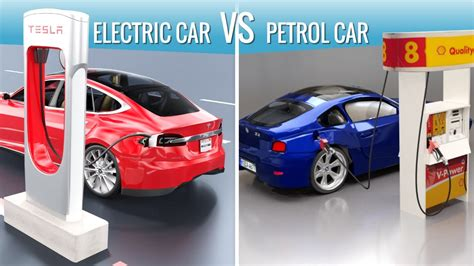
One of the things the green movement strongly encourages is moving away from gasoline- and diesel-powered vehicles and replacing them with electric vehicles (EVs). Since EVs don’t burn gasoline or diesel fuel, they do not emit CO2 into the air, and this is one of the major advantages of EVs. There are also other positive things about EVs.

Some of those advantages, according to drivingelectric.com, are that they are simpler and more reliable. They are quiet and relaxing, but can also be fast and exciting. And since they have smaller engines and their very large batteries can be laid out underneath the vehicle, they have more luggage space and more legroom for passengers.

But there are other factors to the story.

Libertarian author, commentator, and consumer journalist John Stossel wrote an article published by the Daily Signal earlier this month addressing electric vehicles, explaining ways in which EVs are not the wonders their proponents would like for us to believe.

There is a rush to impose EVs on the public. For example, some states have banned gas-powered cars altogether. “California Gov. Gavin Newsom issued an executive order banning them by 2035,” Stossel wrote. “Oregon, Massachusetts, and New York copied California. Washington state’s politicians said they’d make it happen even faster, by 2030,” just several years from now.

Stossel quotes physicist Mark Mills of the Manhattan Institute, who said, “Electric cars are amazing. But they won’t change the future in any significant way (as far as) oil use or carbon dioxide emissions.”

Stossel wrote: “Inconvenient fact 1: Selling more electric cars won’t reduce oil use very much. ‘The world has 15, 18 million electric vehicles now,’ says Mills. ‘If we [somehow] get to 500 million, that would reduce world oil consumption by about 10%. That’s not nothing, but it doesn’t end the use of oil.’

“Inconvenient fact 2: Although driving an electric car puts little additional carbon into the air, producing the electricity to charge its battery adds plenty. Most of America’s electricity is produced by burning natural gas and coal. Just 12% comes from wind or solar power.” “You have to mine, somewhere on Earth, 500,000 pounds of minerals and rock to make one battery,” Mills said.

“If you’re worried about carbon dioxide,” says Mills, “the electric vehicle has emitted 10 to 20 tons of carbon dioxide (from the mining, manufacturing, and shipping) before it even gets to your driveway.”

“Volkswagen published an honest study [in which they] point out that the first 60,000 miles or so you’re driving an electric vehicle, that electric vehicle will have emitted more carbon dioxide than if you just drove a conventional vehicle,” Mills added. You would have to drive an electric car “100,000 miles” to reduce emissions by just “20 or 30%, which is not nothing, but it’s not zero.”

Stossel then adds: “If you live in New Zealand, where there’s lots of hydro and geothermal power, electric cars pollute less. But in America, your ‘zero-emission vehicle’ adds lots of greenhouse gasses to the atmosphere.”

There is also the possibility of batteries catching fire. Breitbart reported that “In July, a battery fire caused an electric bus to burst into flames in Hamden, Connecticut. Luckily, no one died in the inferno, although two transit workers and two firefighters were hospitalized as a result of the blaze, and a federal investigation was triggered.”

EVs will work pretty well close to home. They can be recharged overnight in your garage. But when you take a 200 mile or longer trip, finding a convenient charging station when you need one, and charging your EV may take a few hours. This depends upon the vehicle’s battery, the charging rate of the charger, and perhaps how long you must wait in line to access a charger.

“The average price for a brand new EV is about $55,000,” according to the National Motorists Association. “That’s considerably higher than the average four-door sedan, which runs about $35,000, according to Kelly Blue Book. Tax credits and gas savings can save you money, however, it’s going to take a few years to make up a potential $20,000 difference.”

“Totaling all factors [purchase price, maintenance and fuel costs] total costs over the average use of the vehicles are $71,770 for EV’s and $58,664 for gasoline powered cars.”

And then there’s the cost of replacing the battery, which lasts from 8 to 15 years. Consumer Affairs “reached out to five mechanics and technicians from different parts of the U.S. to see how much an EV battery replacement costs for different vehicles, and the average results ranged from $4,489 all the way to a staggering $17,658.”

So, the picture of electric vehicles to help save our environment from CO2 is a fuzzy one. And when costs and other factors are figured in, an EV is not yet a viable choice for millions of vehicle owners, especially those living in California, Oregon, Massachusetts, New York, and Washington.

As technology evolves, how we produce electricity, the capacity of our electric grid, and the prices involved will improve. But that is years in the future. We have to stop pushing new ideas so hard, and wait until they are ready for large scale use.

Friday, July 01, 2022

New book takes a broader, more realistic view of fossil fuel use


June 28, 2022

In his new book,
Fossil Future: Why Global Human Flourishing Requires More Oil, Coal, and Natural Gas — Not Less, Alex Epstein agrees that fossil fuels’ CO2 emissions are impacting our climate, and wrote that “I totally acknowledge that they have contributed to the 1ºC warming we’ve experienced over the last one-hundred-plus years, and they will contribute to further warming going forward.”

However, he contends that “the negative climate impacts of fossil fuels will be far, far outweighed by the unique benefits of fossil fuels,” that their impact “would not be catastrophic but rather continue to be ‘masterable’ by ingenious human beings empowered by fossil-fueled machines.”

The advantages of fossil fuels, he wrote, is that their abundance and relatively low cost make them useful so that eventually they will benefit the billions of people who have little or no access to energy. “Fossil Fuels,” he wrote, are “providing four times more energy than all alternatives combined.”

Because of their low cost and reliability they have transformed our environment into “one that is unnaturally clean and unnaturally safe from climate danger.” And while their use did increase the CO2 level, that would be offset by the fossil-fueled machines that provide benefits, like irrigation equipment that counter drought, air-conditioning machines that help us live in very warm climates, and heating units for cold climates.

While conceding that fossil fuels do contribute CO2 to the environment, he called our attention to the excessive and often flat-out incorrect predictions of gloom and doom that have influenced how we do things.

Grossly incorrect predictions of climate doom have been put forth over the years. Highlighting some of these mistakes in not-too-distant history, Epstein provided examples of trusted news institutions wrongly warning us back in the 1970s:

* The Guardian, in 1974: “Space satellites show new ice age coming fast.”

* Newsweek, in 1975: “The cooling world: Climatologists are pessimistic that political leaders will take any positive action to compensate for the climatic change, or even to allay its effects.”

* The New York Times, in 1978: “International team of specialists finds no end in sight to 30-year cooling trend in northern hemisphere.”

More recent predictions that are not included in Fossil Future have been just as wrong, and in the opposite direction, promising death and destruction from a warming world.

* In 2004, the U.S. edition of The Guardian reported that the U.S. Defense Department had told President George W. Bush that European cities will be sunk beneath rising seas as Britain is plunged into a “Siberian” climate, triggering nuclear conflict, mega-droughts, famine and widespread rioting across the world.

* In 2008, then-presidential candidate Al Gore predicted that within five years the North Polar Ice Cap would be completely free of ice.

* In 2009, Great Britain’s Charles, Prince of Wales, said that capitalism and consumerism have brought the world to the brink of economic and environmental collapse, and we have only 96 months to straighten things out.

* In 2014, French foreign minister Laurent Fabius, appearing with then-Secretary of State John Kerry, warned that "we have 500 days to avoid climate chaos." 

Even if you are not a senior citizen that has lived through all these false warnings, you probably realize that none of them has come to pass.

In fact, some positive things have occurred. Even though there has been an increase in atmospheric CO2, according to the U.S. Environmental Protection Agency, U.S. air emissions — including carbon monoxide, ammonia, nitrous oxides, Sulphur dioxide, and particulate matter — have been reduced from 300 million tons in 1970 to approximately 125 million tons in 2020, despite the increased use of fossil fuels.

This is because the currently used fossil fuels are cleaner than those used many years ago such as wood and animal dung, which were often burned indoors, and we have cleaner methods for using them.

Two other energy sources are not used very much: nuclear and hydroelectric, which Epstein says are discouraged because of the harm they do to the environment. But, he noted that the “radiation in the case of nuclear is trivial, and the waste has been safely managed for generations.” And for hydroelectric, arguing against those projects “in the name of free-flowing rivers … is clearly not focused on human flourishing” that it will provide.

Essentially, he suggests that these arguments greatly exaggerate the dangers of nuclear and hydroelectric, and essentially ignore the positive aspects they provide that will benefit humanity. 

What Epstein accomplishes is something not really complicated, but it is something rather rare; instead of taking one side or the other and pushing it, he accepts the strong points of both sides, and presents both of them. He makes the case that ought to be more broadly presented to us; that we must keep at the top of our thinking how we best serve the needs of the billions of people on Earth by making the most of fossil fuels, and in doing that we also manage the negatives of fossil fuels to prevent them from doing serious harm.

Texas Congressman Chip Roy terms this approach a “humanity-centric alternative to the anti-fossil fuel climate hysteria” so prevalent today.

Friday, March 25, 2022

Ending fossil fuel usage is only a dream, at this point in time

Green Energy Mania (GEM) desires that we do away with fossil fuels immediately, without regard to whether the preferred types of green energy sources are available in the necessary quantities to meet the present and future needs of Americans and the rest of humanity.

Few people believe that burning materials to make electricity is a good idea, if there are other ways of producing it. There are, however, lots of people who believe that the GEM goal is so important that it needs to be forced on Americas right away, without regard to the reality that we are nowhere close to being able to produce enough electricity by wind, solar, nuclear, et al, to handle the needs of Americans.

This attitude produces many problems, such as rules and restrictions that were created that affect the production of fossil fuels, reducing their availability and increasing their price.

Furthermore, while the US is at the top of the list of nations reducing CO2 emissions, there are other nations, like China and India, that couldn’t care less about that, and are increasing their use of fossil fuels. Why are we punishing ourselves with expensive and inconvenient restrictions when the reductions they produce are made irrelevant by the increasing excesses of other nations? 

Perhaps the only thing good about Putin’s Russian attack on Ukraine might be that it has highlighted some of the fallacies of the GEM mindset. Not so long ago — 2020, to be exact — the United States had gained the status of being a net energy exporter. And then, Joseph Biden became President of the United States, and willingly gave that up through executive orders that hurt our fossil fuel production and usage.

We must sensibly balance our wants against our needs. No matter how badly people want to end fossil fuel use, we have no choice but to depend upon them until cleaner methods are able to meet our needs. And even more sensibly, let’s use our own fossil fuels, not those of other countries.

Buying oil from places like Venezuela, whose oil is the dirtiest in the world, and America-hating Iran, the world’s top sponsor of terror, is just foolish.

And when we start smartly using our own fossil fuels as needed, let’s stop foolishly making that more difficult and expensive by getting rid of rules and restrictions. Let’s finish the Keystone XL pipeline that will make it safer and faster to get fuel from Canada for use here.

On that topic, Global Energy Institute President Marty Durbin said last year that her organization “opposes President Biden’s action to revoke the permit for the Keystone XL pipeline. The pipeline — the most studied infrastructure project in American history — is already under construction and has cleared countless legal and environmental hurdles. This is a politically motivated decision that is not grounded in science. It will harm consumers and put thousands of Americans in the building trades out of work. Halting construction will also impede the safe and efficient transport of oil, and unfairly single out production from one of our closest and most important allies.”

“Several extensive regulatory studies conducted over the past decade as part of an unprecedented regulatory review concluded the pipeline would enhance the American economy while protecting the environment,” according to the Global Energy Institute.

Those that think not using a pipeline, and transporting fuels instead by trucks and trains — which burn fossil fuels while moving those fuels, putting lots of CO2 into the air, which a pipeline does not do — are not thinking clearly.

The Keystone XL pipeline would deliver over 800,000 barrels of oil a day. Its construction supports over 13,000 Canadian and American workers in the building trades.

And, while the U.S. and some other nations are working to phase out the use of coal for electricity production, others are increasing its use.

Citing data from the International Energy Agency (IEA), the Heartland Daily News, published by The Heartland Institute, reported that “Global coal demand fell by 4 percent in the pandemic year 2020, the biggest decline since World War II, but coal demand surged in 2021 as economies rebounded from the 2020 lockdowns. The IEA projects coal use will rise at an annual rate of 6 percent through 2024, surpassing its previous all-time high for use sometime in 2022.”

“According to the IEA,” the Heartland report continued, “the gap between the political commitments to meet net zero carbon dioxide emissions and the realities of the electric power demand and the increasing use of coal to satisfy it, is widening.”

We need fossil fuels, and will for some time to come. And, other nations are going to continue to use fossil fuels, regardless of what the U.S. and other nations decide to do, or what they may think is needed. 

Some nation or nations will benefit from producing those products. Why should that not be the U.S.? We will benefit from the jobs created, and the income produced, and we might as well enjoy the cost savings that using American fossil fuels will provide to us.

Saturday, January 29, 2022

Maybe CO2 isn’t the huge problem we have been told that it is

Two videos have come to light recently addressing Earth’s climate. One is by the World Cycles Institute (WCI), and the other by an Australian geologist and college professor named Ian Rutherford Plimer.

The WCI specializes in analyzing various cycles, such as currency and money, revolutions and wars, governments, markets, and our climate.

Unlike what we see and hear most often these days, presenter Peter Temple began by saying we need “a little dose of reality, because it’s getting colder and dryer, and it’s all because of the sun, and the planets.” He then addressed the cycles of Earth’s temperature over the last 11,000 years.

The video had a chart showing the history of alternating periods of warming and cooling. It showed that we are currently in the “Modern Warm Period,” the most recent of seven throughout the history of the chart.  Two of the longest periods of warming were much warmer than it is today, and occurred long ago. “In fact, the trendline shows that it’s gradually getting cooler,” Temple said, with the chart showing that peak temperatures of the warming periods have been going down. This trend, he said, is because the sun is cooling, adding that no astrophysicist disputes that fact.

Temple then said that we are entering a cooling period. How do we know this? He cited the work of Dr. Raymond Wheeler, whose team of about 200 scientists in the early 1900s researched climate temperatures from 600 BC forward. That research, using tree rings and sun spot records, discovered major cycles of temperatures and rainfall throughout the period of research. Those cycles are roughly 100, 172, 515 and 1,030 years long.

Interestingly, the warm and cold periods matched up precisely with the rise and fall of great empires, which rose in the warming periods, and fell during the cooling periods.

Wheeler’s cycles predicted extreme weather at about the year 2000, followed by a cooling period and long-term drought. Temple then says that is what is now happening. “A recent drop in solar activity is warning of a much colder time coming ahead,” he said.

In fact, Russian astrophysicist, Habibullo Ismailovich Abdussamatov, who is head of the Russian section of the International Space Station, predicted not long ago that a mini ice age is on its way.

Temple then showed a chart from the National Oceanic and Atmospheric Administration with data gathered from Greenland ice cores, which he said supports Wheeler’s cycle theory.

Temperatures consistently turned colder every 172 years, and the last of those cycles was in 2007. Temple says that the Earth is going to get a lot colder and dryer, and this period may last several hundred years. This will be accompanied by a major financial collapse, he said, which is a feature of the 172-year cycles.

Ian Plimer appeared in an interview on Sky News a year ago, and responded to a question about the idea that instead of our end being hastened by global warming, we are actually headed toward an ice age by saying that, as Temple noted, our climate is cyclical.

“We are getting towards the end of a warm period … and we are heading for the next inevitable ice age,” Plimer said.

“We have had six major ice ages during which we’ve had glaciations -- that’s when the ice expands -- and warmer periods when the ice retreats. All that happened before humans were on planet Earth, and every single major ice age started when we had more carbon dioxide in the atmosphere than now,” he said. “And to use the words ‘climate emergency’ indicates that you have absolutely no knowledge about the past.”

Responding to a question about the “link between humans and global warming,” and whether these claims are correct or not, he replied, “No one has ever shown that human emissions of carbon dioxide drive global warming.”

He then asked anyone with such proof to show him the scientific papers that prove it. Citing the fact that so many people live in cities rather than in rural areas, they have not experienced nature in the same way as those who live in the more rural areas.

“So, we have a city-based population that doesn’t read the scientific literature, and has had no life experience [about climate], and they are telling us the ‘chicken little’ story that the sky is falling in. Well I’m sorry folks, there is a very, very large amount of scientific evidence out there that shows that we live in exceptionally boring times. And we’re just having cycles of climate come and go.”

He then cited the major factor in our climate that makes it warmer and cooler without our permission: the sun.

In the email he was quoted as saying that a four-day eruption of a volcano in Iceland negated every single effort we have made in the past five years to control CO2 emissions on our planet.

And, as with every similar explanation that contradicts the climate doom narrative, many have criticized him.

There are experienced scientists that provide strong arguments, backed by data, that we are not about to destroy the Earth with CO2.

Friday, September 06, 2019

More information essential to evaluate the renewable energy idea


What we hear about almost ceaselessly is the impending environmental catastrophe facing the world. Despite the tremendous progress the U.S. has made in reducing its carbon emissions, which we are told is what is causing, or hastening, the crisis, more must be done.

We must spend trillions of dollars and turn our lifestyles upside down to make a very fast transition from traditional fossil fuel production of energy through coal, oil and natural gas to so-called “green” renewable energy sources.

We hear repeatedly how bad fossil fuels are as primary energy sources, and how wind and solar power are our salvation. However, much needed detail about this transition is left out.

So much of what those on the left offer regarding climate change, and their proposed solutions to the problem, is what economist and columnist Thomas Sowell calls “Stage One Thinking.” This involves identifying a problem and proposing a solution that sounds effective and satisfying, but doing so without thoughtfully looking at what happens after that initial action – Stage One – is taken.

Mark P. Mills, senior fellow at the Manhattan Institute, has gone beyond Stage One to look into what is involved in replacing fossil fuels with renewable energy sources in his column “If You Want ‘Renewable Energy,’ Get Ready to Dig.”

“’Renewable energy’ is a misnomer,” he wrote. “Wind and solar machines and batteries are built from nonrenewable materials. And they wear out. Old equipment must be decommissioned, generating millions of tons of waste. The International Renewable Energy Agency calculates that solar goals for 2050 consistent with the Paris Accords will result in old-panel disposal constituting more than double the tonnage of all today’s global plastic waste.”

Mills’ excellent article appeared in The Wall Street Journalin July. He helps us understand the enormous amount of raw materials needed for electric vehicles, and where we will get them. For example, “A single electric-car battery weighs about 1,000 pounds. Fabricating one requires digging up, moving and processing more than 500,000 pounds of raw materials somewhere on the planet,” he explained. “The alternative? Use gasoline and extract one-tenth as much total tonnage to deliver the same number of vehicle-miles over the battery’s seven-year life.”

Wind and solar power involve similar problems: “Building one wind turbine requires 900 tons of steel, 2,500 tons of concrete and 45 tons of nonrecyclable plastic. Solar power requires even more cement, steel and glass—not to mention other metals. Global silver and indium mining will jump 250 percent and 1,200 percent respectively over the next couple of decades to provide the materials necessary to build the number of solar panels the International Energy Agency forecasts. World demand for rare-earth elements—which aren’t rare but are rarely mined in America—will rise 300 percent to 1,000 percent by 2050 to meet the Paris green goals. If electric vehicles replace conventional cars, demand for cobalt and lithium, will rise more than 20-fold. That doesn’t count batteries to back up wind and solar grids.”

And, what the greenies do not want you to know is that so much of the production of renewable energy devices requires the burning of fossil fuels. “What’s more, mining and fabrication require the consumption of hydrocarbons,” Mills explains. “Building enough wind turbines to supply half the world’s electricity would require nearly two billion tons of coal to produce the concrete and steel, along with two billion barrels of oil to make the composite blades. More than 90 percent of the world’s solar panels are built in Asia on coal-heavy electric grids.”

Mills referenced a Dutch government-sponsored study that concluded “that the Netherlands’ green ambitions alone would consume a major share of global minerals. ‘Exponential growth in [global] renewable energy production capacity is not possible with present-day technologies and annual metal production,’ it concluded.”

He adds that Europe and the U.S. will not be able to produce the minerals needed for this gargantuan undertaking. “Instead, much of the mining will take place in nations with oppressive labor practices. The Democratic Republic of the Congo produces 70 percent of the world’s raw cobalt, and China controls 90 percent of cobalt refining. The Sydney-based Institute for a Sustainable Future cautions that a global ‘gold’ rush for minerals could take miners into ‘some remote wilderness areas [that] have maintained high biodiversity because they haven’t yet been disturbed.’”

And his coup de gras: “Engineers joke about discovering ‘unobtanium,’ a magical energy-producing element that appears out of nowhere, requires no land, weighs nothing, and emits nothing. Absent the realization of that impossible dream, hydrocarbons remain a far better alternative than today’s green dreams.”

So much of what the increasingly socialist left proposes sounds good, but fails the pragmatism test. Its ideas: are ridiculously expensive; increase government control; impinge on constitutionally guaranteed freedoms; or all of the above.

These solutions are sold to the people through fear of impending catastrophe, such as that climate change is caused by or made worse by human activities. Scientists who produce contrary scientific evidence, and those who believe them, are “science deniers,” which is somewhat the same as being a “deplorable.”

Resistance to this dogma is essential if America is to survive intact.