Pages

Showing posts with label Honesty. Show all posts

Tuesday, October 23, 2018

The country’s election system needs dramatic overhaul and reform

We’ve all seen the political ads for the upcoming election, right? We’ve all likely found many of them to be smear pieces, using exaggeration, taking words out of context, and using unflattering photos or pieces of videos of opposing candidates to make them look bad, or stupid, or both.

It is not important to the producers of these ads that their content accurately represents the opposing candidate’s character, record, actual spoken words, or positions on issues. What is important is that they create a negative impression and a negative vote.

Nearly always, these ads are not directly the work of an opposing candidate’s campaign staff, but the work of an independent group — maybe a political action committee (PAC) — that supports another candidate and works to get him or her elected by trashing the opponent. The candidate favored by the ad has little, if anything, to do with the ad, and therefore cannot be held responsible for whatever untruths or other dirty tricks may be employed.

Many of these ads contain a statement to the effect that no candidate supports the ad. It is junk such as this that helps give politics its well-deserved reputation of being a sewer. These ads should be outlawed.

Another thing that stretches the bounds of decency is that much, or sometimes most of a candidate’s financial support comes from people or entities he or she does not represent. A candidate in South Carolina may get financial support from people and organizations in California, New York, Missouri, or any or all of the other states in the union.

Why should any candidate in a state or local race receive financial support from people and organizations in other states? Why is this allowed?

There are other problems with our political system, and many of them involve the system of elections. For example, some “Americans” think it is okay for people to vote who are not eligible to vote. And they openly advocate for that.

One such person is a candidate for governor of Georgia. Of the Democrats’ blue wave that they hope will sweep the nation she said, after listing some of the kinds of people who comprise the wave,  “It is made up of those who’ve been told that they are not worthy of being here. It is comprised of those who are documented and undocumented.”

This person is the Democrat candidate, Stacey Abrams. She is a lawyer and has served in the Georgia General Assembly, and ought to know better.

While many deny the reality, non-citizens do vote in our elections, as do some who have been dead for years or months, and some who vote under more than one name, and some who are registered in more than one state.

Here is just one example, as reported by the McClatchy Washington Bureau: Habersham County's Mud Creek precinct in northeastern Georgia had 276 registered voters ahead of the state's primary elections in May. But 670 ballots were cast, according to the Georgia secretary of state's office, indicating a 243 percent voter turnout.

Here is another: ABC News reports that the California Department of Motor Vehicles admitted last week that a mistake caused as many as 1,500 noncitizens being registered to vote in the state.

That there are ineligible voters in every election in the United States is not in question. What is in question is how many are there and how often do they affect one or more races.

Russians being blamed for a poor candidate’s loss in 2016 does an effective job of distracting the people from the actual problem of illegal voting that occurs in every election.

Our elections have lots of problems. The Trust the Vote Project cites voting machines as one of them, noting the potential for manipulation by cyber criminals. 

Other elements also can be problematic. Early voting, for example, is convenient, and it may be the easiest way for some people to vote in some circumstances. But voting is a critical duty of citizens, and convenience is not the primary concern when important duties are the topic of discussion. Things can happen after an early vote has been cast, but before Election Day, that could have influenced someone’s vote. But after the vote has been cast, it cannot be changed.

Another is that any person can claim to be an eligible, registered voter, but without a photo ID requirement, their identity is less easily verified, allowing voter fraud to occur.

The two most important aspects of voting are, first, that everyone who is eligible to vote be registered to vote, and study the candidates and the issues, make informed and thoughtful decisions about them, and then express their preferences at the polls.

The second is that election officials make an honest and determined effort to be sure that no ineligible person votes in any election, and further that anyone who breaks voting laws is prosecuted and justly punished.

The US has a long way to go to strengthen and secure the election process. We do our nation and ourselves a great disservice by not focusing on improving and securing the election procSess.

Tuesday, August 15, 2017

The people’s will is at risk from election fraud and carelessness


When the topic of election fraud comes up, a lot of people say there is not much of that, except for the Russians.

The problem is that there is a good bit of evidence for domestic election irregularities, and little or none for the Russians having had a real effect in 2016.

Two recent inconvenient items remind us just how real election fraud really is.

The first is especially inconvenient for Democrats, as a college student working as a staffer for Harrisonburg Votes, described as being affiliated with the Democrat Party in Harrisonburg, Va., gets jail time. 

James Madison University student Andrew J. Spieles will spend 100 days in jail for knowingly turning in false Virginia voter registration forms during the 2016 election containing the names of dead people and other faulty information.

And, a woman in the country legally, but a non-citizen, has been sentenced to eight years in prison and fined $5,000 for voting illegally five times over a period of years. Rosa Maria Ortega of Grand Prairie, Texas, was sentenced earlier this year for the 2nd-degree felony.

Ortega had applied to vote in Tarrant County, but acknowledged she was not a citizen, and was turned down because she was not a citizen. Despite being told she was not eligible to vote in the United States, five months later, she applied again, claiming to be a citizen.

She did not vote in Tarrant County, but did vote in Dallas County, authorities say.

Four employees of the Massachusetts Registry of Motor Vehicles (RMV) were arrested earlier this month in a scheme to produce false identification documents enabling illegal immigrants to vote in Boston. In addition to the employees of the RMV, people selling illegal documents were also arrested for selling Puerto Rico licenses and official state ID cards to illegal aliens.

According to the Department of Justice website in Massachusetts, the document dealer sold Puerto Rican birth certificates and U.S. Social Security cards to the document vendor for $900 who then sold the stolen identities for over $2,000 to clients seeking false identities in Massachusetts.

This fraud was only discovered when Massachusetts State Police received an anonymous letter telling them what was going on in the RMV.

In October of last year The Washington Times published a list of states where regularities have been found:
** Colorado discovered that dead people voted in elections in several different years.
** Illegals were found voting in Virginia, but were only discovered after they self-reported.
** In Pennsylvania 700 voters might have voted twice in recent elections, and 43,000 others potentially had duplicate registrations in Pennsylvania or in Pennsylvania and another state.
** The secretary of state’s office in Pennsylvania mailed about 2.5 million voter registration postcards to people who are not registered voters, but are licensed drivers.
** At least 86 non-citizens have been registered voters in Philadelphia since 2013.
** Allegations of voter fraud in Tarrant County, Texas, prompted a state investigation. Of concern are mail-in ballots, which allow for people to vote from their homes without any ID or verification of identity. And then they found so-called “vote-harvesting” where political operatives fill out and return other people’s ballots, without their consent.
** An Indiana voter fraud investigation grows to 56 counties where police believe there could be hundreds of fraudulent voter registration records with different combinations of made up names and addresses with people’s real information.
** Three people are under investigation in Oklahoma for voting twice in the presidential primary. All three submitted absentee ballots before showing up to their polling place on March 1 and voted again in person.
** Underage voters were found voting in Wisconsin’s presidential primary. This involves six under-age students that voted, and the election workers didn’t even check their birthdays on their IDs.

All of these examples are evidence of both dishonesty and incompetence, or at least carelessness.

So, there is no question that there is election fraud in the United States, but how serious a problem is it?

In a free country founded on following the will of the people, voting is of paramount importance. Without a clean and honest election system, the will of the people may be subverted.

It’s time we get serious about protecting elections from illegal voters and others who work to weaken its security, or who fail to do their jobs competently.

We are reminded frequently that voting is a right and it should be easy to vote. But voting is a solemn duty that must be properly supervised and operated.

One of the best ways to discourage voter fraud is requiring a photo ID obtained by proving eligibility to vote. A long list of everyday activities requires a photo ID, like buying liquor and cigarettes, but not voting. Many people oppose this helpful, common sense mechanism for one of the most important things people do.

They complain that somehow helping to assure only eligible voters can vote disenfranchises some people. But there are steps that correct that problem, and they are already in effect in many states.

Requiring a photo ID to vote is a necessary change, along with steps to help eligible voters register.

Tuesday, April 18, 2017

The willful subversion of critical institutions threatens America


As the Constitutional Convention of 1787 was wrapping up, Benjamin Franklin was asked this question: “Well Doctor what have we got, a republic or a monarchy.”  Franklin replied, “A republic ... if you can keep it.”

That has been one of America’s greatest challenges ever since, and there certainly are numerous discernible threats to our republic today.

Certain of our institutions play a critical role in sustaining the republic and promoting and protecting the unique character of the United States of America, and they therefore have a tremendous obligation to operate ethically and honorably. To the extent that they abandon their obligation, the country’s fundamental character is threatened.

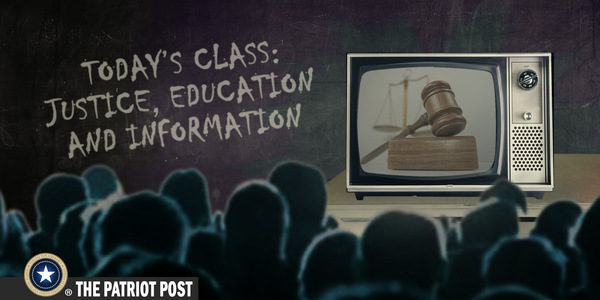
Those institutions are: the justice system, the education system, and the information media.

Imagine you have a business renting apartments. One of your tenants, who has rented a place for $1,500 a month for three years sends you a check for only $900 for the current month.

You contact the tenant and are told that he views the lease that both you and he signed as a “living document,” the meaning of which may be altered as circumstances change. Having lost the job that paid $73,000 a year, his new job pays only $45,000, and he says he can now only afford $900 rent a month.

That is precisely the rationale that activist judges apply when they abandon the clear language of the U.S. Constitution and the laws of the land to make rulings they say are in line with current circumstances and the “mood” of the country, and because the Founders and those who enacted older laws were unable at that time to imagine current circumstances, that old stuff must be modernized.

However, the laws or Constitutional principles that activist judges disagree with must be amended or repealed through existing formal processes, not ignored or altered because they are viewed as inconvenient. If momentary interpretations are all that matter, and the Constitution is merely a “living document,” we don’t have a Constitution and we are not a nation of laws.

A nation needs its history and culture – all of it: the good, the bad, and the ugly – to be passed down from generation to generation so that its people will know who they are and where the came from, and can properly determine where they want to go and why.

While families should pass much of this along to children, we largely entrust this duty to formal education. To guide the learning process and assist students in learning an array of important and useful subjects and life lessons, we employ teachers, professors, instructors, and such, who coach and assist students.

Most of us had at least some teachers, professors, coaches who inspired us and helped us learn difficult subject matter, develop our skills, and learn how to think critically and logically. Hopefully, we did not have any that strayed from their professional duties and tried to tell us what to think about things, rather than developing the ability to think for ourselves.

Today, among the great number of effective educators there are too many who stray from the straight and narrow, especially in colleges and universities, where education too often takes a back seat to political and ideological indoctrination and politically correct policies. Imposing beliefs on students is worse than merely disrespecting the student; it is an outright abandonment of integrity and principle.

Along with an accurate base of knowledge about the country’s founding and history presented to them in schools, the people need to be well informed about current events. Information journalism contains two parts, and they must be kept separate. One is news about events, which must be accurate, honest and objective. The other is opinion, and must be clearly defined and omitted from straight news.

But far too often, opinion and political considerations sneak into news reporting, and also into the selection of what news gets reported and how it is reported, as well as what news does not get coverage. This is like playing golf blindfolded. You might find your driver, your ball and a tee, and you might tee up and actually hit the ball, but after that, you are literally in the dark, depending on the honesty of those around you to accurately describe the situation for you.

The American Left – liberals, progressives, socialists, etc. – has a vision of America that is in many ways sharply at odds with the founding principles. Both beneficial and harmful ideas that the Left pursues are at odds with the ideal of limited government, because using government to force things on the people is the Left’s tool of choice.

Fortunately, there are obstacles to using government to “fundamentally transform the United States of America,” as a former leftist president pledged. These obstacles are difficult to remove, as they should be. So the Left resorts not infrequently to re-interpreting the Constitution and the laws; managing and manipulating the information coming through much of the mass media; and sometimes indoctrinating children.

We all need to remember that worthy and broadly beneficial ideas will sell themselves; they don’t need people to take short cuts or cheat to get them accepted.

Tuesday, September 27, 2016

Elections are too important to allow voting system insecurities


With the presidential election just weeks away, some Americans still are concerned about the security of the election process. But don’t worry; America’s always-reliable news media assure us that those concerns are unfounded.

To wit:
~ “No, voter fraud actually isn’t a persistent problem,” says The Washington Post online.
~ “Study Finds No Evidence of Widespread Voter Fraud,” states NBC News.
~ “Republicans’ ‘voter fraud’ false flag: Voter ID laws offer imaginary solutions to imaginary problems,” blares a Salon.com headline.

A great deal of contrary evidence exists, however, some new, some not so new. In 2012 the ACORN voter registration scandal involved Mickey Mouse and Donald Duck turning up on registration forms in Nevada. And, one of the most ridiculous examples of voting irregularity occurred in Washington, DC, in the shadow of the Justice Department where an undercover reporter recorded himself giving his name as Eric Holder, who at the time was the U.S. Attorney General, and being offered a ballot without showing an ID or being questioned about his identity.

The Pew Center on the States found nearly 2 million dead Americans still on the books as active voters; that 2.7 million people were registered in more than one state; and 12 million voter records had incorrect addresses or other discrepancies. All of these are potential fraud opportunities.

The Daily Signal reported on a 2014 Old Dominion University study looking into noncitizen voting and found that “6.4 percent of all noncitizens voted in the 2008 election and 2.2 percent voted in the 2010 midterm elections,” and suggested that this likely helped Democrat Al Franken defeat Republican Norm Coleman by 312 votes for a U.S. Senate seat from Minnesota in 2008.

The group Minnesota Majority investigated claims of voter fraud, comparing criminal records with voter rolls and found 1,099 felons who had voted illegally in that election. National Review reported: “Prosecutors were ultimately able to convict only those who were dumb enough to admit they had knowingly broken the law, and that added up to 177 fraudulent voters. Nine out of ten suspect felon voters contacted by a Minneapolis TV station said they had voted for Franken.” Since Franken’s margin of “victory” was 312, subtracting the 177 admitted fraudulent ballots could not overturn the result.

New York City’s Department of Investigation sent out 63 under-cover investigators posing either as dead people or people who no longer lived in the city. Of those, 61 were cleared to vote. Confronted with this evidence, the City Council decided not to demand accountability from the Board of Elections, but to prosecute the investigators for impersonating voters, according to National Review columnist John Fund.

Just this month CBS4 in Denver reported on an investigation that found numerous examples of dead people voting and other irregularities. It said a Colorado Congressional race was decided by just 121 votes, and an Ohio tax measure was decided by just two votes.

There simply is no question that fraud exists in elections at all levels, and as previously shown, it is significant enough to affect election outcomes.

Despite these and other “irregularities,” certain factions continue to oppose efforts to clean up the problems in all levels of the election system. And state efforts to impose voter ID requirements, one of the best ways to validate potential voters at the polling place, is perhaps the idea that draws the most vociferous opposition.

Opponents of voter ID and other sensible requirements often fall back on the argument that voting is a right for all citizens of legal age, and therefore it ought to be easy to vote, and they claim that requiring a photo ID to vote places a hardship on some citizens.

This argument is defeated by reality: The Washington Examiner listed 24 routine things requiring photo IDs, such as to: buy alcohol and cigarettes, apply for Medicaid/Social Security, purchase a gun, get married, apply for a job or unemployment, drive/buy/rent a car, adopt a pet, visit a casino, hold a rally or protest, buy an "M" rated video game, buy a cell phone, or apply for food stamps and welfare.

But, if failing to require provisions to make the system more secure makes voting easier, that ought to set off warnings, because while it may be easier for legal voters to vote, it also makes it easier for ineligible persons to vote.
One might think that since voting is a critical right, all Americans would want that right protected from infringement by non-legal voters.

Certainly, the U.S. Supreme Court subscribes to this idea, The Court commented on the need for secure elections in United States v. Classic, 313 U.S. 299 at 329 (1941): “Free and honest elections are the very foundation of our republican form of government. Hence any attempt to defile the sanctity of the ballot cannot be viewed with equanimity,” wrote Justice William O. Douglas.

Rhetorical question: Why would any good and honest American oppose efforts to assure that only legal voters are registered to vote and able to cast a ballot in any and every election?

The obvious answer is that an unsecure election process enables cheating for nefarious political reasons.

Tuesday, August 09, 2016

Americans depend on accurate, balanced information from the media


After seven months since her last press conference in December, Hillary Clinton appeared before journalists last Friday. As Slate.com reported, “Clinton spoke at a joint convention being held by the National Association of Black Journalists (NABJ) and the National Association of Hispanic Journalists (NAHJ).” This lengthy hiatus has brought heavy criticism from Donald Trump’s campaign, and even from the mainstream media.

Clinton held what many called a press conference in Washington, DC, last Friday that was open only to members of the NABJ and NAHJ – two ethnic groups that are generally friendly to her – according to a press release for the event. “It is notable that Democratic presidential nominee Hillary Clinton has recognized the 2016 NABJ-NAHJ Convention as a vital gathering to discuss her platform and the issues impacting black and Latino communities,” said NABJ President Sarah Glover in the news release.

While the Slate piece was generally not complimentary of the responses Clinton gave to questions from the journalists, it did not mention the positive reaction she received to campaign positions prior to the question/answer period. Slate suggested the questions were submitted in advance for approval. A campaign appearance at a minority journalist organizations’ convention, with attendance limited only to members of those organizations, does not a press conference make.

It isn’t difficult to understand why Clinton, or any candidate, would want to speak at such an event, but it is fair to ask why objective journalists of any description would allow that, let alone invite it.

The Media Research Center outlined the fondness of CNN’s “New Day” for Donald Trump issues over the issues surrounding Iran and the payment of $400 million in possible ransom money for four hostages held by the Islamic nation. MRC’s Newsbusters.org detailed the allotment of time on the two topics: “CNN set aside nearly half of its air time on Wednesday's “New Day” to various recent controversies involving the Trump campaign — 1 hour, 24 minutes, and 18 seconds over three hours. By contrast, the program clearly didn't think much of the Wall Street Journal's Tuesday revelation that the Obama administration secretly airlifted $400 million in cash to Iran. John Berman gave a 27-second news brief to the report, but didn't mention that the payment was sent on ‘an unmarked cargo plane.’ ‘New Day,’ therefore, devoted over 187 times more coverage to Trump than to the millions to Iran.”

No matter what you believe about the Iran hostage release and potential ransom payment, no matter what actually transpired, the utter clumsiness of making a payment for any purpose that way on that date warrants more than a half-minute in a three-hour program that spent 84 minutes on the Trump issues.

All major media organizations spent hours of broadcast time and dozens of printed pages on the Republican and Democrat nominating conventions. At each of these events one speaker addressed the delegates about the loss of a child.

At the Republican convention the mother of Sean Smith, one of the four American heroes killed in the terrorist attack on the U.S. Consulate in Benghazi, Libya, spoke movingly about losing her son, and laid responsibility for it at the feet of then-Secretary of State Hillary Clinton. Pat Smith also noted that when her son’s body was brought home, Clinton “looked me squarely in the eye and told me a video was responsible.”

The following week at the Democrat convention Khizr Kahn and his wife Ghazala appeared and Mr. Kahn talked about the death of his son, Marine Capt. Humayun Khan, who died in Iraq heroically protecting his men. Kahn described himself and his wife as “patriotic American Muslims, with undivided loyalty to our country.” He then criticized Donald Trump for his comments about Muslims, and said, “You have sacrificed nothing and no one.” Predictably, Kahn’s comments about Trump triggered a response.

“While all the grieving parents deserve sympathy, the Big Three (ABC, CBS, NBC) network evening and morning shows seemed to only care about the parents that showed up at the Democratic Convention,” Newsbusters.org reported. “Khizr Khan and his wife Ghazala’s DNC appearance earned 55 minutes, 13 seconds of Big Three network coverage, nearly 50 times more than Pat Smith, whose RNC speech honoring her son earned just 70 seconds of airtime.”

The First Amendment protects free speech, and that includes newspapers, television and radio news operations; they are free to say what they like, bound generally by the same restrictions as individuals. The difference is that the public depends upon media sources for information upon which people base important decisions, such as deciding whom to elect to important positions.

Therefore, news organizations have a solemn duty to provide balance to the news they cover and how they cover it, and news journalists – as distinguished from opinion journalists – should be proscribed from injecting bias and opinion into their work.

These recent examples show decision-making by journalistic organizations in selecting a convention speaker that raises questions about objectivity, and a clear, undeniable lack of balance in reporting on important events that Americans will use in deciding their choice for the presidency and other offices.


Surely the U.S. media can do better than this.

Tuesday, June 17, 2014

More crazy stuff from the world of “You can’t make this stuff up!”

Everyone says something dumb once in a while, some more than others, of course, but some people in prominent positions have a real knack for it, and others seem to think they can say whatever they want to, and people will believe them. Worse, though, is that for some of these people, like politicians, there are millions of folks who do believe what they say, no matter how weird it may be, how unlikely to happen it is, or how simply unbelievable it is.

In the most recent example, you may remember that IRS official Lois Lerner was called to testify by three Congressional committees looking into the abuse of IRS power in the intimidation of conservative applicants for 501(c)(3) status, and after making a lengthy statement declaring her innocence then availed herself of the 5th Amendment protections against self-incrimination, and then refused to answer any questions. She apparently forgot that as a hired government worker, she is accountable for her actions to the American people.

The committees had requested Ms. Lerner’s emails months ago, but, Shazam!, the IRS announced the other day that, darn the luck, those emails have just disappeared.

Adding considerable interest to this much-too-convenient occurrence is that Internal Revenue Service Commissioner John Koskinen testified in March that Lois Lerner’s emails were archived.

Oh, well. Maybe the NSA or Edward Snowden has copies.

Just a couple of days earlier, Hillary Clinton, told the world that when hubby Bill finished his eight years as President of the United States they were broke and in debt.

That fails both the smell test and the laugh test. Is it possible? Yes, but doubtful.

The American taxpayers paid President Clinton $200,000 a year in wages, $1.6 million over his eight years in the White House. Presidents may have to pay for some of their normal expenses, like food, clothes, and such, but there are several expense accounts that enter into the picture, so it is difficult to imagine exhausting $1.6 million in only eight years with all the help presidents get through expense accounts.

On the other hand, given the liberal penchant for spending money they don’t have, it is entirely possible they really were broke and in debt, and if that is true, maybe we ought to remember that if Mrs. Clinton decides to seek the presidency.

Outlandish statements sometimes serve to cover up misdeeds of government employees and burnish the bona fides of politicos. Sometimes it’s difficult to make up things that are more ridiculous than what reality gives us, as we have just seen, while other times making stuff up is precisely what people do to mislead the public for some narrow political end, as the next example shows.

“Since the December 2012 shooting in Newtown, CT, there have been at least 74 school shootings in America.” So states the Website for “Everytown for Gun Safety,” which explains, “Everytown is a movement of Americans working together to end gun violence and build safer communities.”

If you are wondering why you haven’t heard about 74 more Sandy Hooks or Newtowns, it’s because there haven’t been 74 of them. In fact, CNN investigated these claims, and found that only 15 percent of them – 11 incidents – involved “a minor or adult actively shooting inside or near a school.”

Politifact “quotes a former member of the FBI’s Behavioral Analysis Unit as stating ‘[t]here is an ocean of difference’ between what average people consider a school shooting and various episodes in the Everytown accounting.”

Stipulated: Even one shooting in a school is one too many. But the dishonest use of data to try to scare people is intolerable.

Data from the Bureau of Justice Statistics (BJS) shows that the annual number of school-associated violent deaths, and the annual number of homicides and suicides of students ages 5-18 at school, were lower during the 2010-2011 school year than at any time in the last 20 years. And, in fact, they had been reduced by almost half.

Five of the 74 incidents involved accidental non-fatal shootings; and two other incidents were apparent acts of self-defense. Again, any shooting at a school, other than in self-defense or to stop someone from hurting or killing people, is unacceptable. But that is a very different matter than when someone intentionally shoots and kills or wounds kids.

It appears the anti-gun fanatics will stop at nothing, even creating fairy tales to try to persuade people to their point of view. In doing so, however, they prove that their point of view is unworthy of public attention.

“Everytown” is the brainchild of former New York Mayor Michael Bloomberg, and unfortunately contains the same absurdities as Mr. Bloomberg’s other manias, like his war on sodas.

If making things illegal actually worked, we’d have no drug problems, robberies, murders or rapes. If limiting the right of law-abiding citizens to own weapons as powerful as those criminals possess made any sense, people would support it.

Does anything say, “Come on in” to a criminal more succinctly than posting a “No Guns Allowed” sign on the door?

Gun violence is the result of the desire to commit violence, not the gun.

Tuesday, May 28, 2013

The IRS scandal hearing would be hilarious if it wasn't so serious


The House Committee on Oversight and Reform hearings on Internal Revenue Service malfeasance has produced scenes worthy of a Mel Brooks film, or maybe "Hogan's Heroes" (“I know nussing!”) As of Friday morning, the following had transpired.

Lois Lerner appeared before the committee last Wednesday. She is the IRS director of exempt organizations, which is the office that deliberately targeted organizations with "Tea Party," "Patriot" and other identifiers in their names indicating they were conservative organizations. These organizations not only had their applications for 501(c) tax-exempt status delayed for up to three years, but in many cases were asked for information that is clearly outside the legitimate areas of interest of the IRS, and which crossed the line into unconstitutionality and perhaps illegality.

Ms. Lerner told the Committee in an opening statement that Committee members have already accused her of providing false information to Congress. However, she said, “I have not done anything wrong. I have not broken any laws. I have not violated any IRS rules or regulations. And I have not provided false information to this or any other congressional committee.”

Having thus stated the case for her innocence, she then invoked Fifth Amendment protections against incriminating herself, and refused to answer any questions.

Translation: "I did nothing wrong, but I won't answer any questions that might show that I did something wrong."

Committee chairman Rep. Darrell Issa (R-Calif.) asked her to reconsider, and when she refused he then dismissed her and her attorney from the hearing room. However, Rep. Trey Gowdy (R-S.C.) objected, pointing out that since Ms. Lerner actually testified by making an opening statement, she should have to stay and answer the lawmakers' questions.

"You don't get to tell your side of the story and then not be subjected to cross-examination," Rep. Gowdy said. "That's not the way it works. She waived her right to Fifth Amendment privilege by issuing an opening statement. She ought to stand here and answer our questions," he said.

Ms. Lerner was ultimately dismissed, but with the caveat that she may be recalled. Better late than never, on Thursday she was suspended from her job. With pay.

This is not the first time the long-time federal employee has been suspected of questionable behavior. When she headed the Enforcement Office at the Federal Election Commission (FEC) from 1986 until 2001, there appeared to be politically motivated harassment of conservative groups not unlike what the IRS  did. In the late 1990s, the FEC launched an investigation of the Christian Coalition that ultimately cost the organization hundreds of thousands of dollars and countless hours of lost work.

However, in addition to failing to prove that the Coalition did anything wrong is the question of whether the FEC even had authority to assert the charges it leveled against the Coalition, which was absolved of any wrongdoing in 1999. Following this suspicious investigation Ms. Lerner was promoted to acting General Counsel at the FEC in 2001.

Next to testify was Douglas Shulman, who was appointed by George W. Bush and headed the IRS during the first Obama term. In 2012 he testified before the Committee, saying, "As you know, we pride ourselves in being a non-political, non-partisan organization." He continued, "There is absolutely no political targeting." We now know that was clearly untrue.

In last week's appearance Mr. Shulman denied that he had discussed targeting conservative groups with anyone at the White House in any of the more than 100 times he visited the White House complex between 2010 and 2011.  “It would not have been appropriate to have a conversation with anyone at the White House about the subject of discriminating against conservative groups,” he said.

When asked if he could recall the nature of any of those visits, Mr. Shulman responded, "The Easter Egg Roll with my kids." Seriously.

In response to questioning from Rep. Tammy Duckworth (D-Ill.), Mr. Shulman replied: "I accept the fact that this happened on my watch and I am very sorry that this happened while I was at the IRS. I feel horrible about this for the agency, for the people there, for the great public servants. I am not sure what else I can say." He could have overtly taken responsibility for his agency's malfeasance while he headed it, and apologized to the victims, but he didn't.

Ms. Duckworth, a military veteran, said that she was "deeply disappointed" by his response, explaining that soldiers serving their country know "you can never delegate responsibility and that you are always responsible for the performance, the training, the actions of the men and women under you."

Former President Harry Truman had a sign on his desk that read: "The Buck Stops Here." This is a concept foreign to many in this administration. But it is the law of leadership, whether at the department level, or at the chief executive level: Whatever happens on your watch is your responsibility.

Maybe actually holding people accountable for their mismanagement through firings and prosecution will wake up sleeping bureaucrats like Ms. Lerner and Mr. Shulman, and restore the idea of "service" to public service.

Tuesday, March 12, 2013

Unemployment, droning citizens, and sequester scare-mongering


February's unemployment rate fell from 7.9 percent to 7.7 percent, and the Labor Department’s survey of households found that 170,000 more people were working. But there's a downside: the survey also found that, despite the number of working-age civilians increasing by 165,000, the labor force actually shrank in size instead of growing, and 130,000 fewer people were working or looking for work in February.

The employment-to-population ratio (EPOP) was unchanged at 58.6 percent, exactly the same as the rate in February of 2012, and an anemic four-tenths percent above the low mark in the summer of 2011. This compares with an EPOP of 63.0 percent in 2007 before the crisis struck.

The Labor Force Participation Rate at 63.5 percent was well below the 66-to-67 percent rate that was normal over the last 20 years. The Bureau of Labor Statistics data show workers remain discouraged and many are unable to find full time employment, or have given up trying.

The U-6 number under the BLS’ “Alternative Measures of Labor Underutilization” includes persons who have given up looking for work, as well as the 7.7 percent who are unemployed. That number is 14.3 percent.

Compared with December 2007, when the recession officially began, there are 5.8 million fewer Americans working full time, and there are 2.8 million more working part time. Part-time workers, who usually work fewer than 35 hours a week, are still a minority of the work force, but their share is growing. When the recession began, 16.9 percent of those working usually worked part time. That share rose in 2008 and 2009 and has remained high since, and today stands at 19.2 percent.

This would not be so troubling if people were working fewer hours by choice. But that is not the case.

 * * * *

Isn't it interesting that the same administration that believes foreign terrorists should be brought into the U.S., given the same status in court as actual citizens, provided a defense attorney if they can't afford one, and put on trial as if they had merely shoplifted items at the local grocery store, would equivocate instead of forthrightly condemning the idea of potentially using a drone on U.S. soil to kill a U.S. citizen who was not posing an immediate threat, and do so with no more due process than that someone in the administration thought that person was a threat to the country.

Citizens are guaranteed protection from such third world practices by the 5th Amendment to the U.S. Constitution; non-citizen terrorists -- actual and suspected -- have no such guarantees, and deserve none. This small point apparently escapes the notice of the Obama administration.

Sen. Rand Paul (R-KY) had the good sense to force this issue to the fore by filibustering the confirmation of John Brennan as CIA Director in order to get the administration to furnish more information about its intentions. Some Democrats joined Sen. Paul in holding the administration accountable to the Constitutional protections afforded U.S. citizens.

Ultimately, Mr. Brennan was confirmed, but he took the oath of office by swearing not on a Bible, as is customary, but on a version of the U.S. Constitution that did not include the Bill of Rights.

* * * *

Two of the most prominent aspects of the sequester are the scare-mongering and duplicity of the Obama administration.

First, an example of the false predictions of catastrophe: “Starting tomorrow everybody here, all the folks who are cleaning the floors at the Capitol. Now that Congress has left, somebody’s going to be vacuuming and cleaning those floors and throwing out the garbage. They’re going to have less pay. The janitors, the security guards, they just got a pay cut, and they’ve got to figure out how to manage that. That’s real," President Obama said at a news conference on March 1.

Didn't happen, and was never going to happen.

And now, the duplicity: The Washington Times reported that "Animal and Plant Health Inspection Service official Charles Brown said he asked if he could try to spread out the sequester cuts in his region to minimize the impact, and he said he was told not to do anything that would lessen the dire impacts Congress had been warned of."

Mr. Brown was told in an email: "We have gone on record with a notification to Congress and whoever else that 'APHIS would eliminate assistance to producers in 24 states in managing wildlife damage to the aquaculture industry, unless they provide funding to cover the costs.' So it is our opinion that however you manage that reduction, you need to make sure you are not contradicting what we said the impact would be."

The Armageddon President Obama has forecast could easily be averted by a simple bill in Congress to allow the president to decide what spending to cut and what not to cut, or to allow managers to manage their own budgets. But if the APHIS directive described above reflects the president's attitude, Mr. Obama wants the maximum pain from his boondoggle, and also wants to stay as far away as possible from responsibility for the misery his idea produces.