Pages

Showing posts with label Tradition. Show all posts

Thursday, January 05, 2023

More changes are being offered to satisfy the “cancel culture”

January 3, 2023

Here we go again! Along with all the efforts to “cancel” things that upset someone, a few people, or lots of people — like the names of buildings, streets and schools; and statues of people, and actual people living and dead — there is a new movement. This one seeks to eliminate words and phrases used for years, decades or centuries.

In an act of “we gotta get woke,” Stanford University has published an index of "harmful language." The school plans to eliminate this language from its websites and computer code, and will offer replacement terms to be used in the future. And likely these rules will apply to those on campus and otherwise associated with the school.

Stanford calls this project the Elimination of Harmful Language Initiative, and it is described as a "multi-phase, multi-year project to address harmful language in IT at Stanford," according to the project guide.

The guide goes on to say that its goal is to eliminate "many forms of harmful language," including "racist, violent, and biased language, including disability bias, ethnic bias, ethnic slurs, gender bias, implicit bias, and sexual bias. "It also states that it wants to educate people on the impact of words.

It should be fairly obvious that the language Stanford finds “harmful” consists of words and phrases that have been around in popular usage for years or decades. But in this new hypersensitive world, they are no longer useful because of some relatively under-lying meaning that someone might find offensive.

Here’s one example. Under a section titled “Imprecise Language,” the guide advised readers to replace the term “American” with “U.S. citizen.” The reason for this is that calling people who live in the United States of America (USA) “Americans” insinuates that the USA is the most important country in the Americas.

There are four groups of countries in the Americas: North America, Central America, South America and The Caribbean. And in those four groups, there are more than 40 individual countries. However, only one of them, the United States of America, has the word “America” in its name. The USA has also been known as “America,” for a long time. Therefore, the citizens of the USA can properly be called “Americans.”

This example is plain evidence of how foolish this and many other such efforts are. Perhaps the powers that be at Stanford realized this, had it explained to them, or gave in to the outrage over this cancellation, because it has back-tracked on this word, and now claims to absolutely welcome the term “American.” 

Progress? Perhaps.

Some of the terms Stanford deems harmful and has not back-tracked on include "abort," which the school wants to replace with "cancel" or "end," due to moral concerns about abortion; "child prostitute" to be replaced with a "child who has been trafficked," so the person is not defined by just one characteristic; and "Karen" is to be replaced with "demanding or entitled White woman."

The index suggests using "accessible parking" instead of "handicap parking," "died by suicide" instead of "committed suicide" and "anonymous review" instead of "blind review." We also should use "unenlightened" as a replacement for "tone deaf," and a "person with a substance abuse disorder" as a replacement for "addict."

The institutionalized racism section says to avoid using phrases like "black hat," "black mark" and "black sheep" because of "negative connotations to the color black." It also says to avoid using "grandfathered" and use "legacy status" instead, because of "roots in the ‘grandfather clause’ adopted by Southern states to deny voting rights to Blacks."

“Immigrant” is out, and the preferred substitute is “person who has immigrated.” The Wall Street Journal noted about this cancellation that, “It’s the iron law of academic writing: Why use one word when four will do?”

“You can’t ‘master’ your subject at Stanford any longer,” the Journal added, saying “in case you hadn’t heard, the school instructs that ‘historically, masters enslaved people.’” 

Does Stanford still award “masters” degrees? Or, will they simply be renamed “post-bachelor,” “bachelor-plus,” or “pre-doctorate,” “not-yet-doctorate,” or something else?

Given that these words and phrases “trigger” the sensitivities of some folks, and that the multitude of other things that people want to cancel are things that have been around or in common use for a long time, and their meanings have been understood and accepted as useful and normal.

Why is it now suddenly necessary to get rid of them?

These days there is virtually nothing that doesn’t bother someone. So, the question that arises is, are we going to give in to this new mania and change everything when some people become uncomfortable with them? Or, are we just going to learn to deal with the discomforts, as we have been doing since humans have existed?

The things that are now considered as unacceptable are part of American society and history. They are “us.” If they are removed, we lose the valuable lessons they can teach us. If we reword things, we are giving in to what in many cases are hyper-sensitive feelings about things that we historically have simply accepted. 

We aren’t perfect, and will never be. We need to learn to live with these imperfections.

Wednesday, February 07, 2018

The softening of America is becoming a rampant social ill


America has many problems these days, and some of them are very serious. Among those on the long list are: a serious drug problem, international anxieties, the strong division between the political left and right, and our once stable, but now collapsing cultural environment.

Another troubling thing that doesn’t reach the crisis level of some of the aforementioned is that some individuals take themselves way too seriously, and believe that their personal opinion deserves national attention or perhaps even demands some immediate action. This is the height of self-absorption, egomania, and it is a rampant social ill.

This malady expresses itself in different ways, such as through people whose name is well known within a certain limited area of life – like actors, media personalities, entertainers, athletes – who have allowed themselves to believe their own PR, and think that because they have a group of adoring fans that appreciate their pretty face, latest hit song or film, recent great athletic accomplishment, late night TV show, or whatever, that they are endowed with ultimate wisdom about everything, and are therefore required to share it with the world.

In another scenario, some think so highly of their opinion and beliefs that they isolate themselves from things they don’t agree with, refusing to face opposing ideas and, frequently, dodging reality itself. They insist on being able to avoid contact with things that cause discomfort – a long and confounding list of things – anything that interferes with merrily going on their way through an imaginary world that must submit to their every wish.

For example, if an historic person or event traumatizes some people, like a statue or a memorial to someone or some thing, they then protest to have it removed, disregarding the broader historical value of the offensive thing that is far more important than their feelings of pique.

Sometimes, when faced with someone holding a different opinion they cannot abide, instead of discussing their differences like mature adults, they resort to vilification, hurling slurs and epithets, and name-calling.

Once upon a time the process of growing up in America took a course that did not include this pathology, or even imagine there could be such a thing. When one reached adulthood, the learning process had guided her or him to maturity through good parenting and informal education in the home or formal education in school or, ideally, a combination of the two.

Our system of education begins at a young age and progresses through high school, each successive level presenting material suited to the developing mind. After that, some go out into the world, while others head for vocational/technical training or head for college. College is where more intense subject learning takes place, but it also develops the thinking process and aids in learning to live in the real world where all is not always pleasant or agreeable, and at one time a college education could be counted on to do this.

Obviously, some families and some educational institutions have failed to maintain the tradition of guidance that is necessary to assist young people in maturing properly. The “everybody gets a trophy,” the “no person should ever feel uncomfortable” foolishness and other similar things have had a deleterious effect. This is not about real bullying and other serious problems, but things have deteriorated into a condition where personal offenses that once were laughed off or quickly forgotten now cause major trauma to young people, and some who are not so young.

Some colleges have lost their luster as mind-expanding influences, and instead of aiding the maturing process they have become bastions of protecting the hypersensitive, where instructors are required to issue trigger warnings prior to discussing “troubling” material, and where free speech can only be indulged in and enjoyed in special “free speech zones.”

Where once the idea of free speech was eagerly defended, we now find conservative speakers banned from campuses because their mere presence sends students scurrying for their safe spaces or into sometimes-violent protests, and where liberal/socialist faculty band together to attack their conservative colleagues for disagreeing with the “proper” thinking (political correctness) at the same time they are transferring their ideology onto their students along with subject matter, or perhaps in place of it.

Many of them push an agenda in proper thinking instead of aiding the development of the process of critical thinking, turning students into delicate little creatures who are frightened by the very idea that some people do not agree with them, or become angry in response. The art of civil and intelligent debate has been banned from some of the country’s once-fine institutions where free speech was celebrated. Is an education at one of these wayward institutions actually worth the tens of thousands it costs?

Perhaps the softening of the American mind does not rise to the urgency of the deadly drug problem or the potential for a nuclear attack by some foreign maniac or despot. But if not gotten under control pretty soon, we face the very strong likelihood of living in a country run by these folks, who are incapable of dealing maturely with complex and unfriendly circumstances that life throws at us.


Tuesday, April 18, 2017

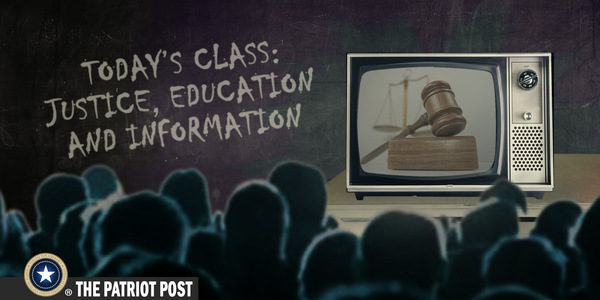
The willful subversion of critical institutions threatens America


As the Constitutional Convention of 1787 was wrapping up, Benjamin Franklin was asked this question: “Well Doctor what have we got, a republic or a monarchy.”  Franklin replied, “A republic ... if you can keep it.”

That has been one of America’s greatest challenges ever since, and there certainly are numerous discernible threats to our republic today.

Certain of our institutions play a critical role in sustaining the republic and promoting and protecting the unique character of the United States of America, and they therefore have a tremendous obligation to operate ethically and honorably. To the extent that they abandon their obligation, the country’s fundamental character is threatened.

Those institutions are: the justice system, the education system, and the information media.

Imagine you have a business renting apartments. One of your tenants, who has rented a place for $1,500 a month for three years sends you a check for only $900 for the current month.

You contact the tenant and are told that he views the lease that both you and he signed as a “living document,” the meaning of which may be altered as circumstances change. Having lost the job that paid $73,000 a year, his new job pays only $45,000, and he says he can now only afford $900 rent a month.

That is precisely the rationale that activist judges apply when they abandon the clear language of the U.S. Constitution and the laws of the land to make rulings they say are in line with current circumstances and the “mood” of the country, and because the Founders and those who enacted older laws were unable at that time to imagine current circumstances, that old stuff must be modernized.

However, the laws or Constitutional principles that activist judges disagree with must be amended or repealed through existing formal processes, not ignored or altered because they are viewed as inconvenient. If momentary interpretations are all that matter, and the Constitution is merely a “living document,” we don’t have a Constitution and we are not a nation of laws.

A nation needs its history and culture – all of it: the good, the bad, and the ugly – to be passed down from generation to generation so that its people will know who they are and where the came from, and can properly determine where they want to go and why.

While families should pass much of this along to children, we largely entrust this duty to formal education. To guide the learning process and assist students in learning an array of important and useful subjects and life lessons, we employ teachers, professors, instructors, and such, who coach and assist students.

Most of us had at least some teachers, professors, coaches who inspired us and helped us learn difficult subject matter, develop our skills, and learn how to think critically and logically. Hopefully, we did not have any that strayed from their professional duties and tried to tell us what to think about things, rather than developing the ability to think for ourselves.

Today, among the great number of effective educators there are too many who stray from the straight and narrow, especially in colleges and universities, where education too often takes a back seat to political and ideological indoctrination and politically correct policies. Imposing beliefs on students is worse than merely disrespecting the student; it is an outright abandonment of integrity and principle.

Along with an accurate base of knowledge about the country’s founding and history presented to them in schools, the people need to be well informed about current events. Information journalism contains two parts, and they must be kept separate. One is news about events, which must be accurate, honest and objective. The other is opinion, and must be clearly defined and omitted from straight news.

But far too often, opinion and political considerations sneak into news reporting, and also into the selection of what news gets reported and how it is reported, as well as what news does not get coverage. This is like playing golf blindfolded. You might find your driver, your ball and a tee, and you might tee up and actually hit the ball, but after that, you are literally in the dark, depending on the honesty of those around you to accurately describe the situation for you.

The American Left – liberals, progressives, socialists, etc. – has a vision of America that is in many ways sharply at odds with the founding principles. Both beneficial and harmful ideas that the Left pursues are at odds with the ideal of limited government, because using government to force things on the people is the Left’s tool of choice.

Fortunately, there are obstacles to using government to “fundamentally transform the United States of America,” as a former leftist president pledged. These obstacles are difficult to remove, as they should be. So the Left resorts not infrequently to re-interpreting the Constitution and the laws; managing and manipulating the information coming through much of the mass media; and sometimes indoctrinating children.

We all need to remember that worthy and broadly beneficial ideas will sell themselves; they don’t need people to take short cuts or cheat to get them accepted.