Pages

Showing posts with label Environment. Show all posts

Saturday, June 07, 2025

The One Big Beautiful Bill and the environment in the news

June 3, 2025

A very hot topic in the news lately is the Republican’s “One Big Beautiful Bill Act” (OBBB) that passed the House by a razor-thin margin and is now before the Senate. As with many bills of this kind, there are good things, and not-so-good things, in it. And, predictably, the Democrats are 100% against the bill, and even some Republicans have issues with it.

There will be much activity in the Senate for members to get things taken out they don’t like, or to moderate things to make them more acceptable.

And like so many others, this one breaks a common-sense idea about legislation. The OBBB is 1,100 pages long and proposes tax cuts and spending cuts, as well as several other subjects that are not related to each other. The bill contains many things that Republicans and President Donald Trump like and want, hence its title. 

However, as a practical matter, bills before Congress should address 1 item, or maybe a couple that are very closely related, and not be as long as, or longer than, a best-selling novel.

Bills are often used to sneak in a controversial topic that a small number of the members support. It might get passed because the primary topic or topics are very popular, and voting against the bill because of the sneaked-in aspect would not sit well with constituents. Also, having a number of different topics in a bill makes it longer and harder to get through, as well as more difficult to understand and to develop a level of support or opposition.

Ideas about changes to the OBBB are being suggested. The Club for Growth, for example, has a list of 21 “potential improvements,” including: 
* Full and immediate repeal of the Inflation Reduction Act  
* Cut marginal tax rates for individuals 
* Reduction to Corporate Income Tax rate 
* Enhance the qualified business income deduction from 23% to 40% 
* Reduction of capital gains and dividends taxation/investment income 
* Index Capital Gains to Inflation 
* Allow all Americans to save for their futures tax-free through Universal Savings        Accounts 
* Prohibit funding for sanctuary cities 
* Eliminate the SALT deduction 
* Extend Work Requirements to all anti-poverty welfare benefit programs
* Sell federal land

There are also a few articles dealing with the environment that are not widely available. Some of them challenge the popular narrative, while others discuss topics less common than those to which we are accustomed. 

Dr. Roy Spencer is a former NASA scientist, climatologist, author, and former Visiting Fellow in The Heritage Foundation’s Center for Energy, Climate, and Environment. He offered this information in a Heritage Foundation article. 

“Warming of the global climate system over the past half-century has averaged 43 percent less than that produced by computerized climate models used to promote changes in energy policy. In the United States during summer, the observed warming is much weaker than that produced by all 36 climate models surveyed here. 

“While the cause of this relatively benign warming could theoretically be entirely due to humanity’s production of carbon dioxide from fossil-fuel burning, this claim cannot be demonstrated through science. At least some of the measured warming could be natural. Contrary to media reports and environmental organizations’ press releases, global warming offers no justification for carbon-based regulation.”

Two “Key Takeaways” from the Heritage article are:
* Climate models that guide energy policy do not even conserve energy, a necessary condition for any physically based model of the climate system.
* Public policy should be based on climate observations—which are rather unremarkable—rather than climate models that exaggerate climate impacts.

Appearing in emails and elsewhere is this: “After nearly two decades of accelerating ice loss (with losses reaching about 142 billion tons per year from 2011–2020), Antarctica saw a dramatic shift between 2021 and 2023.

“During this period, satellite data (GRACE and GRACE-FO missions) show the Antarctic Ice Sheet gained about 108–119 billion tons of ice per year.

This gain was especially pronounced in four major glacier basins in East Antarctica (Totten, Moscow University, Denman, and Vincennes Bay), which had previously been rapidly losing mass.”

Another article discussed a lesser-known factor that affects our environment. “A recent scientific study confirms that changes in Earth’s orbit play a key role in triggering ice ages. These shifts, known as Milankovitch cycles, affect the planet's climate over tens of thousands of years by altering the amount of sunlight reaching Earth. Based on current orbital patterns, researchers estimate that the next ice age could begin within the next 11,000 years. This discovery deepens our understanding of Earth's long-term climate cycles and the natural forces that drive major environmental changes.”

And Researchers from ETH Zurich and the Carnegie Institution for Science say Earth is cooling far faster than we thought — and will turn into a dead, rocky planet like Mars much sooner than expected.

Our environment is very complex, with factors of which most people are unaware that affect it. They are rarely talked about outside of scientific circles. But they have an effect on the environment that cannot be ignored. We must always be aware of the “big picture” of our environment.

Friday, November 03, 2023

The less frequently published side of the climate change debate


October 31, 2023

One of the hottest issues occurring these days is the debate over whether we are harming the planet and threatening human life by burning fossil fuels and adding dangerous amounts of carbon dioxide into the atmosphere.

There are many people on each side of this debate, including scientists. The more frequently expressed point of view in the media is the climate catastrophe side. But to add a strong opinion to the other side of that argument, the following information from Patrick Moore is offered.

Moore is a co-founder of Greenpeace, a Canadian environmentalist who previously served as president of Greenpeace Canada and director of Greenpeace International.

In a video produced by Prager University, he presented his position. “All life is carbon based. And the carbon for all that life originates from carbon dioxide in the atmosphere. 

“All of the carbon in the fossil fuels we are burning for energy today was once in the atmosphere as carbon dioxide before it was consumed by plankton in the sea and plants on the land. Coal, oil and natural gas are the remains of those planktons and plants transformed by heat and pressure deep in the Earth’s crust. 

“In other words, fossil fuels are 100 percent organic, and were produced with solar energy. Sounds positively green. 

“If there were no carbon dioxide in the Earth’s atmosphere, the Earth would be a dead planet. Period. Talk about catastrophic climate change. Take away CO2 and you’d have it. 

“And yet the U.S. Environmental Protection Agency has deemed this essential ingredient for life a pollutant. But how can something that makes life possible be bad?” 

He went on to say that “carbon dioxide is a colorless, odorless, tasteless gas which is an indispensable food for all living things. Can you have too much of it? In theory, yes. That’s what climate alarmists say is happening now: CO2 levels are getting too high.

“Are they right? Well, if we look at the big picture, we find something surprising. For most of the history of life on Earth, carbon dioxide has been present in the atmosphere at much higher levels than it is today.”

Continuing, Moore said that “From a big picture perspective, we’re actually living in a low carbon dioxide era. The optimum level of CO2 for plant growth, for example, is four to five times what is currently found in our atmosphere. That’s why greenhouse growers worldwide actually inject additional CO2 into their greenhouses.”

That certainly is not a common perspective on CO2 and the environment.

Ian Plimer is a geologist and professor emeritus at the University of Melbourne. He spoke at the 2009 Copenhagen Climate Challenge, a conference for climate change deniers. According to The Australian newspaper, in closing his speech, Plimer stated that "They’ve got us outnumbered, but we’ve got them outgunned, and that’s with the truth." 

An online video produced after the conference shows Plimer saying, “No one has ever shown that human emissions of carbon dioxide drive global warming. Never been shown. 

“And if it could be shown, then you would have to show that the 97 percent of emissions which are natural do not drive global warming. Game over.

“We are dealing with a fraud. That’s a scientific fraud from day one. We hear the propaganda that increases of the gas of life, a trace gas in the atmosphere, will bring a disaster. And that we will have runaway global warming. 

“Sorry, folks. We’ve known for 200 years from chemistry that it’s the exact inverse. When we drill into ice we have chemical fingerprints that tell us what the temperature was, and we have little bits of trapped air [to examine]. And we can show that when we had natural warming, some 650 to 6,000 years later we had an increase in carbon dioxide. 

“It’s not carbon dioxide that drives temperature, it’s the exact inverse. Another fraud.”

Godfrey William Bloom is a former British politician who served as a Member of the European Parliament. His position on the argument is one that often arises when governments attempt to do something that many disagree with.

“Isn’t this really just about the state being able to get its hands in ordinary people’s trouser pockets to still get more tax from them,” he asked. “Isn’t this all about political control? Isn’t all of this about politics and big business?

“The whole thing’s a sham, this bogus hypothesis, this ridiculous nonsense that manmade CO2 is causing global warming.  Enough, please, before we damage irrevocably the global economy.”

It is crucial to recognize the need for carbon dioxide to sustain life, and also that it is possible to have too much of many things. But, if it is possible to have too much carbon dioxide, how much is actually too much? And, are we really there, yet?

This argument is not going to be resolved anytime soon. Both sides of the issue have strongly held positions. And neither side seems ready to give in to the other.

But it is important to have as many different ideas about important topics as possible so that after considering all relevant points, good decisions can be made.

Friday, August 18, 2023

The problems associated with recycling plastics


August 15, 2023

The climate change faction, to which the Biden administration belongs, wants to do away with fossil fuels. But what they may not realize is that in addition to being fuel, some fossil fuels, like oil and natural gas, are basic elements in many things the American people need and want.

“Petrochemicals derived from oil and natural gas make the manufacturing of over 6,000 everyday products and high-tech devices possible,” Energy.gov tells us. 

“Major petrochemicals—including ethylene, propylene, acetylene, benzene, and toluene, as well as natural gas constituents like methane, propane, and ethane—are the feedstock chemicals for the production of many of the items we use and depend on every day. Modern life relies on the availability of these products that are made in the United States and across the globe.”

Energy.gov lists 161 of the 6,000 items that are made from oil and natural gas. The list includes: artificial limbs, asphalt, aspirin, awnings, backpacks, balloons, caulking, electric blankets, electrical tape, enamel, epoxy paint, eyeglasses, fan belts, faucet washers, fertilizers, hearing aids, heart valves, house paint, ink, insect repellent, insecticides, insulation, iPad/iPhone, petroleum jelly, pharmaceuticals, plastics, life jackets, light-weight aircraft, roofing, refrigerants, vinyl flooring, vitamin capsules, tires, tool boxes, toothbrushes, toothpaste, transparent tape, water pipes, wind turbine blades, and many more.

Many of those products are valuable and useful, so the mania to end fossil fuels carries with it a heavy price in terms of replacing these items.

One of those products is plastic. Take a guess at how many things that people use, want, and depend upon are made from or contain plastic?

Plastics, however, have a down side. So many plastic products are used once or a few times and discarded. Many people try to recycle them, but that is a non-existent entity, to a large degree.

An article on the National Public Radio (NPR) website addresses this. “The vast majority of plastic that people use, and in many cases put into blue recycling bins, is headed to landfills, or worse, according to a report from Greenpeace on the state of plastic recycling in the U.S.”

The article cites a report that the amount of plastic actually recycled and used for new products has fallen to only about 5 percent, and is expected to fall even further in the future.

“Greenpeace found that no plastic — not even soda bottles, one of the most prolific items thrown into recycling bins — meets the threshold to be called "recyclable" according to standards set by the Ellen MacArthur Foundation New Plastic Economy Initiative,” the article continued. “Plastic must have a recycling rate of 30 percent to reach that standard; no plastic has ever been recycled and reused close to that rate.”

The NPR article also explained that “Waste management experts say the problem with plastic is that it is expensive to collect and sort. There are now thousands of different types of plastic, and none of them can be melted down together. Plastic also degrades after one or two uses. Greenpeace found that the more plastic is reused the more toxic it becomes.

“New plastic, on the other hand, is cheap and easy to produce. The result is that plastic trash has few markets — a reality the public has not wanted to hear,” NPR wrote.

There are tons of these un-reusable plastic items that are not really needed. Things such as packaging materials, shopping bags, straws, bottles, cups and such things were made of paper or glass prior to plastic being implemented, and we can move back in that direction. Paper and glass are much easier to recycle or dispose of than these plastic items.

So, while we need to cut back on the production of plastic items that can be replaced with materials that can be reused, or really are not needed, there are still many plastic items that we must continue to produce.

On the former point, “Environmentalists and lawmakers in some states are now pushing for legislation that bans single use plastics, and for ‘bottle bills’ which pay customers to bring back their plastic bottles,” NPR said. “The bills have led to successful recycling rates for plastic bottles in places like Oregon and Michigan, but have faced steep resistance from plastic and oil industry lobbyists.”

"The real solution is to switch to systems of reuse and refill," Lisa Ramsden, senior plastic campaigner for Greenpeace USA, said. "We are at a decision point on plastic pollution. It is time for corporations to turn off the plastic tap."

Joshua Baca, vice president of plastics for the American Chemistry Council, criticized the Greenpeace view on plastics, and added that the industry is "on the cusp of a circularity revolution" regarding plastic recycling, and is "scaling up sortation, advanced recycling, and new partnerships that enable used plastic to be remade again and again."

Throwing used plastics in oceans and landfills has created a serious problem. It makes no sense to keep producing and then throwing away plastic items that are used once or a few times, like straws, wrappers, etc. Those items could be made from recyclable materials, or be made to be reused continuously.


Friday, August 11, 2023

Climate change is being blamed for wildfires in North America


August 8, 2023

The wild fires in Canada this year along with the warmer-than-normal temperatures in parts of the country have energized the pro-climate change voices.

An article on the National Oceanic and Atmospheric Administration (NOAA) Website noted the following: “Climate change, including increased heat, extended drought, and a thirsty atmosphere, has been a key driver in increasing the risk and extent of wildfires in the western United States during the last two decades.”

Citing a 2016 Proceedings of the National Academy of Sciences (PNAS) study, the article added that, “climate change enhanced the drying of organic matter and doubled the number of large fires between 1984 and 2015 in the western United States. A 2021 study supported by NOAA concluded that climate change has been the main driver of the increase in fire in the western United States.”

This is a compelling scenario. Wildfires in the U.S. and Canada have certainly been a problem, particularly recently. But as Paul Harvey so wisely said in his radio broadcasts, “Now, the rest of the story.”

An opinion piece in the Wall Street Journal last month, authored by Dr. Bjorn Lomborg, tells us that, “One of the most common tropes in our increasingly alarmist climate debate is that global warming has set the world on fire. But it hasn’t.”

Lomborg isn’t just some “climate denier,” he is a visiting fellow at the Hoover Institution, and is president of the Copenhagen Consensus Center and visiting professor at Copenhagen Business School. He was listed as one of Time's “100 most influential people,” and Business Insider cited him as one of "The 10 Most-Respected Global Warming Skeptics."

The Copenhagen Consensus Center is the winner of Prospect magazine’s 2016 Think Tank of the Year award in the International Affairs category for think tanks based in the United States. 

Given his skepticism of the degree to which the fears of climate change have been expanded, his arguments against that mentality have been harshly received by those who promote that danger.

But he does not come to the fight unarmed, or with only words. In his column he wrote that, “For more than two decades, satellites have recorded fires across the planet’s surface. The data are unequivocal: Since the early 2000s, when 3 percent of the world’s land caught fire, the area burned annually has trended downward.” In support of that claim, there is a chart prepared by the National Aeronautical and Space Administration (NASA).

“In 2022, the last year for which there are complete data,” Lomborg continues, “the world hit a new record-low of 2.2 percent burned area. Yet you’ll struggle to find that reported anywhere.”

The area burned has decreased by 0.8 percent, showing that there has been roughly 27 percent less area burned since 2000.

Lomborg’s point is that while looking at North America tells a particular story, broadening the focus to include the entire globe tells a very different story.

Leighton Steward, who passed away last year, was a geologist, environmentalist, author, and retired energy industry executive. He had served as Chairman of the Board of The Institute for the Study of Earth and Man at Southern Methodist University, was Chairman of the National Wetlands Coalition, and was twice Chairman of the Audubon Nature Institute. He had offered environmental advice that was accepted by both the EPA and the U. S. Corps of Engineers.

Years before his passing, U.S. News’ “Washington Whispers” discussed Steward’s perspective on climate change. Paul Bedard, who authored the article, outlined Steward’s views. “Much of the global warming debate has focused on reducing CO2 emissions because it is thought that the greenhouse gas produced mostly from fossil fuels is warming the planet. But Steward, who once believed CO2 caused global warming, is trying to fight that with a mountain of studies and scientific evidence that suggest CO2 is not the cause for warming. What's more, he says CO2 levels are so low that more, not less, is needed to sustain and expand plant growth.”

Furthermore, Steward believed that if CO2 levels are cut, food production will suffer because plants grown at higher CO2 levels make larger fruit and vegetables and also use less water. He also believed that higher CO2 levels are really not harmful to humans. 

Buying into the CO2 crisis, the Biden administration is rising to the occasion by planning to limit many things that Americans need and want. Things like gasoline- and diesel-powered vehicles that are affordable and dependable. Incandescent bulbs to light our homes and businesses. Stoves, water heaters, furnaces, grills and other appliances powered by natural gas and propane. All of these desired devices will be banned in favor of electric devices that will be heavily regulated, very expensive, and will create more of a demand than the electric grid can supply.

And the federal government — which has evolved from the smaller and limited entity it was designed to be into a gargantuan, too-powerful body — now enforces these political desires with rules with the force of law that have not been approved by the Congress, the law-making body in our tripartite government.

Friday, June 16, 2023

Fueling America: U.S. not capable of being battery powered

June 13, 2023

The U.S. government has many policies, rules and other things in place that work against people’s interests. In the haste to do away with fossil fuel use, we have made it more difficult to acquire coal, oil and natural gas, things that people need. And even when we have those fuels, it has been made more difficult and more expensive to transport them. Pipeline transport is much more economical than transporting oil and natural gas by truck and train. But President Joe Biden’s halting of the Keystone XL Pipeline interfered with that.

Even Biden knows that we can’t do without fossil fuels. As he said during the State of the Union address last February, “We’re going to need oil for at least another decade.” The Congressional audience erupted in laughter, and he corrected himself, adding, “And beyond that, we’re going to need it.” 

Because of Biden’s actions the U.S.  now has to buy oil from other countries, usually dirtier and more polluting than our oil, which is the cleanest in the world. 

In 2021, the Energy Information Administration reported that about 51 percent of the world’s oil comes from five countries. The U.S. led the group, producing 14.5 percent of the 51 percent, followed by Russia at 13.1 percent, Saudi Arabia at 12.1 percent, and Canada and Iraq that together total about 11 percent.

In 2022 U.S. oil production was below the 2019 record levels. That may reflect a trend in domestic oil production.

The terribly optimistic idea of an electric vehicle replacement of vehicles that burn gasoline and diesel fuel any time in the next three decades or so is a pipe dream. 

The vehicles in use in the U.S. are mostly made here, and they use fuels we can make here. But the desire is to replace them with vehicles that use batteries, and a great deal of the materials to make the batteries come from other countries.

As reported by U.S. News, most electric cars use lithium-ion batteries. “These types of batteries require several chemical components, including lithium, manganese, cobalt, graphite, steel and nickel, and they require a lot of these materials. By a lot, we mean about 17 pounds of lithium carbonate, 44 pounds of manganese, 30 pounds of cobalt and a whopping 77 pounds of nickel!”

Here's where some of the components for batteries come from. According to SAE International, 100 percent of natural graphite comes from China, Mexico, Canada and India; 37 percent of copper comes from Chile, Canada and Mexico; 50 percent of nickel comes from Canada, Norway, Finland, and Russia; 100 percent of Manganese comes from Gabon, South Africa, Australia and Georgia; 50 percent of lithium comes from Argentina, Chile, China and Russia; 100 percent of rare earths come from China, Estonia, Japan and Malaysia; and 83 percent of zinc comes from Canada, Mexico, Peru and Spain. 

We are dependent on other countries for much of these components.

U.S. mining of basically anything useful as a fuel or in making materials for electric vehicles, like nickel, copper and cobalt, is blocked or made more difficult by government rules. And we buy lots of these materials, and other things, from China, our greatest adversary.

So, while we will need fossil fuels for a long time, and while the materials for making EV batteries largely come from other countries, the climate change faction still preaches our destruction if we don’t change how we do many things.

Not everyone agrees with that unavoidable catastrophe being the future of the world if we don’t stop using fossil fuels.

One of those people is an early member and former president of Greenpeace. Formed in Canada in 1971, Greenpeace exists “to expose global environmental problems and promote solutions that are essential to a green and peaceful future,” according to its website.

A former president of Greenpeace, Dr. Patrick Moore, served as Greenpeace Canada President for nine years and as a Director of Greenpeace International for six years. Among his many credits, Moore has a Ph.D. in Ecology from the Institute of Resource Ecology at the University of British Columbia.

He is no longer affiliated with Greenpeace, and his current position on Earth’s environment is at odds with the organization, and that has earned him its harsh criticism.

Speaking on a video from 2015, Moore said the following: “There is no definitive scientific proof … that carbon dioxide is responsible for any of the slight warming of the global climate that has occurred during the last 300 years.

“But there is a certainty beyond a reasonable doubt that CO2 is the building block for all life on Earth, and that without its presence in the global atmosphere … this would be a dead planet.”

Moore is not the only scientist who disbelieves the idea that CO2 will someday destroy humanity. And the accuracy of previous predictions of environmental catastrophe is stunningly poor. 

Not burning fossil fuels is certainly a worthy goal. And it is a goal that will eventually be reached as the natural development of alternative energy proceeds.

These manic efforts to force these not-yet-capable energy sources into use is expensive, and works against the needs and desires of the people.

Saturday, April 15, 2023

An Associated Press story provides some things to think about


April 11, 2023

The recent horrible weather events that have killed and injured hundreds of Americans and destroyed hundreds of homes and businesses have gotten well-deserved attention.

In addition to tornados like those seen this year in America, through its many decades the country has experienced many severe weather events, like hurricanes, floods, draughts, blizzards, ice storms, wildfires, bomb cyclones, the polar vortex and other weather horrors.

These weather phenomena were addressed last week by the Associated Press (AP) in a story by Seth Borenstein titled, “Why the US leads the world in weather catastrophes.”

Borenstein, noting that the “United States is Earth’s punching bag for nasty weather,” said that we can blame geography for the serious weather we experience.

“Two oceans, the Gulf of Mexico, the Rocky Mountains, jutting peninsulas like Florida, clashing storm fronts and the jet stream combine to naturally brew the nastiest of weather,” he wrote.

According to North Carolina state climatologist Kathie Dello, our weather problems start with “where we are on the globe. It’s truly a little bit … unlucky.”

Borenstein noted that when we add to that man-made aspects that complicate our locational problem -- like what, where and how we build things -- the situation gets worse. “The U.S. is by far the king of tornadoes and other severe storms,” he wrote. 

Northern Illinois University meteorology professor Victor Gensini commented that “It really starts with two things. Number one is the Gulf of Mexico. And number two is elevated terrain to the west.”

Describing our recent outbreak of tornadoes, Borenstein warned that more could be coming. “Dry air from the West goes up over the Rockies and crashes into warm, moist air from the Gulf of Mexico, and it’s all brought together along a stormy jet stream. 

“In the West, it’s a drumbeat of atmospheric rivers. In the Atlantic, it’s nor’easters in the winter, hurricanes in the summer and sometimes a weird combination of both, like Superstorm Sandy.”

The way forward to reduce the hazards of these storms is not to stop using incandescent light bulbs, gas stoves, gas-powered and diesel-powered vehicles and toilet paper, as championed by the Climate Change camp. 

Susan Cutter, director of the Hazards Vulnerability and Resilience Institute at the University of South Carolina, told Borenstein, “One of the ways you can make your communities more resilient is to not develop them in the most hazard-prone way or in the most hazard-prone portion of the community.”

“The insistence on building up barrier islands and development on barrier islands, particularly on the East Coast and the Gulf Coast, knowing that that sand is going to move and having hurricanes hit with some frequency … seems like a colossal waste of money,” she said.

One factor is that in the south more manufactured housing is being used, and it is “more vulnerable to all sorts of weather hazards,” Cutter said. 

Where we build and how we build contributes greatly to the deaths, injuries, and destruction resulting from the weather phenomena that our Earthly location brings to us. Given that we cannot control the weather that occurs naturally in the U.S., we should be even more aware of where and how we build structures.

If the United States as a whole has it bad, the South has it worse, according to Marshall Shepherd, a Georgia meteorology professor and former president of the American Meteorological Society.

“We drew the short straw (in the South) that we literally can experience every single type of extreme weather event,” Shepherd said. “There’s no other place in the United States that can say that.”

Some states, like Florida, North Carolina and Louisiana, stick out in the water, so they are more prone to being hit by hurricanes, some of the experts noted.

This AP story provides a factor affecting our severe and often deadly weather that many or most of us have not known of thought about previously. While those who argue against the catastrophic claims of climate change are generally ridiculed, this factor tends to lend them a significant element of defense.

And those dire warnings of catastrophe in the past decades that did not materialize seem even more crazy than before.

Comedian George Carlin many years ago pointed out that our planet has been here 4.5 billion years. Humans, by contrast, have only been around for maybe 200,000 years, a very small percentage of that time. And we have been involved in heavy industry and other things that so many believe may destroy Earth for only about 200 years. He said that “the planet has been through a lot worse than us.” 

Of course, George Carlin is not a climate scientist, and how humans do things can have very negative consequences. But maybe things aren’t as bad as some think. 

The natural factors that the AP story highlights must be a part of how we think about weather and climate change. And maybe we can moderate our attitude regarding doing away with fossil fuels by forcing the end of their use prematurely and unnaturally, given that our Earthly location is a primary factor in our weather. 

Friday, November 18, 2022

Is now really the right time to buy an electric vehicle?


November 15, 2022

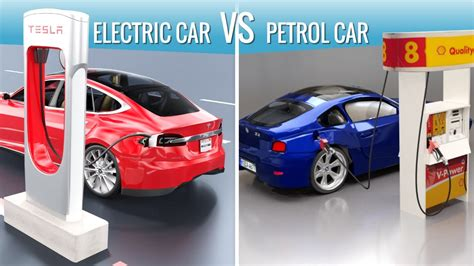
One of the things the green movement strongly encourages is moving away from gasoline- and diesel-powered vehicles and replacing them with electric vehicles (EVs). Since EVs don’t burn gasoline or diesel fuel, they do not emit CO2 into the air, and this is one of the major advantages of EVs. There are also other positive things about EVs.

Some of those advantages, according to drivingelectric.com, are that they are simpler and more reliable. They are quiet and relaxing, but can also be fast and exciting. And since they have smaller engines and their very large batteries can be laid out underneath the vehicle, they have more luggage space and more legroom for passengers.

But there are other factors to the story.

Libertarian author, commentator, and consumer journalist John Stossel wrote an article published by the Daily Signal earlier this month addressing electric vehicles, explaining ways in which EVs are not the wonders their proponents would like for us to believe.

There is a rush to impose EVs on the public. For example, some states have banned gas-powered cars altogether. “California Gov. Gavin Newsom issued an executive order banning them by 2035,” Stossel wrote. “Oregon, Massachusetts, and New York copied California. Washington state’s politicians said they’d make it happen even faster, by 2030,” just several years from now.

Stossel quotes physicist Mark Mills of the Manhattan Institute, who said, “Electric cars are amazing. But they won’t change the future in any significant way (as far as) oil use or carbon dioxide emissions.”

Stossel wrote: “Inconvenient fact 1: Selling more electric cars won’t reduce oil use very much. ‘The world has 15, 18 million electric vehicles now,’ says Mills. ‘If we [somehow] get to 500 million, that would reduce world oil consumption by about 10%. That’s not nothing, but it doesn’t end the use of oil.’

“Inconvenient fact 2: Although driving an electric car puts little additional carbon into the air, producing the electricity to charge its battery adds plenty. Most of America’s electricity is produced by burning natural gas and coal. Just 12% comes from wind or solar power.” “You have to mine, somewhere on Earth, 500,000 pounds of minerals and rock to make one battery,” Mills said.

“If you’re worried about carbon dioxide,” says Mills, “the electric vehicle has emitted 10 to 20 tons of carbon dioxide (from the mining, manufacturing, and shipping) before it even gets to your driveway.”

“Volkswagen published an honest study [in which they] point out that the first 60,000 miles or so you’re driving an electric vehicle, that electric vehicle will have emitted more carbon dioxide than if you just drove a conventional vehicle,” Mills added. You would have to drive an electric car “100,000 miles” to reduce emissions by just “20 or 30%, which is not nothing, but it’s not zero.”

Stossel then adds: “If you live in New Zealand, where there’s lots of hydro and geothermal power, electric cars pollute less. But in America, your ‘zero-emission vehicle’ adds lots of greenhouse gasses to the atmosphere.”

There is also the possibility of batteries catching fire. Breitbart reported that “In July, a battery fire caused an electric bus to burst into flames in Hamden, Connecticut. Luckily, no one died in the inferno, although two transit workers and two firefighters were hospitalized as a result of the blaze, and a federal investigation was triggered.”

EVs will work pretty well close to home. They can be recharged overnight in your garage. But when you take a 200 mile or longer trip, finding a convenient charging station when you need one, and charging your EV may take a few hours. This depends upon the vehicle’s battery, the charging rate of the charger, and perhaps how long you must wait in line to access a charger.

“The average price for a brand new EV is about $55,000,” according to the National Motorists Association. “That’s considerably higher than the average four-door sedan, which runs about $35,000, according to Kelly Blue Book. Tax credits and gas savings can save you money, however, it’s going to take a few years to make up a potential $20,000 difference.”

“Totaling all factors [purchase price, maintenance and fuel costs] total costs over the average use of the vehicles are $71,770 for EV’s and $58,664 for gasoline powered cars.”

And then there’s the cost of replacing the battery, which lasts from 8 to 15 years. Consumer Affairs “reached out to five mechanics and technicians from different parts of the U.S. to see how much an EV battery replacement costs for different vehicles, and the average results ranged from $4,489 all the way to a staggering $17,658.”

So, the picture of electric vehicles to help save our environment from CO2 is a fuzzy one. And when costs and other factors are figured in, an EV is not yet a viable choice for millions of vehicle owners, especially those living in California, Oregon, Massachusetts, New York, and Washington.

As technology evolves, how we produce electricity, the capacity of our electric grid, and the prices involved will improve. But that is years in the future. We have to stop pushing new ideas so hard, and wait until they are ready for large scale use.

Saturday, January 29, 2022

Maybe CO2 isn’t the huge problem we have been told that it is

Two videos have come to light recently addressing Earth’s climate. One is by the World Cycles Institute (WCI), and the other by an Australian geologist and college professor named Ian Rutherford Plimer.

The WCI specializes in analyzing various cycles, such as currency and money, revolutions and wars, governments, markets, and our climate.

Unlike what we see and hear most often these days, presenter Peter Temple began by saying we need “a little dose of reality, because it’s getting colder and dryer, and it’s all because of the sun, and the planets.” He then addressed the cycles of Earth’s temperature over the last 11,000 years.

The video had a chart showing the history of alternating periods of warming and cooling. It showed that we are currently in the “Modern Warm Period,” the most recent of seven throughout the history of the chart.  Two of the longest periods of warming were much warmer than it is today, and occurred long ago. “In fact, the trendline shows that it’s gradually getting cooler,” Temple said, with the chart showing that peak temperatures of the warming periods have been going down. This trend, he said, is because the sun is cooling, adding that no astrophysicist disputes that fact.

Temple then said that we are entering a cooling period. How do we know this? He cited the work of Dr. Raymond Wheeler, whose team of about 200 scientists in the early 1900s researched climate temperatures from 600 BC forward. That research, using tree rings and sun spot records, discovered major cycles of temperatures and rainfall throughout the period of research. Those cycles are roughly 100, 172, 515 and 1,030 years long.

Interestingly, the warm and cold periods matched up precisely with the rise and fall of great empires, which rose in the warming periods, and fell during the cooling periods.

Wheeler’s cycles predicted extreme weather at about the year 2000, followed by a cooling period and long-term drought. Temple then says that is what is now happening. “A recent drop in solar activity is warning of a much colder time coming ahead,” he said.

In fact, Russian astrophysicist, Habibullo Ismailovich Abdussamatov, who is head of the Russian section of the International Space Station, predicted not long ago that a mini ice age is on its way.

Temple then showed a chart from the National Oceanic and Atmospheric Administration with data gathered from Greenland ice cores, which he said supports Wheeler’s cycle theory.

Temperatures consistently turned colder every 172 years, and the last of those cycles was in 2007. Temple says that the Earth is going to get a lot colder and dryer, and this period may last several hundred years. This will be accompanied by a major financial collapse, he said, which is a feature of the 172-year cycles.

Ian Plimer appeared in an interview on Sky News a year ago, and responded to a question about the idea that instead of our end being hastened by global warming, we are actually headed toward an ice age by saying that, as Temple noted, our climate is cyclical.

“We are getting towards the end of a warm period … and we are heading for the next inevitable ice age,” Plimer said.

“We have had six major ice ages during which we’ve had glaciations -- that’s when the ice expands -- and warmer periods when the ice retreats. All that happened before humans were on planet Earth, and every single major ice age started when we had more carbon dioxide in the atmosphere than now,” he said. “And to use the words ‘climate emergency’ indicates that you have absolutely no knowledge about the past.”

Responding to a question about the “link between humans and global warming,” and whether these claims are correct or not, he replied, “No one has ever shown that human emissions of carbon dioxide drive global warming.”

He then asked anyone with such proof to show him the scientific papers that prove it. Citing the fact that so many people live in cities rather than in rural areas, they have not experienced nature in the same way as those who live in the more rural areas.

“So, we have a city-based population that doesn’t read the scientific literature, and has had no life experience [about climate], and they are telling us the ‘chicken little’ story that the sky is falling in. Well I’m sorry folks, there is a very, very large amount of scientific evidence out there that shows that we live in exceptionally boring times. And we’re just having cycles of climate come and go.”

He then cited the major factor in our climate that makes it warmer and cooler without our permission: the sun.

In the email he was quoted as saying that a four-day eruption of a volcano in Iceland negated every single effort we have made in the past five years to control CO2 emissions on our planet.

And, as with every similar explanation that contradicts the climate doom narrative, many have criticized him.

There are experienced scientists that provide strong arguments, backed by data, that we are not about to destroy the Earth with CO2.

Friday, December 10, 2021

Many people see electric vehicles as our environmental salvation


“Specifically, the President will sign an Executive Order that sets an ambitious new target to make half of all new vehicles sold in 2030 zero-emissions vehicles, including battery electric, plug-in hybrid electric, or fuel cell electric vehicles,” the Whitehouse Fact Sheet tells us.

“The Executive Order also kicks off development of long-term fuel efficiency and emissions standards to save consumers money, cut pollution, boost public health, advance environmental justice, and tackle the climate crisis,” the Fact Sheet continues.

The EO outlines President Joe Biden’s plan “for the U.S. to lead in electric vehicle manufacturing, infrastructure, and innovation,” by investing in:

* A national network of electric vehicle charging stations.

* Point-of-sale consumer incentives to spur U.S. manufacturing and union jobs.

* The retooling and expansion of the full domestic manufacturing supply chain.

* The next generation of clean technologies to maintain our competitive edge.

The Fact Sheet says that “Over the last decade, we have seen a transformation in the technology costs, performance, and availability of electric vehicles. Since 2010:

* “Battery pack costs dropped by 85 percent, paving the way to sticker price parity with gasoline-powered vehicles.

* “Average vehicle range increased dramatically as charging times shortened.

* “Electric models available to U.S. consumers expanded to over 40 last year – and growing.”

How much will all of this cost, and where will the money come from? The recently passed infrastructure bill earmarks $7.5 billion for electric vehicle (EV) infrastructure.

And, as CBS News reported: “A credit of up to $7,500 for an electric or plug-in hybrid vehicle. ... An additional $500 credit for a car with a battery pack made in the U.S. An additional $4,500 credit for cars assembled at a unionized U.S. plant. (Currently, only plants owned by GM, Ford, and Stellantis qualify [formerly, Fiat-Chrysler].)”

The provision is a tax credit — up to federal income tax owed — not a refund. And, CBS also noted that there is an income limit to the credit: You cannot make more than $500,000 for married couples and $250,000 for single buyers.

“This credit is at the point of purchase — it’s not a credit that you apply for,” Kristin Dziczek, senior vice president of research at the Center for Automotive Research, said. “It’s going to come straight off a loan or the price of the vehicle.”

So, the federal government will pay people to buy certain types of cars from certain manufacturers, and pay them more if they buy a union-made car. Why did that factor come into play? Was it because the unions opened their wallets?

And with these tax deduction incentives, won’t that cause an even larger deficit in the false concept that “it’s paid for?”

Even the best ideas have downsides. Here are some problems with electric vehicles.

Lithium is a part — the expensive part — of EV batteries, and it is getting more expensive these days. Where do we get lithium? Not here at home. Australia is the world’s biggest supplier, followed by Chile, Argentina, China, and Zimbabwe in the top five.

Lithium is finite, and it is becoming more expensive because of the demands made by automakers. 

Coal-fired power plants are the single-largest source of greenhouse gas pollution in the U.S., yet that is what supplies electricity to charge electric cars. As EV use increases, so then will the demand for more electricity to charge them. One of the main reasons EVs are preferred over gas-burning vehicles is to reduce pollution. 

After the two different kinds of batteries now used in EVs are no longer useful — after about 20 years — there is not yet a market for the used batteries to recycle them and their parts. 

If you run out of juice on the road, you cannot get a jump start to get back on the road. If a problem with your electric motor develops, you cannot just take it down the street to the shop and find someone who can fix it. Dealers will be the only source of repair.

Speaking of “re-fueling” an EV, how long does that take? According to avtowow.com, “Charging most EVs using 220 volts will give you a full charge in as little as 3-4 hours to anywhere between 10-12 hours (depending on the battery size).”

And what about road-trips? “Charging electric vehicles using 440-volt systems during road trips adds a considerable amount of time to the trip. For example, a trip from Washington, DC to Little Rock, Arkansas could take 17 hours in a regular car,” avtowow.com says. Charging stops will add hours to the trip. And charging on a regular home’s 110-volt power supply could take up to 45 hours.

EVs may well be a sensible option for future transportation. But the industry is not yet up to speed, and won’t be for years. Trying to rush this “solution” into reality is foolish, and will likely make things worse, at least for a while. Which, of course, is usually not a consideration when liberals think they have a problem solved.

Better to let things develop at their own pace. The industry is working toward that end. It will take longer, but the result will be better. And, that will cost taxpayers less money.

Tuesday, October 01, 2019

Badly needed: A more balanced approach for environmental policy


A few months ago, a new proposal to save the world from environmental catastrophe burst forth. The plan was designed to eliminate the threat, or at least reset the End of the World Clock that is counting down the final 10, or maybe 12, remaining years of life on Earth.

Called the Green New Deal (GND), it would turn life in the United States upside down by eliminating some things that we want and need, like fossil fuels and nuclear energy, 99 percent of motor vehicles, air travel, meat, and some other equally radical things.

In addition to all the inconvenience and misery the GND would cause, its price tag is trillions of dollars we don’t have. 

The GND’s narrative of impending doom, burdened with weaknesses and dangers, is just the latest of dozens of prior such predictions. One list contains 42 of them, 27 for which the Competitive Enterprise Institute provided sources, such as The New York TimesThe Boston Globe, the Washington PostThe Guardian, Brown University, Time magazine, and the Associated Press.

Here are some select excerpts of predictions issued between 1967 and 2014, categorized, and each preceded by the year of the prediction:
* Ice Age: 1971 - New Ice Age Coming By 2020 or 2030; 1972 - New Ice Age By 2070; 1974 - Space Satellites Show New Ice Age Coming Fast
* Flooding: 1988 - Maldive Islands will Be Underwater by 2018; 1989 - Rising Sea Levels Will Obliterate Nations if Nothing Done by 2000; 2005 - Manhattan Underwater by 2015
* Warming: 2008 - Arctic will Be Ice Free by 2018; 2013 - Arctic Ice-Free by 2015; 2000 - Children Won’t Know What Snow Is
* Famine: 1967 - Dire Famine Forecast By 1975; 2002 - Famine In 10 Years If We Don’t Give Up Eating Fish, Meat, and Dairy
* Diverse problems: 1969 - Everyone Will Disappear in a Cloud of Blue Steam By 1989; 1970 - Urban Citizens Will Require Gas Masks by 1985; 2004 - Britain will Be Siberia by 2024; 2014 - Only 500 Days Before ‘Climate Chaos’

If you do not buy into the catastrophe warnings, you are deemed a “science denier” by the climate alarmists. However, you have evidence on your side. The history of predictive catastrophic environmental science is poor.

Despite this horrid record, however, we are told that in 12 years it’s all over. And even though hundreds of scientists dispute the doomsday scenario, we are told it is the unquestionable truth.

Attempting to persuade the powers that be at the United Nations of its erroneous outlook, a group of 500 prominent scientists and professionals from around the globe has produced the European Climate Declaration, and submitted it to officials at the UN. 

The group is led by CLINTEL (Climate Intelligence Foundation) co-founder Guus Berkhout of The Netherlands, and includes America’s noted Richard Lindzen, Ph.D., a professor of meteorology and member of the National Academy of Sciences. Both men are among the Declaration’s “ambassadors” from 14 different countries who signed the communication to the UN.

The September 2019 document makes seven major points: 1. There is no climate emergency; 2. Natural as well as anthropogenic factors cause warming; 3. Warming is far slower than predicted; 4. Climate policy relies on inadequate models; 5. CO2 is plant food, the basis of all life on Earth; 6. Global warming has not increased natural disasters; and 7. Policy must respect scientific and economic realities.

Two major fallacies exist in the “science” behind climate catastrophe predictions these scientists say: First, political considerations infect the scientific process, and second, the climate models that predict catastrophe are biased.

Climate models use quantitative methods to simulate the interactions of the important drivers of climate, including atmosphere, oceans, land surface and ice. The results of a climate model are a product of the data provided. 

The Declaration offers the following comment on climate models: “Climate models have many shortcomings and are not remotely plausible as policy tools. Moreover, they most likely exaggerate the effect of greenhouse gases such as CO2. In addition, they ignore the fact that enriching the atmosphere with CO2 is beneficial.”

Further, it notes: “CO2 is not a pollutant. It is essential to all life on Earth. Photosynthesis is a blessing. More CO2 is beneficial for nature, greening the Earth: additional CO2 in the air has promoted growth in global plant biomass. It is also good for agriculture, increasing the yields of crop worldwide.”

And the seventh and final point: “There is no climate emergency. Therefore, there is no cause for panic and alarm. We strongly oppose the harmful and unrealistic net-zero CO2 policy proposed for 2050. If better approaches emerge, and they certainly will, we have ample time to reflect and adapt. The aim of international policy should be to provide reliable and affordable energy at all times, and throughout the world.”

The introductory letter written by the ambassadors suggests that the UN “organize with us a constructive high-level meeting between world-class scientists on both sides of the climate debate early in 2020,” and recommends a full and fair discussion of the issue. 

That seems to be a sensible plan.

Tuesday, September 10, 2019

Democrats want to turn the United States upside-down


CNN’s marathon townhall last Wednesday may have set some records. The broadcast lasted a full seven hours. It featured 10 of the numerous candidates for the Democrat nomination to run for president in 2020. They were, alphabetically: Joe Biden, Cory Booker, Pete Buttigieg, Julián Castro, Kamala Harris, Amy Klobuchar, Robert Francis “Beto” O’Rourke, Bernie Sanders, Andrew Yang, and Elizabeth Warren.

The event did not set a record for the number of viewers it attracted. During the 5:00 p.m.-12:00 a.m. broadcast, CNN pulled only 1.1 million viewers, compared to MSNBC’s 1.7 million, and Fox News’ more-than-double 2.5 million during that time period.

The focus of the event was climate change. “So, based off [a BBC] study, CNN will produce 57.4 tons of carbon dioxide emissions while warning about increasing carbon dioxide emissions,” wrote Timothy Meads on Townhall.com prior to the event.

The candidates expressed their ideas about what they say is an existential threat to life on Earth. These ideas include doing away with fossil fuels and nuclear energy, red meat, plastic straws, incandescent light bulbs, carbon, fracking, combustion engine vehicles, and babies.

Abortion was high on the list for some. “Human population growth has more than doubled in the past 50 years. The planet cannot sustain this growth,” an audience member said to Bernie Sanders. He agreed, and promised to back more U.S. funding for abortions in the developing world.

Environmental groups like the Sierra Club have warned that Africa and Asia are producing way too many babies, and this will threaten the future of the Earth. Former Vice President Al Gore once said the we “have to have ubiquitous availability of fertility management” in the developing world to fight climate change. 

And Supreme Court Justice Ruth Bader Ginsburg offered an opinion some time ago. “[A]t the time Roe (v. Wade) was decided, there was concern about population growth and particularly growth in populations that we don’t want to have too many of.” Was that a racist comment?

If over-population truly is a problem, Gore’s fertility management solution, if that means pregnancy prevention, would be far preferable to killing developing humans in the womb.

"We are fighting for the survival of the planet Earth, our only planet. How is this not a major priority?" Sanders asked.  He boasted that his was the most serious approach of any presidential candidate in history. It will only cost us $16 trillion. That is roughly equal to all federal spending for four years.

Cory Booker has changed his super-identity from “Spartacus” to “Star Trekian.” This transformation may have come after his discovery that non-white and low-income people are disproportionately affected by climate change, though he did not explain how this occurs. Economic and environmental justice therefore demand that we transition to a carbon-neutral economy as soon as we possibly can, he said, in order to restore the balance of the effects of climate related issues.

Getting millions of vehicles off the road was posited by Joe Biden, the most moderate candidate, who vowed to lead the whole world in this effort if elected president, not just the U.S.

Asked by CNN’s Anderson Cooper if the Green New Deal’s plan to ban all fossil fuels, 99 percent of cars and planes, and meat within the next decade was “unrealistic” or “promising too much?” Biden answered, “No, no it’s not.”

Pledging to do away with carbon energy, but also to do away with nuclear energy by 2035, Elizabeth Warren urged Democrats not to get distracted by sideline issues like the environmental consequences of plastic straws, cheeseburgers and light bulbs. "This is exactly what the fossil fuel industry hopes we're all talking about," she said.

Taking a different tack on the issue, admitted cheeseburger lover Kamala Harris wants to eliminate barriers to forcing her radical views on we the people by ending the Senate filibuster. Currently, ending debate on legislation requires 60 votes. Harris supports a simple majority vote to speed along her efforts at control.

Senate Majority Leader Mitch McConnell, R-Ky., commented on that idea. "The legislative filibuster is directly downstream from our founding tradition. If that tradition frustrates the whims of those on the far left, it is their half-baked proposals and not the centuries-old wisdom that need retooling," he wrote in an op-ed in The New York Times.

Harris also said she would use executive power to order the Justice Department to go after oil and gas firms. Is that an American ideal? Or does Harris believe that when you can’t win through better ideas and honesty, you must change the rules, or play dirty?

The list of past environmental catastrophe predictions that didn’t come to be is long: in 1975 a coming ice age; the acid rain threat; over-population producing mass starvation; global temperatures melting ice floes and flooding coastal cities. And now, only 10 or 12 years left to save the world. Again.

The alarmists point to a “scientific consensus” that millions cling to. There were scientists selling the past failed predictions, too. Even if these predictions of doom are true, the only way to stop the threat, apparently, is to spend trillions and turn the United States upside-down, and impose government control.

Tuesday, May 16, 2017

Wind and solar energy have failed to perform as advertised


The bad news for what we have been told are superior energy sources keeps piling up. Even European countries, with their strong preference for things that don’t work, like socialist government, have begun pulling back from wind energy as a major energy source, and solar energy isn’t doing so well, either.

German-owned solar panel producer SolarWorld has filed for what it termed “insolvency” in a European court, saying it was “over-indebted” and did not have a “positive going concern prognosis.” Translated into the plain language of American business, SolarWorld is filing for bankruptcy.

In America bankruptcy does not necessarily mean the end for a company, so perhaps “insolvency” is only a temporary side trip, but it certainly falls well below the description of a successful company.

Here at home, that raises concerns over the company’s U.S. division, SolarWorld America, Inc., which operates a $600 million panel plant in Hillsboro, Oregon. Democrat Gov. Ted Kulongoski praised the plant as an economic development beacon “in the Silicon forest” during a ribbon-cutting ceremony, also attended by Democrats Sen. Ron Wyden and then-Rep. David Wu.

The facility was purchased in 2007 from Japan's Komatsu Group, and by 2012 had collected $57 million in Business Energy Tax Credits from the state. Reports say it now has received $100 million in tax breaks just from state and local government. It also benefitted from a $4 million grant from Barack Obama’s Department of Energy.

SolarWorld notes, however, that despite its problems in Germany, the Hillsboro plant that employs 800 people continues to operate. The question now is how long before the Oregon plant, which its previous owner wanted rid of, joins the infamous Solyndra and Solar Trust green energy fiascos, that cost U.S. taxpayers billions of dollars?

Across the country in Rhode Island a new offshore wind farm just went online last week. The five-turbine farm cost $300 million and currently powers just 2,000 homes, which works out to a bargain-basement price of only $150,000 per household. Ultimately, it is expected to power 17,000 homes, which will lower the cost per home, but progressives and environmentalists believe the price per home isn’t important. They believe that “it’s the precedent that counts,” according to Salon.com.

The Daily Caller News Foundation calculated the difference in wind and nuclear power by comparing this wind farm with a new nuclear plant, Watts Bar Unit 2, which cost $4.7 billion to build. The important difference is not the price, but the result: the nuclear facility will power 4.5 million homes at a comparatively cheap $1,044 per house.

Even with 17,000 customers, the wind farm is still 17 times more expensive than nuclear. Despite this ridiculous situation, the feds want to use offshore wind to power 23 million homes by 2050. However, Germany has finally been shocked into reality as to the inefficiency of wind power, and now plans to stop building wind facilities.

Further illustrating the calamity of the world’s environmental mania is the condition of the environment. The Danish Meteorological Institute (DMI), which because of its European connection ought to have more credibility with the environmental faction than do Americans who don’t buy into the green energy hype, made data public recently that even the most strident greenie ought to consider.

As published by the UK Telegraph, “ever since December temperatures in the Arctic have consistently been lower than minus 20 [degrees]C. In April the extent of Arctic sea ice was back to where it was in April 13 years ago. Furthermore, whereas in 2008 most of the ice was extremely thin, this year most has been at least two metres thick. The Greenland ice cap last winter increased in volume faster than at any time for years.”

The Telegraph goes on to say that “as for those record temperatures brought in 2016 by an exceptionally strong El Niño, the satellites now show that in recent months global temperatures have plummeted by more than 0.6 degrees, just as happened 17 years ago after a similarly strong El Niño had also made 1998 the ‘hottest year on record.’”

The DMI reported actual measurements of climate information, rather than the results of climate models, which are projections that are often wrong. The DMI data shows there has been no additional warming for the last 19 years, which is “an inconvenient truth,” to environmental zealots.

The shortcomings of wind and solar power and the mounting evidence that fossil fuels have not caused the environment to warm significantly cast doubt on the idea that we need expensive “green” energy. In addition to their high costs, wind and solar energy are inefficient, and not as “green” as they are advertised. Both cause environmental harm in their construction and operation.

Non-fossil fuel energy sources are not yet ready to replace coal, oil and natural gas, but they may be in the future.

As with most things the secret to better, cleaner energy is through natural processes, not government force. As technology develops, improvements in how we use fossil fuels make even the dirtiest sources of much cleaner and less objectionable. This process may also make wind and solar energy more efficient, and therefore desirable.

Tuesday, April 26, 2016

Clearing the air on fossil fuels: Here is the rest of the story


A few years ago Hal Willis, a scientist from the University of California, Santa Barbara, resigned from the American Physical Society after 67 years as a member, citing the global warming/climate change issue and the blind allegiance to global warming theory by so many of the Society’s members, as well as the organization’s failure to challenge these members in the name of true scientific investigation, and citing trillions of dollars of research funding as a major reason the practice of true science on climate change has been replaced by ideological advocacy.

Of the climate change issue Willis said, “It is the greatest pseudoscientific fraud I have seen in my long life as a scientist.” His position has support from other scientists, among them Dr. Ivar Giaever, a 1973 Nobel Prize-Winner for physics.

Giaever joined more than 70 Nobel Science Laureates in signing an open letter in October of 2008 expressing strong support for then-presidential candidate Barack Obama, who had said “no challenge poses a greater threat to future generations than climate change.” Seven years later he believes Obama’s warning was a “ridiculous statement.” He told a Nobel forum last July, “I would say that basically global warming is a non-problem.”

Dr. Richard Lindzen is emeritus professor of Atmospheric Sciences at MIT. Citing the growing shrillness of the cries about “global warming” during his 30 years there, during which time he says “the climate has changed remarkably little,” he notes that the less the climate changes, the louder the warnings of climate catastrophe become.

In a recent video presentation by Prager University, he said that participants in the climate change debate fall into one of three groups.

Group One, he says, is associated with the scientific part of the United Nations Intergovernmental Panel on Climate Change (Working Group 1), and are scientists that generally believe recent climate change is due to burning fossil fuels, which releases CO2 (carbon dioxide) and might eventually dangerously harm the planet.

Group Two is made up of scientists who, like Lindzen, don’t see the problem identified by Group One as an especially serious one. They say there are many reasons why the climate changes – the sun, clouds, oceans, the orbital variations of the Earth, as well as a myriad of other inputs, none of which are fully understood.

Group Three is made up of politicians, environmentalists and the media. Climate alarmism provides politicians money and power and environmentalists also get money as well as confirmation of their religious zealotry for the environment, while the issue satisfies the media’s need for a cause to support, money and headlines. Said Lindzen, “Doomsday scenarios sell.”

From the climate alarmists’ point of view, virtually every problem on Earth stems from climate change, as Lindzen said, “everything from acne to the Syrian civil war.”

The Director of the Center for Industrial Progress, and author of The Moral Case for Fossil Fuels, Alex Epstein, shows us in a Prager University video presentation that contains thorough sourcing for his assertions that burning fossil fuels has improved the lives of millions in the developed world by helping solve their biggest environmental challenges, purified their water and air, made their cities and homes more sanitary and kept them safe from potential catastrophic climate change.

Could we have built reservoirs, purification plants, and laid networks of pipes to bring clean water to homes without fossil fuels, he asks? Fossil fuels can do the same for those in the developing world, if the powers that be will allow it. More fossil fuel use equals more clean water, he said.

He further shows that despite an increase in fossil fuel use from 1.5 billion tons in 1970 to around 2.0 billion tons in 2010, emissions dropped from about 300 million tons to about 150 million tons during the same period. This resulted from using anti-pollution technology powered by … fossil fuels.

If CO2 emissions cause harmful changes in the environment, and if emissions have increased, then more people must be suffering “climate-related deaths,” due to things like droughts, floods, storms and extreme temperatures. But no, Epstein said. “In the last eighty years, as CO2 emissions have rapidly escalated, the annual rate of climate-related deaths worldwide has rapidly declined – by 98 percent.”

“In sum,” Epstein said, “fossil fuels don’t take a naturally safe environment and make it dangerous; they empower us to take a naturally dangerous environment and make it cleaner and safer.”

A large segment of the public has bought into the “we are killing our environment” idea put forth by the climate alarmists, and now meekly accept it when the United Nations and their own government advocate harmful solutions to climate change, ignoring the mounting pile of contrary data. Consequently, the economic damage done to regions of the U.S. and the thousands of American workers put on the unemployment line by the foolish policies of the Obama administration basically are accepted as necessary.

A strong case has been made that fossil fuels aren’t significantly harmful, and that they have been and will be extraordinarily helpful to the people of the world, if only we will listen.