Pages

Showing posts with label Indoctrination. Show all posts

Thursday, May 23, 2024

Basic education in America is falling short of what is needed


May 21, 2024

In the last few years there has been much criticism of both public education and higher education. Stories abound regarding the changing of education into indoctrination in many public schools and school systems, and colleges and universities.

It got so bad that when parents attended school board meetings to express their concern and displeasure, they were sometimes hassled by security and police personnel. And the U.S. Department of Justice even went so far as to label some of them as “domestic terrorists.”

While these unauthorized and often secret changes in the curriculum are dishonest, some of them are truly dangerous. Some schools or teachers not only keep parents from knowing that their children are interested in changing genders, for example, some of them are actively encouraging it.

Colleges and universities are suspected of teaching students not how to think, but they instead are pushing political points of view about what to think on important issues.

Another side of the education situation is what is happening to the actual level of education taking place. On this topic, The Daily Signal, a digital news platform of The Heritage Foundation, has recently published some statistics that truly ought to alarm every American, and especially those in the school systems dealt with in the story.

The Signal story discusses the spending on education in Connecticut, Idaho, Massachusetts, New Jersey, New York, Utah, Vermont, and Washington, DC, along with their level of performance as measured by the Department of Education’s National Center for Education Statistics (NCES), and the National Assessment of Educational Progress (NAEP).

The state which spent the most in “current expenditures” in FY2022 was New York, laying out $29,284 per pupil.

The Signal noted that “[c]urrent expenditures comprise expenditures for the day-to-day operation of schools and school districts for public elementary and secondary education, including expenditures for staff salaries and benefits, supplies, and purchased services,” according to the NCES. “General administration expenditures and school administration expenditures are also included in current expenditures,” it added.

According to the NAEP, New York had only 28 percent of eighth grade students scoring proficient or better in mathematics, and just 32 percent were proficient or better in reading.

Spending a little less money than New York was Washington, D.C., at $28,128 in current expenditures per pupil. But proficiency did not measure up. For mathematics, only 16 percent were proficient or better, and only 22 percent made the grade in reading.

Showing better proficiency than New York or D.C. was New Jersey, where per-pupil spending was $25,550. Mathematics = 33 percent, reading = 42 percent.

Vermont and Connecticut followed, with spending of $25,073, and $23,868, respectively. Vermont: mathematics = 27 percent, reading = 34 percent. Connecticut: mathematics = 30 percent, reading = 35 percent.

In the per-pupil rankings, three other New England states followed. Massachusetts spent $22,778; Rhode Island spent $20,498; and New Hampshire spent $20,424. Massachusetts: mathematics = 35 percent, reading = 40 percent. Rhode Island: mathematics = 24 percent, and reading = 31 percent. And, New Hampshire: mathematics = 29 percent, reading = 33 percent.

Utah and Idaho spent significantly less per-pupil, but didn’t do worse in ratings and in some cases were better than the higher-spending systems.

Utah spent just $9,496 per-pupil: mathematics = 35 percent, reading = 36 percent. Idaho spent $9,662 per-pupil and scored 32 percent in both math and reading.

The Signal also published some data on Catholic schools, at which parents pay tuition for their children to attend, in addition to the taxes they pay that support public education. “The average tuition at Catholic elementary schools in 2023, according to U.S. News and World Report, was $4,840. The average tuition at Catholic high schools was $11,240,” the story said.

And, it added that “students at Catholic schools score better on these NAEP tests than students at public schools.”

It should be noted that the FY2022 data was affected to some degree by the COVID virus and its effects on school operations. However, the 2022 numbers were not very much lower than the previous survey data from FY2019.

The Signal story did not cover all states, and we may assume that some states did much better than those listed. However, any school system that produces proficiency for fewer than 50 percent of students, has a serious problem.

And these low scores are not limited to these particular states and D.C. The NAEP Report Card for 2022 in reading shows that “the average reading score for eighth-grade students was 3 points lower than 2019. Average scores are reported on the NAEP reading scale that ranges from 0 to 500.”  The score for 2019 was 263, and for 2022 was 260. And only two states had higher scores in reading in 2022 than they had in 2019.

NCES data shows rising scores in both math and reading starting in FY1990/1991 on a 500-point scale. Reading scores rose from 211 to 221 in FY2012 before dropping to 215 in FY2022. Math scores rose from about 235 to 241, then dropped to 234 in FY2022.

Our country’s future depends on younger generations that can function at a high level. The information provided indicates that we will not meet that need.

Saturday, February 24, 2024

A teacher’s view of how America’s history is being taught


February 13, 2024

A major problem in America is that so many of us do not have a correct understanding of the origins of our country, and the ideals put forth in the founding documents.

The political left is working very hard to transform the country from what it is and was to something that suits the left’s ideals, the primary one of which is perpetual control of the government and the people residing here.

That concept is 180 degrees from what our Founders created. Their idea was a limited government with the maximum degree of personal freedom: a government of the people, by the people and for the people.

The concept of government of, by and for the people was part of a speech by then-president Abraham Lincoln several decades after the Constitution was ratified in the Gettysburg Address in 1863 as the nation fought the Civil War.

Lincoln’s now-well-known phrase is an apt description of the way our government was perceived and designed, and has operated for over 200 years..

In every nation, regardless of its ruling ideology, there are some who have different ideas about how things should be. In many of those nations, you can die or be severely punished for expressing ideas contrary to the ruling philosophy. But not in America, where we have the Bill of Rights as part of our Constitution that guarantees us the right to free speech, among other valuable freedoms.

Today, we see free speech and other guaranteed rights being restricted by some. We see efforts to challenge our history and aspects of that history under attack, both in plain sight and under the table.

Education is one of those places where un-American ideas are being pushed on our children at every level of schooling. These efforts are being strongly denied by the indoctrinators, who blame critics of their efforts by those with conservative, traditional views of America as exaggerations or lies.

“American history must be taught fully, fairly and honestly or else we have a limited understanding of the past, with no way to explain the present, and no hope of building a better future.”

That truth was written by Michael R. Burgess, in The Island Packet on Hilton Head Island, South Carolina. Burgess is and has been for many years a history teacher, and now teaches in Lexington County, SC. He was selected as the state’s 2023 History Teacher of the Year by the Gilder Lehrman Institute of American History, and is recognized by the S.C. Department of Education.

Of what is currently happening, he wrote, “We are at a crossroads in South Carolina with how American history is to be taught in our classrooms. We are trapped between those who want to whitewash and sanitize our state and national story to omit those truths we find uncomfortable and those who want to erase any part of our past that does not meet our 21st century social and cultural norms.”

He described a false perception that “the dedication to learn, embrace and understand American history is lost among our youth.” It is the education system that is to blame for the failure to present true history to children, not a lack of interest.

“We do not devote enough time to teaching it at the elementary, middle or high school levels. Our standards do not require a thorough teaching of key figures and events in American history. We are losing our best U.S. History teachers as a consequence of large class sizes, long hours, low pay, and bureaucratic overreach. And, U.S. History teachers are the focus of a war being waged against them by groups who wish to whitewash or erase our history.”

“Many U.S. History teachers believe it is safer to create neutral, vanilla, plain -rice-cake learning experiences which fall short of needed instruction, but avoid the onslaught of those who tear teachers down.

If we want American history to be told and taught fully, fairly and honestly, and if we want our children to be prepared to lead this nation forward, we must make significant changes to the way we approach teaching American history.”

Burgess goes on to say that those teachers presenting U.S. History in the proper way need the strong support of the public, and not attacking the devoted and honest ones with “innuendo and false accusations for the wrong-doings of a few rogue actors.”

The problems he sees in his state are not restricted to South Carolina. This same mentality exists in many states, perhaps every state in the country. There is an active faction determined to subvert the strong traditional education that has been the rule for many decades.

Burgess closes with a quote from George Orwell: “The most effective way to destroy a people is to deny and obliterate their own understanding of their history.”

And the actions cited by Orwell can be easily seen in education in many, many classrooms, schools, and districts across the country. If they are not reversed and our education system returned to its previous structure of honesty and integrity of mission, our nation will continue its slide toward the misery of socialism.

Saturday, April 01, 2023

America needs to understand the operation of public education


March 28, 2023

“Public education in the U.S. is largely financed by state (46.8 percent) and local (45.3 percent) sources, while the remaining 7.8 percent is contributed by federal sources,” according to a research.com article from last September. The sources for the state and local portions are from income taxes, sales taxes, property taxes, and fees. 

So state and local taxes account for roughly 92 percent of the funding for public education, and the people, businesses and organizations who pay taxes are responsible for education funding.

How state and local spending is determined and distributed varies from state to state, but this explanation is a good general look at the process that keeps public education going most of the time.

And the upshot is that it is entirely appropriate that the people are responsible for funding public education, since public education is constitutionally a function and responsibility of states and localities.

The U.S. Constitution does not include education in the scope of responsibility of the federal government. Our Founders decided that things not assigned to the federal government are left to the states. And this idea was agreed to by the states when they ratified the Constitution.

That being the case, why is there a federal Department of Education?

Charles Murray, writing in the Hillsdale College publication “Imprimis” years ago an article titled “Do We Need a Department of Education?” He tells us that “American education had been improving since World War II. Then, when the federal government began to get involved, it got worse.”

He does not blame the downturn on the feds, but wrote that “[t]he overall data on the performance of American K-12 students give no reason to think that federal involvement, which took the form of the Department of Education after 1979, has been an engine of improvement.”

The involvement of the federal government in areas of our lives tends to shift the focus on those areas away from the states and localities and toward the federal government to varying degrees, depending upon the level of involvement of the feds are in those areas. This is especially bad for areas where the federal government is not constitutionally the governing body with that authority, like public education.

A glaring example of this phenomenon is the recent action of the Department of Justice, when it got involved in the supposed “violence” at local boards of education meetings. This occurred when parents and other citizens appeared and vocally opposed some of the things affecting their children that they disagreed with.

If there really were threats of violence or actual violence in these circumstances, addressing them was the responsibility of state and local authorities, not the DOJ. Its actions were clearly unwarranted, and a gross over-reach.

Recently, we have been seeing some — emphasis on “some” — teachers, administrators, school boards, and teacher unions swerving from traditional curricula and secretly substituting things like teaching Critical Race Theory rather than traditional history, allowing books in school libraries that are not age-appropriate or appropriate for any student, assisting and encouraging young students to pursue gender transitioning, and other inappropriate things.

This generally occurs without telling the parents of these children what is happening, and even deliberately hiding this from parents.

“Parents have raised concerns about how SEL [social and emotional learning] 

teachings are impacting their children,” the Congressional Post reported. “One parent from Texas recounted how her daughter was socially transitioned into thinking she was a boy,” and a father from Washington “shared how a school put his child on antidepressants without parental consent through the SEL program.” This is clearly wrong.

Wrongs like this are often done by people who absurdly imagine they are superior to parents. A Georgia state Representative, Democrat Lydia Glaize, said during debate on an education bill that many parents are not qualified to have input in their child’s education since they did not graduate from high school. 

Perhaps she is unaware that parents’ taxes and taxes paid by organizations parents and support pay for education, as well as her salary.

This attitude, accompanied by a lack of professional integrity, have transformed education in some schools and school districts into indoctrination. There, young people are taught not “how” to think, but “what” to think about some things.

The House of Representatives recently passed H.R. 5 by a 213-208 party-line vote.

Congressman Morgan Griffith, R-VA, commented that the bill “recognizes and restores parents’ rights through five pillars: the right to know what’s being taught in schools and to see reading material; the right to be heard; the right to see school budget and spending; the right to protect their child’s privacy; and the right to be updated on any violent activity at school.”

Democrats voted against the bill, and use untruths and exaggeration to condemn it. They do this not because their evaluation of the bill is correct, but because it attacks their socialistic agenda to indoctrinate the young.

Since public education is funded almost completely by the taxes and fees paid by the people, the people have the indisputable right to express their opinion and be informed about what goes on in public schools.

Friday, January 27, 2023

The value of public education is under attack, and sinking


January 24, 2023

Between 2000 and 2019 the student population in America’s public schools increased by 7.6 percent. The number of teachers increased by 8.7 percent. However, the population of district administrators nearly doubled, increasing by 87.6 percent.

This is a fundamental change in the public education system, a foundational change. When the foundation changes, what sits on that foundation also changes. This is certainly happening in public education.

Among these changes is a challenge to the age-old idea that the responsibility for and the raising of children belongs to the parents. They are the ones that created the child; paid for her/his food, clothing, and living quarters for years; and began the long, slow process of helping them grow and mature.

But now, in this age of administrative growth, the idea is that those involved in the process of teaching subjects like language, science, history, math, the arts, and other things, are really the ones who should teach kids everything, including those things that for centuries had been the domain of parents. This attitude is the basis for many of the problems of public education today.

And this attitude exists in spite of the fact that the taxes of citizens — most of whom have been, now are, or someday will be parents of school children — pay for the bulk of public education.

As parents have become aware that the education bureaucracy — which includes state agencies, school boards, administrators and teachers — is slowly and secretly controlling what is being presented to their children in school, they are correctly concerned and justifiably upset.

In Virginia, where much controversy exists over public education, it was recently discovered that administrators in three counties and 17 high schools had failed to notify their students that they qualified as National Merit scholars. 

The National Merit Scholarship Program, administered by the National Merit Scholarship Corporation, “is an academic competition for recognition and scholarships that began in 1955. Approximately 1.5 million high school students enter the program each year,” according to the organization’s Website.

Those who receive this honor have applied for it, and worked hard to earn the award. They set this high goal, and they achieved it. Those who receive the Merit award stand at the top of the student learning pyramid. 

Yet, some Virginia education administrators, and likely some in other states, as well, decided not to notify these students in a timely manner. This in many cases denied the recipients the ability to include this information in their applications to the colleges where they hope to go to further their education, and cost them scholarship support. 

And what is the reason for this unacceptable decision? The education authorities did not want to hurt the feelings of those students who did not earn the award, whether or not they even tried for it.

This is one example of what the dubious goal of creating “equity” in outcomes requires. The new “rule” is that a student may have out-performed all other students in the senior class, but it is not fair to the others for him or her to be recognized for that.

There are other unacceptable activities taking place in some American schools. There is strong evidence that some schools and school systems, such as in Chicago, Illinois, and Virginia are teaching Critical Race Theory (CRT). A simplified definition of CRT is that it classifies one race as oppressors and other races as oppressed, increasing division among races rather than continuing to bring all races together.

Gender fluidity is being taught in some schools in New York state. This encourages youngsters to question their gender and perhaps attempt to change it. Other topics regarding sexual activity are also being presented which, out of regard for using appropriate language, will not be named or described here. 

The latter two topics are being presented to very young students, in elementary and middle school. These children are not old enough or mature enough to be presented these topics, or to make decisions about changing their gender. Furthermore, none of these topics are officially part of the approved curricula; they are being added under the table.

Writing in Hillsdale College’s publication, Imprimis, Hillsdale President Larry Arnn explains what he sees as the origin and purpose of these changes. “The process is dominated by ‘stakeholders’ — mostly people who have a financial or political interest in what is taught. They are mostly not teachers or scholars, but advocates. And so we adopt our textbooks, our lesson plans, and our state standardized tests with a view to future political outcomes once the kids grow up.”

Arnn blames these changes on the administrative state. Nationwide, he said, the administrative state has more than 20 million employees, most of whom are at the state level. They are in many areas of government, education among them. They make direct and indirect decisions on the economy, and those decisions affect everything, including educational direction.

The growth of administrative positions in public education was noted earlier. While teachers sometimes are active participants in these under-handed activities, the primary culprits are in administrative positions.

This has to be stopped.

Saturday, April 16, 2022

Florida takes a stand for parent’s rights to protect their children

What is basic education? It is the process of helping youngsters in their early years to gain knowledge, skills and understanding of important, fundamental areas of living as a human being. These things are taught in the home and in schools, and for some, in religious activities.

And in schools, at first, the focus is on learning basic things like the ABCs, then how to read, speak and write; how to count, and then to add, subtract, multiply and divide. With each year of age comes more complex learning. 

Young minds are only capable of basic learning, which is why the early years focus on the basics. What children learn in the early years will stick with them. Which is why they need to be taught by parents and in school about fundamentals, like honesty, kindness, fairness, clear thinking, respect for others, and working to achieve. 

Young minds are evolving, and are malleable. In their early years, children have little ability to evaluate the good or bad of things with which they come in contact. That is why parents must be sure they are not exposed to harmful ideas, and why they must be watchful for efforts to “mold” the young in certain harmful ways.

Such things as gender identity, that there are more than two genders, whether they like being a boy or girl, or would rather transition to another gender, are not appropriate. Bringing up what the letters LGBT mean. Teaching that people of color are oppressed, and white people are oppressors. These concepts are unsuitable for K-3 children, and perhaps some older ones, as well.

While the denials are strong, the fact is that some schools and some teachers are taking advantage of the malleable nature of children in kindergarten and the early grades to put harmful ideas into the curricula that most parents do not support. These ideas are being secretly introduced into classrooms, as neither school boards nor the public have given them official and public approval.

This subversive behavior has raised the ire of parents in some states, as they resent the effort to remove from them the obvious authority they have over how their children are treated. And in Florida, the Legislature has acted on their behalf.

On March 28, the Governor’s website (flgov.com) said the following: “Today, Governor Ron DeSantis signed House Bill (HB) 1557, Parental Rights in Education, which reinforces parents’ fundamental rights to make decisions regarding the upbringing of their children. The bill prohibits classroom instruction on sexual orientation or gender identity in kindergarten through 3rd grade and prohibits instruction that is not age appropriate for students and requires school districts to adopt procedures for notifying parents if there is a change in services from the school regarding a child’s mental, emotional or physical health or well-being. The bill builds on the Parents’ Bill of Rights, which was signed into law in Florida last year, and is part of Governor DeSantis’ Year of the Parent focus on protecting parental rights in education.”

Gender activists and opponents of this bill call it the “The Don’t Say Gay” bill, even though the term “gay” does not appear in the text of the legislation. Reacting not to the bill itself and its purpose, but to the activists’ mischaracterization of it as the “Don’t Say Gay” bill, opposition to Gov. DeSantis’ position and the legislation has gained a following.

And the once red-blooded American company, the Walt Disney Company, has taken exception to this child-protecting law. The company’s CEO, Bob Chapek, intends to work for the repeal of the law.

The company’s position has angered a group of its employees, which wrote an unsigned letter claiming Disney has embraced a “progressive orthodoxy” that has created an “environment of fear” in employees that are not progressives.

 “The Walt Disney Company has come to be an increasingly uncomfortable place to work for those of us whose political and religious views are not explicitly progressive,” the letter said, as reported by the New York Post. “We watch quietly as our beliefs come under attack from our own employer, and we frequently see those who share our opinions condemned as villains by our own leadership.” 

Responding to Disney’s opposition to the bill, DeSantis’ said this in a Twitter post: “The state of Florida is governed according to the interests of the people, not according to the political posturing of corporate executives in California. We will never allow corporate influence to repeal the substantive rights of parents in our state.”

Someone posted a meme on Facebook which read: “It’s not about homosexuality or heterosexuality. Stop promoting sexuality to our children, PERIOD. Let kids be kids.” So far, this common-sense post has not been taken down.

People who support DeSantis’ position are being accused of being “anti-gay” or “anti-trans.” But wanting to protect the youngest school children from potential indoctrination of a subject that could harm them for the rest of their lives is not “anti-gay” or “anti-trans.” It is pro-children.

Mature individuals will have plenty of time to decide how they spend their adult years after they have progressed sufficiently to make such decisions. 

Friday, December 31, 2021

Marriage and a traditional family are still the bedrocks of a stable society

In a few days, a new year will be upon us. And after the disaster of 2020, and the nearly-as-bad 2021, we can all hope for a much better 2022.

We might wish for a return to normal, but that is a bit too optimistic. Maybe we can be satisfied with several steps toward normal.

There is a long list of the things that need to be rolled back to where they used to be. We have seen how crime, destruction and death have risen since foolish ideas like defunding or reimagining the police were put into place in some cities.

Another mistake is destroying our history instead of learning about it and learning from it. And, the so-called cancel culture that attacks people with the goal to destroy them for no better reason than that they don’t agree with them about something is irrational.

But a very important way to fight off these destructive ideas is to rebuild our culture through an emphasis on marriage and the traditional family, as well as how we educate our children. Much of the damage to our culture can be traced to these areas.

The devolution of the family is something that started years before the pandemic came along, and has continued to devolve during it. It is something that desperately needs to be reborn.

Those of us who were fortunate enough to have been brought up in one of those traditional families understand just how important they were, and are.

Marriage and the traditional family are bedrocks of a stable society, and were a critical part of what made America the world-leading nation it became. Today, we see that the traditional family and its stable rules of the road have fallen by the way-side, and that has had a serious negative impact on our culture and our lives.

In 1960, 73 percent of children lived in a two-parent household with parents in their first marriage, another 14 percent lived with two parents who had remarried, and only 9 percent lived in a single-parent home, a Pew Research Center study tells us.

Through the years, those statistics showing 87 percent of children living in a two-parent home have taken a beating. In 2014, only 46 percent of children lived in a two-parent, first-marriage household, 15 percent were in a two-parent re-married family, and 26 percent were in a single-parent household. Things have not improved over the last seven years.

In the 60s, Pew’s study said, “babies typically arrived within a marriage, today fully four-in-ten births occur to women who are single or living with a non-marital partner.” And then there are the millions of babies who were conceived, but never born because of abortion.

The traditional family put children in a stable setting in which most learned valuable life lessons. That stability occurs far less today. That does not mean that today’s parents do not love and take good care of their children. It simply means that the benefits of the traditional family are available to fewer children today.

And whatever the situation is for children and their parents, education from elementary grades through high school and college have changed, too. And not for the better.

In many elementary and secondary schools, tried and true methods of learning how to read, write and do arithmetic have been done away with. Some schools have done away with GPAs and class rankings. And some colleges have abandoned ACT and SAT requirements to enter their institutions. 

Many schools today underhandedly push Critical Race Theory on their students, teaching them that, depending upon their skin color, they are either an oppressor or are oppressed. 

Some advocate the idea that math, as traditionally taught, is racist. And, believe it or not, some are trying to encourage children suffering from gender dysphoria to go through the dangerous process of changing genders before they are even old enough to consider such decisions. 

Some schools are trying to impose equality of outcomes on students — referred to as “equity” — instead of encouraging them to earn rewards through hard work. These efforts to treat everyone as if they are the same, as if everyone has the same level of skills in all areas, are destroying the idea of excellence. 

If everyone is assumed to have the same abilities, if everyone’s’ strengths and weaknesses are hidden under a blanket of equity, people will never fully develop their strengths. How will our country be able to reach the high levels of performance needed to measure up to the rest of the world if, while other nations focus on achieving excellence, we focus on preventing it?

If we cannot achieve our highest possible level of performance, aggressive nations with negative intentions — like China, Russia and Iran — will gain control of the world, and we will be at their mercy.

America must refocus its attention on being the best it can be, which is what made it the best in the world. 

By refocusing on those fundamental concepts that provide stability, like marriage and family, and an education system that is focused on helping every student achieve to their highest levels, we can begin to recover what has been lost.

Friday, November 12, 2021

Virginia’s red wave fueled by parents fighting for their children

The Nov. 2 state elections were certainly noteworthy, with Republicans making inroads into Democrat strongholds in several states. A very tight race for governor in New Jersey was an unexpected too-close-to-call situation throughout Tuesday night’s election coverage. Incumbent Democrat Phil Murphy ultimately defeated Republican Jack Ciattarelli by a very narrow margin.

The Virginia election also stands out, since the controversy surrounding the Loudoun County school system and the actions by its school board that angered parents had gotten so much attention, along with similar situations elsewhere in the Commonwealth.

Former Democrat Governor Terry McAuliffe, the party’s candidate for a second term as governor, was defeated by a non-politician running his first race for political office. Republican Glenn Youngkin won the governor’s race, Republican candidate Winsome Sears defeated Democrat candidate Hala Ayala in the Lieutenant Governor’s race, and Republican candidate Jason Miyares defeated incumbent Democrat Mark R. Herring for Attorney General.

After post-election counting of mail-in and absentee ballots late Friday night, Republicans officially won control of the House of Delegates by a slim 51-49 margin. One more seat could go Republican when the winner is determined in a Virginia Beach district.

What in the world is going on? Both New Jersey and Virginia gleamed bright blue after the 2020 election. But Virginia turned a bright red last week, and New Jersey had a red election glow, until the next day.

The situation in Virginia is no mystery. Democrat candidates suffered losses due to unpopular positions taken by many candidates and particularly by McAuliffe, who further fired up voters by saying that parents have no role in the education of their children. This comment came after the Loudoun County school board treated parents as intruders in the school system’s operation. In another incident, a father whose daughter was sexually assaulted in a girl’s bathroom by a boy wearing a skirt challenged the school board that had hidden that fact.

Parents have also been upset by the mandate to wear masks in school. Children wearing masks for hours has been shown as harmful to them. And they object to the teaching of Critical Race Theory (CRT) in Virginia schools. Opposition to both of these issues drew harsh reactions from some school officials, and others.

McAuliffe denies that CRT is being taught, and claims that it has "never been taught in Virginia," and accused those concerned about CRT of promoting a divisive "dog-whistle." And liberal news sources CNN and MSNBC joined in the chorus of those denying that CRT is being taught.

MSNBC host Nicolle Wallace said during the network’s Election Night coverage that critical race theory "isn’t real," and criticized Republican candidate Youngkin for his positions.

Last week John King, CNN Inside Politics host, took the side of Democrat strategist Paul Begala, agreeing that Republican criticisms of CRT were just racist dog whistles for “suburbanites who don't like diversity.” 

But the lies and/or ignorance of these naysayers has been proven by other news sources, such as The Fairfax County Times, National Review, Fox News, The Federalist, and ABC 13 WSET-TV, Lynchburg, Va.

WSET reported, “As part of the program's ‘Culturally-Responsive Teaching and Learning Principles,’ public schools were encouraged to ‘embrace critical race theory,’ and ‘engage in race-conscious teaching and learning,’ according to [a] leaked presentation first reported by investigative journalist Christopher Rufo.”

The report continued, “In addition, Va. Superintendent of Public Instruction James F. Lane sent a memo to all school districts in 2019 encouraging school leaders to read a book that calls critical race theory ‘an important analytic tool’ for addressing ‘power and privilege.’”

What is Critical Race Theory? According to Britannica online, “Critical race theory is an intellectual movement and a framework of legal analysis according to which (1) race is a culturally invented category used to oppress people of colour and (2) the law and legal institutions in the United States are inherently racist insofar as they function to create and maintain social, political, and economic inequalities between white and nonwhite people.”

CRT represents a vastly different look at America’s past. And, more importantly, it is a perspective that is being sneaked into classrooms without having been publicly offered and properly approved as a modification of the traditional curriculum that has been taught for more than a century.

Why would school officials want to underhandedly implement such a drastic change to the history curriculum? And why would news agencies and “journalists” support this clandestine action by openly attacking those who oppose it?

The obvious answer is that they fear that the public would not accept CRT if it was handled honestly and openly.

CRT has its roots in “Critical Theory,” a doctrine of Karl Marx. Many or most people may not know that connection. What they do know is that they don’t like CRT, and other things that are being done to their children against their wishes. These parents are fighting for their children. 

Last week, enough people in Virginia expressed a different opinion at the polls than those in liberal northern Virginia and the other population centers that put the Democrats in power. This is also happening in other parts of the country, and it’s a good thing.

Wednesday, October 13, 2021

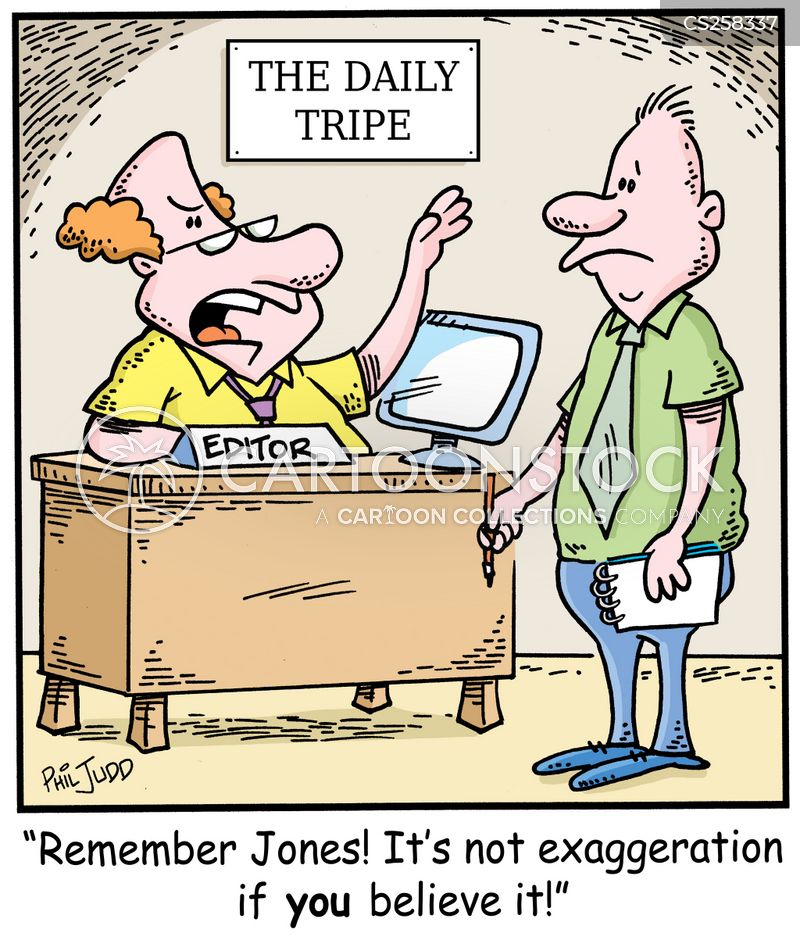
Wildly exaggerating things is a cheap, repulsive political tactic

Lately, we have seen two occasions where certain parties have exaggerated descriptions of some events to make them seem more serious than they actually were. Two immediately come to mind: The January 6th “insurrection” at the U.S. Capitol; and the “domestic terrorism” at some local school board meetings.

Let’s take a look at these terms and allegations.

Insurrection: What it is: a violent armed uprising by a group or movement acting for the specific purpose of overthrowing the constituted government and seizing its powers.

What it isn’t: Insurrection is not a lot of people, nearly all of whom were unarmed, who illegally entered a government building, even if they were intent upon interrupting the work of those who occupy that building. The January 6th event at the U.S. Capitol Building was illegal and wrong — perhaps even an actual riot — but it was not an insurrection.

This common-sense evaluation was confirmed by the FBI, which Reuters reported “has found scant evidence that the Jan. 6 attack on the U.S. Capitol was the result of an organized plot to overturn the presidential election result, according to four current and former law enforcement officials.”

When parents attend their children’s school board meeting and issue complaints against activities, and criticism of the school or the school system, even if they are angry and accusatory, they are not “domestic terrorists.” And if there were threats made against those associated with the school system, they may be minor crimes, but not “domestic terrorism.” This allegation and misuse of the term is irrational and disgraceful.

As reported by The Daily Signal, U.S. Attorney General Merrick Garland ordered the FBI and federal prosecutors to meet with federal, state, and local leaders to look into a “disturbing spike in harassment, intimidation, and threats of violence” allegedly being made against “school administrators, board members, teachers, and staff.” 

Garland’s directive followed soon after the National School Boards Association (NSBA) requested President Joe Biden to assist in looking into behavior it absurdly classified as “domestic terrorism.”

And even if there is unlawful behavior at local school board meetings, it is the responsibility and clearly the purview of local law enforcement to deal with it. The federal government has no business or authority to involve itself in local and state affairs such as the goings-on at local meetings.

However, the actions favored by the NSBA, if granted, are likely to inhibit the ability of voters and parents to make their opinions known to the board. Even the foolish mischaracterization of these events is enough to inhibit some from exercising their constitutional rights and responsibilities in speaking out against what their children’s schools are doing.

This is yet one more episode where the federal government is improperly imposing its will over the guaranteed freedoms of the people.

This increasing misapplication of terrifying terms to make things seem far worse than they are is not the proper way to do things in America. It is a cheap political ploy designed to arouse false negative feelings, and to stifle opposition to unpopular policies. This is especially true when these preposterous over-reaches are done by public servants and/or elected representatives.

Most local school boards are elected by voters, and are therefore accountable to those voters and the parents of school children. They do not have the luxury of ignoring complaints and appeals for change. 

They also do not have the luxury of stifling the free speech of those voters and parents simply because they disagree with their complaints. They are elected servants of the people, not the rulers of the people.

This school board hoopla has spurred the idea of finding alternatives to government schools. This authoritarian behavior is the biggest boost to that idea that has come along lately.

An unresponsive school board runs the risk of parents saying they are finished with the arrogant attitude of the board, and will remove their child or children from the public school to one of the alternatives: charter schools, so long as they retain their independence; private or religious schools; or home schooling.

To what are these parents objecting? In what is likely the most reported of these conflicts, Loudoun County, Virginia, the Democrat-controlled board of supervisors and school board are trying to promote Critical Race Theory (CRT), and silence the opposition, as reported by Real Clear Politics (RCP).

“Supporters of [CRT] claim white racism is embedded in American institutions, and some go so far as to blame whites for poverty and crime in black communities,” RCP wrote. “Opponents claim [CRT] is inherently racist, teaching people to judge by skin color: all whites are oppressors, all blacks are victims.”

Much of the thousands of tax dollars related to CRT has gone to “the ‘Equity Collaborative,’ a group that seeks to expose and eliminate ‘the dominant (male, White, heterosexual) ideology’ and teaches tenets like ‘Whiteness as property’ and “Permanence of racism,’” RCP wrote.

Such a radical change in the history curriculum, without even notifying parents, let alone asking their opinion, does not sit well with true Americans, who expect — and deserve — transparency from their elected public servants.

We must not allow public education to become indoctrination.


Friday, July 23, 2021

The debate between educators and parents over CRT heats up!

Critical Race Theory (CRT), which has Marxist origins, is a version of America’s beginnings that is strongly at odds with the history of our country as it has been taught in public schools for more than a hundred years. The nation’s two largest teacher unions — the National Education Association (NEA) and the American Federation of Teachers (AFT) — support this version.

There are charges that CRT has sneaked into public education in recent years, that some teachers are teaching it, and that some school systems are preparing to start. AFT president Randi Weingarten, who calls CRT the “honest history” of America, denies that CRT is being taught below the college level, but said her union is prepared to defend any teacher accused of teaching it.

There are teachers, administrators and school boards that agree that CRT should be taught in schools now. But many parents and many other Americans strongly oppose it, believing that CRT pits people against each other and destroys the view of their country that generations of Americans have been taught and believe.

Questions arise: Is it appropriate for one or a few teachers, or a school faculty, or a school’s administration, or even a county school board to unilaterally make such a dramatic change in the history curriculum in public schools that are supported by taxpayers without first gaining broad support of the public?

At what stage of the education process should a new and radically different view of the nation’s history be implemented? 

It seems that CRT and other new ideas are right now considered more important than other aspects of education.

As some school teachers, administrators, board members and politicians push hard to justify CRT for children as young as the early grades, the U.S. continues to falter among the world’s nations in successfully educating students in important subjects.

For example, the U.S. placed 11th out of 79 countries in science, and did worse in math, ranking 30th, according to the Program for International Student Assessment tests of 15-year-old students around the world, administered by the Organization for Economic Cooperation and Development (OECD) in 2018.

The U.S. scored below the OECD average in math of 489 with a score of 478. Asian nations placed 1st through 5th: Singapore - 569, Macao - 555, Hong Kong - 551, Taiwan - 531, and Japan - 527. Since only four of China’s provinces participated in the assessment, it was not included in this ranking.

The United States scored a 502 in science, above the OECD average. However, the top five scoring countries were: Singapore - 551, Macao - 544, Estonia - 530, Japan - 529, and Finland - 522.

Pearson.com, in its latest assessment, shows that the United States has a “cognitive skills and educational attainment” score of 0.39, fourteenth out of forty countries that it ranked. The top ten countries and their scores are: South Korea - 1.30, Japan - 1.03, Singapore - 0.99, Hong Kong - 0.96, Finland - 0.92, United Kingdom - 0.67, Canada - 0.60, Netherlands - 0.58, Ireland - 0.51, and Poland - 0.50.

What does it mean when our education system finishes so far down in the rankings of nations? Poor performance in languages means many or some will not be able to communicate effectively. The poor performance in math and science indicates that U.S. students are not prepared for high-tech jobs in an increasingly high-tech world.

Silicon Valley has achieved great success in the high-tech industry. That success is due to excellent software engineers. But many of them are foreign-born. If Americans are unable to perform well in these important, high-paying jobs, those jobs will instead go to people from other countries who work here, or worse, to companies in other countries.

It seems that the primary function of helping our children learn the basics of language, mathematics, science, social studies and the arts is suffering, and needs immediate attention. That is far more important than suddenly, and in some alleged cases, secretly trying to overturn the long-standing historical account of the United States, in favor of a highly disputed version of how the nation came to be.

Based upon America’s low rating in international educational performance, it seems U.S. educators have plenty of work to do to get our performance level up where it belongs, and where it once was, before they turn the system upside-down with a radical transformation of our history.

Stuffing controversial ideas — Marxist CRT, transgenderism, diversity, and other such things disguised as harmless ideas — down the throats of the children of the numerous parents who disagree with those ideas is a very divisive thing. Those parents will surely want, need and deserve better choices of schooling for their children. 

And since state and local taxes pay for much of public education, there should be a mechanism to financially assist those parents, who will likely have to pay for an alternative to public schools in order to have their children educated as they choose.

Not all teachers, administrators, schools or school systems are adopting this destructive belief system. But far too many of them are, and many people believe they are a threat to this country.

Sunday, May 26, 2019

Colleges are taking it on the chin lately


The bad news for higher education keeps piling up. Recent scandals involving parents bribing people to help get their otherwise-unqualified kids into elite schools and the new story of sexual impropriety at Ohio State University add to the list.  

Such things as challenges to free speech on campus and the imposition of politically correct mandates that run contrary to common sense have dramatically changed things for higher education.

The traditional role of colleges to help students mature into rational and knowledgeable adults that are prepared to deal with the stresses of life is no longer a given.

Once a place for young people to prepare for a career in an idea-rich forum that challenges them to consider new and different perspectives, many campuses have developed “safe spaces” where students can seek refuge from reality, sometimes when instructors provide them with “trigger warnings” in advance of possible “troubling” topics in the classroom.

The complete shutting out of certain unpopular ways of thinking about things often occurs when the dominant left-liberal philosophy of many campuses is threatened by the presence of a conservative or religious speaker. These existential threats turn otherwise normal calm, rational people in their late teens and 20s into mobs protesting these speakers, sometimes violently, even if they are not required to go and hear what they have to say.

These highly negative attributes are not present in all institutions of higher learning, of course, and perhaps one or more of your former schools has avoided this plague. But the trend is extensive, and is growing, and threatens to debase the once-proud custom of a college education.

More and different criticisms of higher education appear in Dr. Walter Williams’ column from last week referencing a new book titled “Restoring the Promise” by Richard Vedder, Ohio University Distinguished Professor Emeritus of Economics.

Williams, himself a professor of economics, in fact the John M. Olin Distinguished Professor of Economics at George Mason University, cites Vedder’s view that our universities "are vastly too expensive, often costing twice as much per student compared with institutions in other industrialized democracies," and that while exceptions exist, students "on average are learning relatively little, spend little time in academic preparation and in some disciplines are indoctrinated by highly subjective ideology."

The latter point supports the idea that too often college students are taught not “how” to think, but “what” to think.

Other points Williams makes from Vedder and other sources include:
** There is a mismatch between student occupational expectations after graduation, and labor market realities. College graduates often find themselves employed as baristas, retail clerks and taxi drivers.
** Data from the New York Federal Reserve Banks and the National Bureau of Economic Research shows that each dollar of federal aid increases tuition by 60 cents.
** Very little improvement in critical reasoning skills occurs in college, and college graduates are less literate than they once were. Areas of exception to this trend are engineering, nursing, architecture and accounting.
** Vedder says that student ineptitude is not surprising since they spend little time in classrooms and studying, and cites weak preparation in high school as another reason. In 2010 and 2013 NAEP test scores, 37 percent of 12th-graders were proficient in reading, 25 percent in math, 12 percent in history, 20 percent in geography and 24 percent in civics.

It seems that the “every child should go to college” craze is blessedly over and the college bubble I have quietly predicted for a few years appears to be upon us. 

After high school, kids must focus on how they are going to make a living for themselves, and perhaps a family. The basic K-12 educational curriculum ought to provide them a good background to do that.

Many good paying jobs may require post-secondary training, but not a 4-year college degree, or more, therefore many, perhaps most, high school graduates should not seek a college degree.

Williams concludes his column with this: “Vedder ends ‘Restoring the Promise’ with a number of proposals with which I agree:"
“--College administrative staff often exceeds the teaching staff. Vedder says, ‘I doubt there is a major campus in America where you couldn't eliminate very conservatively 10 percent of the administrative payroll (in dollar terms) without materially impacting academic performance.’"

“--Reevaluate academic tenure. Tenure is an employment benefit that has costs, and faculty members should be forced to make tradeoffs between it and other forms of university compensation."
“--Colleges of education, with their overall poor academic quality, are an embarrassment on most campuses and should be eliminated."
“--End speech codes on college campuses by using the University of Chicago Principles on free speech."
“--Require a core curriculum that incorporates civic and cultural literacy."
“--The most important measure of academic reforms is to make university governing boards independent and meaningful. In my opinion, most academic governing boards are little more than yes men for the president and provost.”

At this point it is difficult to tell if this will get straightened out, and what higher education will look like if it does. Certainly, it will be a difficult period for colleges.

Tuesday, April 24, 2018

Do we still have freedom of speech? Well, yes; sometimes we do.

 
Thank goodness for the First Amendment to the U.S. Constitution, which protects what our Founders viewed as our God-given rights to free exercise of religion, free speech, freedom of the press, peaceable assembly, and to petition the government for redress of grievances.

However, while efforts to infringe upon those and other rights are not unheard of, the attacks on them currently form a far more serious threat than perhaps at any other time, and certainly the most serious in many decades.

There has been ample news coverage of instances where Christian bakers and florists were forced to bake cakes or produce flower arrangements for gay weddings, contrary to their religious beliefs.

A decorated Army chaplain is facing what his attorneys are calling a “career-ending punishment” after he explained to a soldier that he could not conduct a marriage retreat that included same sex couples, but was willing to find someone else to do it.

Somehow, no matter how many people are available and willing to provide these services, those wanting a particular service view it as a horrible crime if a person refuses to perform it on religious grounds.

These days, certain “preferences” held by relatively small groups are thought to be of even greater importance than those rights set in stone by our Founders.

Some small efforts at balancing these breaches have occurred, but one’s ability to practice his or her religion in the customary fashion is only sometimes protected, these days.

These breaches of the First Amendment’s protections are serious enough, but what is happening on social media, on college campuses and elsewhere regarding free speech and free access to information is much worse, if for no other reason because of its broad swath of free speech encroachments that are being slashed through our culture.

Burgess Owens, a conservative African-American entrepreneur and 10-year veteran of the NFL, appeared at Hobart and William Smith Colleges recently. He told the audience, “I grew up in the Deep South during Jim Crow segregation laws. I can tell you how racism looks, how it feels, and what it means. You guys today can go anyplace you want to — any restaurant, any college.”

Well, that was too much for the audience. A female attendee asked him to repeat his first name, and after he did so, she said, “Oh, I thought it was ‘Tom,’” as in Uncle Tom. Cute.

Student activists at Lewis and Clark College in Portland, Oregon, made good on their threat to disrupt an address by conservative Christina Hoff Sommers. What makes this one worse is that it was at the Law School. Yes, that’s right: students studying the law denied Sommers her free speech right.

The Leftist operators of Google, Twitter, Facebook and YouTube social media platforms think the way to persuade people to their ideas is to cheat them out of contrary opinions. 

The Media Research Center has produced a report titled “Censored” on how and to what extent popular social media are trying to “persuade” people to their way of thinking, not through the common sense of their ideas or the power of their argument, but by keeping people from seeing other points of view.

Authors Ashley Rae Goldenberg and Dan Gainor tell us that social media influences our worldview and can even influence elections. “Americans are seeing the results everywhere online. Conservative spokespeople, political candidates, even members of Congress, are falling victim to censors and the top tech firms are to blame.”

The article addresses claims of liberal bias and censorship against Twitter, Facebook, Google and YouTube individually, listing the claims and evaluating them, showing that the claims are supported by evidence.

These include such things as that Twitter censors conservative tweets pro-life ads, and censors content that governments find objectionable.

Liberal attitudes are at the core of Facebook and it censors pro-life advertising. Facebook’s algorithms filter what things its members can see, and it also blocked the “Diamond and Silk” girls’ posts, calling their content “dangerous.” Have you ever seen Diamond and Silk? Dangerous?

Google’s fact-checking system and algorithm contain an anti-conservative bias, and its News Lab partners with the radical Southern Poverty Law Center to identify “hate.”

Charges against YouTube mirror those previously mentioned for the other three media.

Is it that these folks have so little faith in their way of thinking that they don’t trust it to stand up against contrary ideas? Or do they not want to go to the trouble of actual debate and take a chance on losing in the marketplace of free ideas?

Whatever the motivation, using their ability to control what their customers or users see is truly otherworldly.

Liars, cheaters and cowards, oh my!

Faced with unpopular ideas, so many in our country are convinced that the appropriate reaction is to hold their breath, sob uncontrollably, stomp their feet, run to their safe space and demand that the speaker of these ideas shut up.

Private businesses or organizations can control what their Websites show. No argument there. The question, however, is not whether they can, but whether they should? Politics and business is a bad combination, and in these instances is quite dangerous.

Tuesday, April 14, 2015

State Board acts to allow the light of day into public schools


An email last week from the Committee For A Constructive Tomorrow (CFACT) and a story in the Bluefield Daily Telegraph the following morning noted that the West Virginia Board of Education voted to open up state teaching standards so that students would be able to consider both sides of a contemporary debate.

Say, what? The state Board of Education had to have a special vote to allow more than one side of a critical issue to be studied in West Virginia’s public schools? Well, yes, more or less, since the Next Generation Science Standards that the BOE was considering for adoption were worded such that global warming is settled science, and therefore not a proper topic for debate.

During the deliberations on the standards last December, the Charleston Gazette reported that BOE member Wade Linger requested several changes be made to the standards prior to their being offered for public comment, like this one: “There was a question in there that said: ‘Ask questions to clarify evidence of the factors that have caused the rise in global temperatures over the past century,” Mr. Linger was quoted as saying. “... If you have that as a standard, then that presupposes that global temperatures have risen over the past century, and, of course, there’s debate about that.” He suggested adding the words “and fall” after “rise” to the sixth-grade science standard, and that change some others were adopted.

Then the Gazette reported on January 14 that following a period of public comment the BOE yielded to criticism from “teachers, professors and others,” and withdrew the changes, and again opened a period of public comment.

One wonders exactly what “teachers, professors and others” fear from opening debate on this topic, or any topic?

CFACT reports that Executive Director Craig Rucker, and climate news and information service editor Marc Morano, along with students from West Virginia University and Marshall University who belong to CFACT Collegian chapters at the schools, all testified before the Board.

On April 8 the Board voted to open up teaching standards to permit students to consider both sides in the climate debate by a 6-2 vote. CFACT reported that, “Supporters of the changes, including board members Wade Linger and Tom Campbell, argued that ‘science is never settled’ and that debate will lead students into a deeper understanding of the issue.”

Let’s congratulate the state BOE for finally getting it right, and award special kudos to Mr. Linger and Mr. Campbell for their leadership in blowing away the dark clouds of censorship, and opening the way for contrary ideas to be voiced and discussed. And let’s also acknowledge the efforts of CFACT and WVU and MU students for taking a stand for openness in public education.

Some issues are considered beyond debate, like that the Earth orbits the Sun and the Moon orbits the Earth, that day follows night and night follows day, and that the Earth is not flat. But that does not mean that there can’t be any discussion or that some can’t reject those ideas if they so choose.

In the early 1600s it was “settled science” that the Earth was the center of the universe, a view held by virtually all scientists of the time and by the Catholic Church, supported by Biblical references. Then came Galileo, a scientist who professed heliocentrism – a sun-centered system in which Earth and other heavenly bodies all orbited the Sun – a theory he had developed through observations.

His heretical ideas, like those of today’s climate realists who disagree that man’s activities are contributing to any meaningful degree in the Earth’s temperature, were out of step with the current dogma, but were correct that Earth was not the center of the universe. For daring to express contrary ideas, Galileo faced the Inquisition, and in 1616 was ordered “... to abandon completely... the opinion that the sun stands still at the center of the world and the earth moves, and henceforth not to hold, teach, or defend it in any way whatever, either orally or in writing.”

Galileo was correct that Earth was not the center of the universe, and his theory displaced the previously held “settled science” of geocentrism. Only later would Galileo’s heliocentric idea be found to also not be completely accurate. Settled science once again fell to objective investigation.

One gets the idea that climate alarmists’ positions are so weak that they have to prevent contrary views from being aired for their ideas to win the day.

However, limiting discussion of controversial topics is precisely the wrong thing to do. Why would any reasonable and objective person object to discussing opposing views of important issues such as global warming/climate change, abortion, gun control, vaccinations, the “right” and “wrong” kinds of foods and drinks to consume? As BOE members Linger and Campbell pointed out, such openness will lead only to a deeper understanding of the issues.

There is certainly nothing wrong with the concept of standards of learning, but school boards at every level must be careful to assure that by adopting a set of standards they are not actually imposing ideological perspectives on young, impressionable minds.

Tuesday, April 01, 2014

Common Core State Standards Initiative has uncommonly bad problems


I attended a lecture by former Florida Governor Jeb Bush last year at which he spoke positively about the Common Core State Standards Initiative (CCSS), explaining that governors and state commissioners or secretaries of education developed the program. It is entirely voluntary, and is designed to set uniform high education standards in the states that participate.

The idea seems potentially beneficial, given that the states control it and not the federal government. In support, Mr. Bush cites the fact that the U.S. has fallen behind many other countries in educational attainment, and that CCSS can reverse this trend.

“Let me tell you something,” Mr. Bush said recently at the Broward Workshop business breakfast, as reported by The Miami Herald. “In Asia today, they don’t care about children’s self esteem. They care about math, whether they can read – in English – whether they understand why science is important, whether they have the grit and determination to be successful.”

Appearing on the Hugh Hewitt radio program the host breached the idea that CCSS would be a national curriculum. “In fact, standards are different than curriculum,” Mr. Bush responded, “and that’s where I think the biggest misnomer is where people legitimately get concerned. I would be concerned if we had a national curriculum influenced by the federal government. My God, I’d break out in a rash.” The curriculum, he said, “should be driven by state and local school districts and by policy makers at the state level.”

So, CCSS sounds pretty good. Ideas often fail to reach their expectations, however, and where Common Core is concerned there are numerous examples of how its implementation fails to match up with the high ideals Mr. Bush believes in.

To say that the Common Core approach to basic mathematics is different takes understatement to a new level. If the problem is to find the sum of 26 and 17, we would normally put the addends one above the other, add 7 and 6 to get 13, put the 3 down and carry the 1, then add the 1, the 2 and the other 1 to get 43.

Not so with Common Core math. Here’s how CCSS does it:

Add 26 + 17 by breaking apart numbers to make a ten. Use a number that adds with the 6 in 26 to make a 10. Since 6 + 4 = 10, use 4. Think: 17 = 4 + 13. Add 26 + 4 = 30. Add 30 + 13 = 43. So, 26 + 17 = 43.

Does the CCSS method work? Well, yes, it works. And perhaps some beneficial learning takes place. However it is somewhat like when trying to fly from Washington, DC to New York City, you first fly to Nashville, TN, then to Atlanta, GA, then to Boston, MA then to NYC.

Most important in education, however, is the content presented in the classroom. The most high-minded goals are meaningless if what students actually experience ignores them.

Testifying before the Alabama Senate Education Committee, Becky Gerritson focused primarily on an 11th grade literature textbook called The American Experience: 1900-Present by Prentice Hall, with the words “Common Core Edition” on the cover. She explained that it contains anti-American themes and misrepresents our nation’s founding, and she supports a bill to allow local school districts to opt out of Common Core.

But where she really got the Committee’s attention was when she began reading six sentences of Toni Morrison’s book The Bluest Eye, which she said is recommended reading for 11th graders.

What she read produced gasps from the audience, and the chairman stopped her, and did not allowed her to finish. You see, this book recommended for 11th graders is the story of an 8-year old black girl. The six sentences she chose to read were a graphic depiction of a sex act between a pedophile and the 8-year-old, and contained, among several pornographic phrases that are inappropriate for this column, the F-word that brought the testimony to a close.

Defenders of Common Core might argue that most 11th graders are familiar with such language and concepts, but that is totally beside the point. It is completely inappropriate for a high school classroom.

And political pressure is also present.

According to Susan Kimball, a kindergarten teacher of 20 years in the Sikeston, Missouri Public School District, her opposition to Common Core resulted in bullying and intimidation from administrators and fellow teachers.

Ms. Kimball related that she was told at an in-service meeting to “be careful about what you post on Facebook, or talk about in the public regarding Common Core.  Don’t say anything negative.  It could affect your job.” But she continued to speak out.

“When I turned in a personal day request to come support the rally for House Bill 1490,” she said, “I was asked by my principal, ‘Do you really want that in your personnel file?’ And then I was bullied and ostracized by my administration, a few other teachers and the president of the school board.  And that continues today,” she said.

Common Core must be carefully investigated and cleaned up before being adopted. Or maybe just scrap it.